Archive

Archive for September, 2009

Parents Want to Know: Why the News Blackout of This Story?

September 18th, 2009 No comments

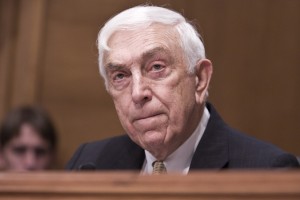
IMG_0663NJ’s senior Senator, Frank Lautenberg, is not known to be shy when it comes to issuing press releases and generating press touting his legislative accomplishments for the people of New Jersey. So, I found it odd that I never saw news coverage of groundbreaking amendments he sponsored creating “Healthy, High Performance Schools.”  (see In Harm’s Way“)

For the first time, that law puts EPA in the role of developing school siting and regulatory guidelines to protect children’s health from environmental pollution while at school.

As experience throughout NJ has shown, this is a highly controversial issue. But, curiously, I had to do a lot of Googling to find anything about the Lautenberg amendments, and finally found it reported by the small trade journal  Education Week on January 16, 2008:

“Tucked quietly into the federal Energy Independence and Security Act of 2007 is a section that calls for establishing voluntary environmental-health and -safety guidelines for states to consult when locating and constructing schools, and authorizes grants for states to develop programs around those standards.

The measure, which President Bush signed into law last month, marks the first time that a federal agency [EPA] will provide such guidance.”

Given several highly controversial school exposure cases reported across NJ (at schools in Paramus, Kiddie Kollege, Union, Franklin, Garfield, Camden, etc) I circulated the Education Week article to the NJ press corps in order to give NJ’s parents information about this issue. Strangely, Lautenberg’s office initially denied enactment of the bill I described. After providing the text of the bill to reporters, Lautenberg’s office ran away from their own law and had no comment, thus the press had no story. Thus parents had no awareness of what was going on at EPA or NJ DEP.

EPA Administraor Lisa JAckson faced criticsim for her handling of toxic school adn day care cases whiel NJ DEP Commissioner. Chairwoman Boxer critically probed her record during confirmation hearing.rg

EPA Administraor Lisa Jackson faced criticism for her handling of toxic school and day care cases while NJ DEP Commissioner. US Senate Environment Committee Chairwoman Barbara Boxer critically probed Jackson's record during confirmation hearing.

The 2008 Lautenberg amendments require:

‘‘SEC. 502. MODEL GUIDELINES FOR SITING OF SCHOOL FACILITIES.

‘‘Not later than 18 months after the date of enactment of

this section, the [EPA] Administrator, in consultation with the Secretary

of Education and the Secretary of Health and Human Services,

shall issue voluntary school site selection guidelines that account

for—

‘‘(1) the special vulnerability of children to hazardous substances

or pollution exposures in any case in which the potential

for contamination at a potential school site exists; (link to full text)


The new law was enacted in January 2008, so the EPA siting guidelines were due in June of 2009. So, it is a good time for NJ press corp to ask EPA about the status of those guidelines. Has EPA adopted them? Here’s what I could find from EPA, which does not inspire confidence:

An EPA-wide work group is currently developing the draft guidelines and EPA anticipates posting a draft for public comment on this web page this summer. EPA will widely publicize the availability of the draft to ensure that a broad spectrum of input is received.

 What is NJ DEP doing to implement them? What are local school districts doing to detect any problems and protect children? Why do we continue to find problems like this?

The Lautenberg sponsored federal law parallels a NJ law and NJ State programs. Fro example, NJ Inspector General Cooper’s Report found that the mismanaged NJ Schools Construction Corporation – later abolished – had purchased contaminated toxic land for schools - including a federal Superfund site in Gloucester City and a radioactive former Manhattan Project in Union City site. Governor Corzine’s SCC reforms were criticized harshly for failure to address these school siting, toxic land acquisition, indoor air, and cleanup  problems.  

In January 2007, Governor Corzine signed into law new requirements to set indoor air standards at schools and daycare centers. (P.L. 2007, c.1) The bill was a response to the Kiddie Kollege tragedy, where toddlers were poisoned by mercury at a day care center that previously was a former mercury manufacturing facility under an un-enforced DEP toxic site cleanup Order. The most complex and controversial requirements of the new law mandate that DHS and DEP take specific regulatory actions – both DEP and DHSS have failed to do so and are not in compliance with the Act. This inaction also could affect NJ’s ability to secure grants under the Lautenberg amendments above:

NJ Governor Jon Corzine signed the "Kiddie Kollege" law in January 2007. The law has yet to be implemented.

NJ Governor Jon Corzine signed the "Kiddie Kollege" law in January 2007.  “This bill will help identify and remediate educational facilities and child care centers located on environmentally high risk sites,” Governor Corzine said. “This puts New Jersey at the forefront of states nationally in protecting children from environmental contaminants while at child care facilities and schools.” (full release here)

“1. a. Within 12 months after the effective date of this act, the Department of Health and

Senior Services shall adopt rules and regulations … The rules and regulations adopted pursuant to this subsection shall be protective of the health of children and infants, and shall account for the difference in rate of the absorption, metabolism, and excretion of compounds between adults and infants and children.

[...]

b. (1) No construction permit shall be issued for the construction or alteration of any

building or structure to be used as a child care center licensed pursuant to the provisions of P.L.1983, c.492, or for educational purposes, on a site that was previously used for industrial, storage, or high hazard purposes, as a nail salon, dry cleaning facility, or gasoline station, or on a contaminated site, on a site on which there is suspected contamination, or on an industrial site that is subject to the provisions of the “Industrial Site Recovery Act,” P.L.1983, c.330 (C.13:1K-6 et al.), except after submission by the applicant to the construction official of documentation sufficient to establish that the Department of Environmental Protection has approved a remedial action workplan for the entire site or that the site has been remediated consistent with the remediation standards and other remediation requirements established pursuant to section 35 of P.L.1993, c.139 (C.58:10B-12) and a no further action letter has been issued by the Department of Environmental Protection for the entire site. (link to full text)


We”ve just seen another children’s toxic exposure disaster repeated in Atlantic Highlands Elementary School, where about 100 parents turned out on Tuesday night to win a major victory. (read here). Yet, that too received no press.


What the hell is going on?


Parents of thousands of kids in scores of potentially poisoned schools want to know.


Could the silence be due to a rumored NJ Attorney General’s opinion that guts the Corzine Kiddie Kollege law by an interpretation that is does NOT to apply to existing schools? (and only new school construction)?

We’ll keep you posted at Wolfenotes.com

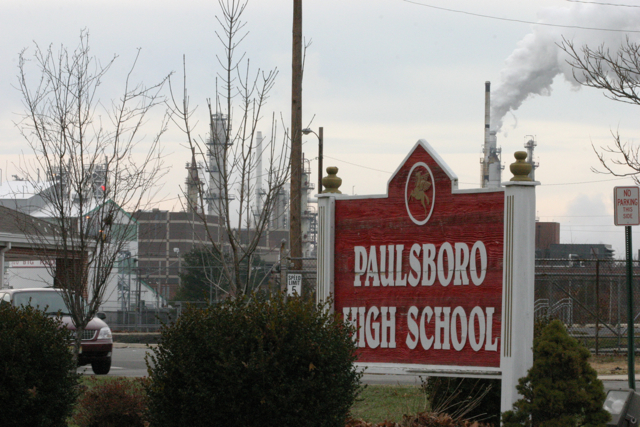
Valeror oil refienry dwarfs Paulsboro High School. The refiernry emits thousands of pounds of toxic chemicals to the local air. Major upsets have coated buildings in toxic fallout. Would you send you child to this school?

Valero oil refinery dwarfs Paulsboro High School. Valero's refinery emits thousands of pounds of toxic chemicals to the local air. Major upsets have coated buildings in toxic fallout. Would you send you child to this school?

Categories: Uncategorized Tags:

A Win for the Kids and Parents of Atlantic Highlands

September 15th, 2009 No comments

Last week, we called on DEP Commissioner Mauriello to resolve a totally unacceptable situation in Atlantic Highlands. Children were being exposed to toxic chemical vapors seeping into their elementary school building, while the DEP failed to enforce the law and require the polluter to cleanup. (click here)

Parents had organized and were working with local school officials, but the polluter was dragging his feet. DEP failed to back local efforts by enforcing State cleanup laws to hold the polluter accountable. As a result, more cleanup delays ensued as the polluter was allowed to flout cleanup requirements. Children were needlessly exposed to toxic chemicals. 

We are pleased to note that the organizing and hard work of a committed group of parents paid off – DEP just announced  a cleanup agreement. Congratulations to those parents and kudos as well to local school officials.

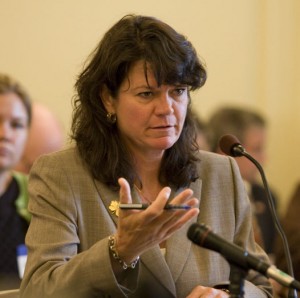
Irene Kropp, DEP Assistant Commissioner for Site Remediation testifies before the Senate Environment Committee. Kropp was forced to defend DEP after several high profile botched cleanups. to defend DEPtt

Irene Kropp, DEP Assistant Commissioner for Site Remediation testifies before the Senate Environment Committee. Kropp was forced to defend DEP after several high profile botched cleanups.Â

Three years after DEP first learned of the problems at the school, DEP Assistant  Commissioner Irene Kropp finally announced the following:

The DEP case manager attended a meeting at 1:00 PM with the Atlantic Highlands School Superintendent, his attorney and his consultant along with the potentially responsible party (PRP), his attorney and his consultant.   The case manager called just minutes ago to advise me of the following:

The outstanding issues between the parties have been resolved;

The Atlantic Highlands School Board will formally approve the installation of the DEP-approved sub-slab vapor mitigation system at tomorrow’s Board meeting;

The PRP’s consultant will begin installing the system on September 21, with an anticipated completion date of October 16;

The system will be installed on a room-by-room basis while school is in session, however, the rooms undergoing installation will be closed for the entire school day;

The cafeteria/kitchen installation will take place between October 9 through 12, while the school is scheduled to be closed;

In light of these developments, we will not be preparing a formal response to Mr. Wolfe’s inquiry.

Please contact Assistant Director Ken Kloo, at 2-1251, if you have specific questions or need additional information.

Irene Kropp
Assistant Commissioner
Site Remediation Program
NJDEP

In a followup post, we will explain the larger context and target what caused the breakdowns  - more analysis to follow after we read the fine print of the cleanup documents.

Corzine applauds New Carbon Control Corporation – Cash for Clunkers at Home. Major Benefits for NJ

September 14th, 2009 1 comment

[Update: Intro warning: If it is not obvious, this is snark! That's why the original piece closed with reference to Yesmen!)

Washington – Harkening back to President Roosevelt’s New Deal, the Obama administration today announced a new federal agency, the ”CCC” - Carbon Control Corporation. The new CCC was modeled on FDR’s Civilian Conservation Corps and the Tennessee Valley Authority, depression era agencies that spurred employment, conservation of the nation’s natural resources, and brought affordable electric power to millions of homes.

Obama, joined by Treasury Secretary Geithner and Energy Czar Carol Browner, said the CCC would manage and finance energy and global warming policy goals, while spurring employment. Headed jointly by internationally recognized Princeton Professors Cornel West, and Nobel Prize winning economist Paul Krugman, the $250 billion per year CCC program will make massive federal infrastructure investments and be funded by three major sources: 1) a surcharge on carbon intensive fuels – domestic coal and oil imports; 2) full refund of the $700 billion Wall Street bailout money; and 3) savings from phase out of the AfPak and Iraq wars and redeployment of 250,000 US troops stationed at over 725 foreign military bases in 120 countries, including Germany, Japan, and North Korea.

“Today, we take the first large step on the sustainable energy path, and call an end to US military empire” said Obama. “The CCC will restore US manufacturing sector jobs and jump-start a socially  just and equitable jobs based economic recovery. The era of deindustrialization, deregulation, privatization, and finance based taxpayer subsidized speculative global trade schemes is over.”

“I have directed CCC head Cornel West  to begin immediately with an expanded “cash for clunkers” program for refrigerators, hot water heaters, and furnaces and energy efficiency in America’s homes.  We will channel $30 billion to US consumers in the next 30 days. We will have 10,000 wind, solar, and mass transportation projects underway before the snow falls. At the upcoming Copenhagen global warming conference, I will present a detailed plan to phase out the nation’s coal power plants over the next 10 years and construct a world class national inter-city rail and urban mass transit system.” he said.

Governor Corzine applauded the CCC, saying “Obama’s leadership will assure that NJ meets my global warming and energy efficiency and conservation goals, as well as avoid the need to finance implementation via a securitized gas tax revenue stream and expanded privatization initiatives” the NJ Governor said, referring to his prior controversial proposals to increase tolls, privatize the NJ Turnpike, and failed plan to fully fund the Transportation Trust Fund . “These are crucial positive developments in light of the upcoming election – I am so glad that we finally we can deploy NJ’s National Guard to serve our communities here at home, instead of killing innocent civilians in foreign lands” he concluded.  

IMG_6106Corzine was joined by a PSEG spokesman, who announced that PSEG would immediately develop plans to close all 4 NJ coal plants; cancel midwestern coal power energy importation contracts; end export of power to the NY City market; abandon controversial new power lines through the NJ Highlands , and south jersey; increase commercial rates and decrease shareholder profits; and provide rebates to low and moderate income families. “However, because of the ongoing environmental impacts of our power line operations and the way we corrupted and undermined trust in government, PSEG will continue the $18.6 million payment to the Highlands Council.” PSEG spokesman concluded. In a statement, other major NJ energy providers echoed PSEG, and pledged to shutdown the aging Oyster Creek plant, and cancel a controversial Linden coal plant and offshore LNG. “We will redouble our wind, solar, and conservation efforts” the energy industry said.

Conservative Republican challenger Christie blasted the Obama CCC as a government takeover, and opposed the thousands of  new jobs that would be created as “more bureaucracy”.

Independent challenger Daggettt urged Corzine to be “realistic” and repeated his claim that renewable energy is more expensive than coal.

The Obama move was applauded by NJ Environmental Czar Bill Wolfe, recently named to revitalize NJ’s hapless ENGO community. “Health, Beauty , Permanence, Jobs, Peace, and Social Justice are now guiding our government policies and programs, as well as our personal aspirations” said Wolfe.”Like we’ve been saying for 40 years: “Small is Beautiful“ and there really are “Limits to Growth“.

 This post was brought to you in the spirit of The Yesmen

Dying Jersey Guy Recalls Whitman 9-11 Remarks – “She’s a Liar”

September 11th, 2009 No comments


Christie Whitman testifies before the House Judiciary Committee to defend  her post 9/11 EPA actionsremarks

Christie Whitman testifies before the House Judiciary Committee to defend her post 9/11 EPA actions and remarks

As all the 9-11 memorial remembrances go down, I want to be sure that there is one story that is not forgotten. Thousands of workers who responded to Ground Zero are dying.

 Here are the words of one hero, a Jersey Guy named Joe Picurro, from Toms River. Joe  worked on the pile and as a result has a fatal lung disease and not long to live:

I mean, we were there for them when they needed us. And, you know, they told us—Christine Whitman stood there, and I don’t care what she says about it. She said the pile was different. She’s a liar. I was standing there. She did not say that the air was different on the pile. She stood on the pile with her mask below her neck and talked to us and told us we were heroes and said the air was fine, and she put the mask back on, and she got back in her car, and she left, you know, and went back to New Jersey where it was safe. So she’s a liar, and that’s all she is. [full transcript of interview here]

Today’s “Democracy Now! covered the story:

AMY GOODMAN: Joe Picurro was one of thousands of men and women who showed up at Ground Zero on September 11th to help with the rescue and recovery efforts. He was thirty-four years old at the time. 

Now Joe is dying. His doctor has told him he has the lungs of a ninety-five-year-old. His lungs are so inflamed from all the tiny particles of glass and even human bone fragments lodged in them that every breath produces excruciating pain. He’s been unable to work for the last five years and takes thirty-seven different medicines. 

Christie Whitman was called before the House Judiciary Committee to defend her remarks post 9-11. I was at that hearing and spoke with several emergency responders. Here’s an excerpt of today’s interview with Joe that recall that hearing: 

JUAN GONZALEZ: Well, I want to play a short excerpt from a 2007 congressional hearing when the former head of the Environmental Protection Agency, Christie Todd Whitman, denied misleading the public over environmental dangers after 9/11. Whitman and John Henshaw, the former head of the Occupational Safety and Health Administration, were questioned by Congressman Jerrold Nadler. 

    REP. JERROLD NADLER: In a series of EPA press releases beginning on September 13th, the following words were used to describe the air conditions: “good news,” “causes no concern,” “not detectable,” “no significant health risk” and “safe to breathe.” Ms. Whitman, do these words and phrases convey a sense of danger or even of caution? Or do they, in fact, convey a sense of safety and security?

     CHRISTINE TODD WHITMAN: Mr. Chairman, those words, to the best of my recollection, in every effort that I made at the time, were also added with the phrase, “however, on the pile it is different.”

     REP. JERROLD NADLER: Well, we’ll get to that.

     CHRISTINE TODD WHITMAN: And that’s—but there’s a significant difference. The readings we were getting of air quality at the time, general—

     REP. JERROLD NADLER: Excuse me. We will get to that. Please. We only have a few minutes. Answer my questions. Do they convey a sense of safety and security or a sense of caution?

     CHRISTINE TODD WHITMAN: They should—they convey exactly what they were meant to convey.

     REP. JERROLD NADLER: OK.

     CHRISTINE TODD WHITMAN: Those were the readings we were getting from the scientists.

     REP. JERROLD NADLER: Do you regret your repeated assurances the air was safe to breathe?

     CHRISTINE TODD WHITMAN: I do not regret repeating what the scientists said was appropriate.

Categories: Uncategorized Tags:

Memo to DEP: Protect Kids – Enforce the Law

September 11th, 2009 No comments

[Update: 10/07/09 - ANOTHER Tragedy: New tests show elevated chemical vapor levels in Middlesex Borough preschool  what did DEP know and when did they know it?]

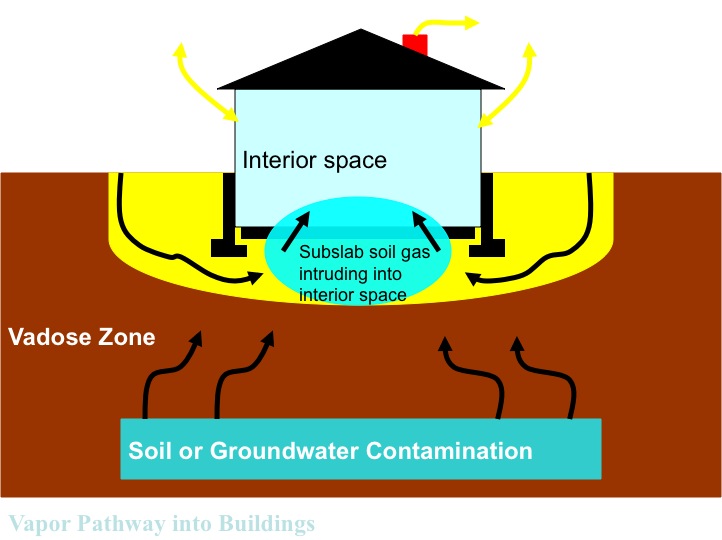
Children attending Atlantic Highlands Elementary School are being exposed to toxic chemicals from a contaminated site across the street. Polluted groundwater from the site has migrated under the school building and toxic chemical vapors are seeping into the building. Levels detected in the school exceed DEP’s own safety levels. Science suggests that DEP’s levels may not be tough enough to protect young children.

DEP has known about the problem for over 3 YEARS and failed to enforce cleanup laws by mandating that the polluter install a cost effective and demonstrated technology called a sub slab depressurization system recommended by a national expert who has worked on similar cases across the country.

Amazingly, state officials have failed to learn the lesson of Kiddie Kollege, reported by the New York Times:

Memo Shows Agency Knew of Danger in Child Care Building

By TINA KELLEY

Published: September 1, 2006

The New Jersey Department of Environmental Protection knew in 1994 that a building that later housed a Gloucester County day care center was so dangerous that state inspectors were instructed to use respirators when entering the building, according to an internal memo obtained by The New York Times yesterday.

But the site remained contaminated, and as far as the department knew, unoccupied, until inspectors visited it in April and found that Kiddie Kollege, a day care center serving children as young as 8 months old, was operating in the building. Yet the center, which is in Franklin Township, was allowed to remain open for more than three months, until state environmental investigators determined in late July that the site was still contaminated.” (read the complete story here)

The legislature quickly reponded to this tragedy by passing a law to protect children in day care centers and schools (read it here). The law directed the DEP to require complete cleanups at these sites, and mandated that the state Department of Health and Senior Services adopt indoor air standards to protect children, based on children’s higher sensitivity to chemicals.  Governor Corzine signed the bill into law in January 2007 and issued a press release that said:

TRENTON - Governor Jon S. Corzine today signed legislation to help ensure that child care and educational facilities are environmentally safe for the children attending them.

“This bill will help identify and remediate educational facilities and child care centers located on environmentally high risk sites,” Governor Corzine said. “This puts New Jersey at the forefront of states nationally in protecting children from environmental contaminants while at child care facilities and schools.” (full release here)

The Department of Health has failed to comply with the Kiddie Kollege law and adopt mandated indoor air standards, which were required to be promulgated by July 2008, 18 months after the law’s passage. Equally amazing is that the DHSS also has been aware of the situation in Atlantic Highlands and has advised – literally – to open the windows and prepare to abandon the school (read the DHSS 9/30/08 recommendations here)

continue to ventilate the areas that were monitored to reduce the levels of  volatile compounds identified; 

develop and implement a contingency plan to limit occupancy if conditions within the building change and levels increase in the sampled areas

Local school officials and a group of parents have been working for months on a solution. But they need the power of state law and DEP enforcement to back them up.

Yesterday, I wrote DEP commissioner Mark Mauriello the following letter – let’s hope this gets resolved immediately. We will keep you posted.

Dear Commissioner:

For many months, the Department has known that children in the Atlantic Highlands elementary school (AHES) are being exposed to unsafe indoor toxic air pollutants that exceed DEP’s vapor intrusion (VI) guidance levels. 

As you know, the Department’s VI guidance levels for indoor air exposure are not based on children’s health risks, pharmacokinetics, and metabolism, as required by P.L. 2007, c.1 (AKA, the “Kiddie Kollege” law, which mandated that DHSS adopt such standards by July 2008), and therefore may not be adequately protective.

The AHES indoor air levels exceed levels that have triggered active indoor vapor mitigation systems in other NJ schools, such as the EPA Pohatcong Valley Superfund site in Franklin Township. The AHES levels also exceed those found in DEP’s oversight of vapor intrusion into homes from Dupont’s Pompton Lakes site (note health based screening level for TCE is 1 ug/m3), where active vapor recovery systems have been installed. They exceed protective science based risk levels by 30 to 3,000 times for TCE. The AHES subslab levels also exceed DEP VI groundwater and soil gas screening criteria.

A plume has migrated under the school building from a site across the street that is the suspected source of the problem. Groundwater standards and soil cleanup criteria are exceeded as well. While indoor air has been monitored, the Department approved remedial action at the site is not designed to reduce indoor air levels or protect children’s health.

Indoor air exceedences are for multiple parameters, but cumulative risks to children have not been quantified or considered as a basis for taking action to prevent needless ongoing toxic exposures of children while at school.

For several months now, an organized group of parents has chosen to work quietly and cooperatively with the DEP case manger and local schools officials  – they were led to believe that a sub-slab depressurization system would be installed BEFORE the start of this school year.

Unfortunately, DEP has not enforced cleanup laws and mandated that this system be installed.

As a result, parents are considering drastic action, including mounting an aggressive public campaign focused on the Department’s failure to protect their children and enforce cleanup laws (something, frankly, I’ve urged them to do many months ago. But they have chosen to work with the Department. But their patience is exhausted and they are feeling betrayed.)

 I am giving you this heads up in hopes of preventing a train wreck and to try to secure what should be a fairly simple and cost effective remedy installed immediately.

Please direct your staff to issue a Spill Act Directive to the Responsible Party (with a compliance schedule and stipulated penalties). The Directive should order the revision of the remedial action workplan for the site to mandate that a sub-slab depressurization system needed to protect the health of children at AHES is installed immediately. In the event that the RP does not timely comply, the Department should be prepared to take emergency action and install the system.

 Thank you.


Bill Wolfe, Director

NJ PEER (Public Employees for Environmental Responsibility)

Death Bonds – that’s right! – Death Bonds

September 9th, 2009 No comments

I heard the “Death Bonds” story on the radio while driving to the Gubernatorial energy forum last night. 

Frankly, I simply did not believe it. Progressive Pacifica radio station NY CIty affiliate WBAI has a range of quality and credibility – from highly credible “Democracy Now! to some pretty far out stuff – so I sort of tuned it out and thought that this must be a joke – the left’s mocking rhetorical counter to the right wing Sarah Palin “Death Panels”

But as I listened, I heard the story sourced to the New York Times‘ business page. So I checked it out and sure enough on September 5, 2009, the Times reported:

 Wall Street Pursues Profit in Bundles of Life Insurance

By JENNY ANDERSON

After the mortgage business imploded last year, Wall Street investment banks began searching for another big idea to make money. They think they may have found one.

The bankers plan to buy “life settlements,” life insurance policies that ill and elderly people sell for cash — $400,000 for a $1 million policy, say, depending on the life expectancy of the insured person. Then they plan to “securitize” these policies, in Wall Street jargon, by packaging hundreds or thousands together into bonds. They will then resell those bonds to investors, like big pension funds, who will receive the payouts when people with the insurance die. [link to full article here]


Westfield, NJ

Westfield, NJ

I thought about this story as I toured historic upscale downtown Westfield. Church spires framed my walk.


IMG_0949I saw families out for dinner, and thought: How many of these wealthy mom’s and dad’s make a living selling Death Bonds?

Have we hit moral rock bottom yet?  (link thrown in for market fundamentalists who would subject all of human society to the nihilism of property, contract, and exchange value)

This is NOT the “Change” I voted for.

If Obama’s financial wizards can’t find a regulatory basis to ban this practice, stop the world. Let me off. I want out of this insane asylum.

(note: Huffington Post wrote about the issue here)

Categories: Uncategorized Tags:

Gubernatorial candidates discuss energy and environmental issues

September 9th, 2009 No comments
Westfield, NJ Library - Environment NJ sponsored forum

Westfield, NJ Library - Environment NJ sponsored forum

[Update: 9/11/09 - here's how the Asbury Park Press and Atlantic City Press reported these issues, 2 days later, from the Statehouse:

Daggett: No gas terminals off the coast [link] 

Daggett opposes liquified natural gas posts off coast [link]

Public presses N.J. Gov. candidates on clean energy plans [link]

About 80 citizens, a handful of local officials, and two state legislators came out to discuss environmental issues with Gubernatorial candidates (or their representatives) last night in Westfield, in a forum sponsored by Environment NJ, the Highlands Coalition, and Clean Ocean Action.

There were no corporate flacks or lobbyists in sight. No one shouted or called anyone a Nazi. Citizens passionately but rationally asked informed and important questions. The candidates didn’t attack each other, pander or appeal to hate or fear, but instead discussed their ideas about public policy.

Given the political context and the in the gutter conduct of the Gubernatorial campaign thus far, the event was a huge success. Thank you Environment NJ for taking the high road, not doing the traditional shallow endorsement rag, and  instead forcing the candidates to discuss issues and to be accountable to voters.

Let’s see if the press can follow your lead, rise to the occasion, and focus on the issues instead of the horse race.

Who knows, maybe this event can catalyze a shift in the entire campaign, and the candidates will start to focus on issues, citizens will be civil, the press responsible, and the corporate special interests neutered – and we can have functional democracy instead of the spin, personal attacks, and propaganda that passes for a political campaign these days….   


Chris Daggett, Independent candidate for Governor

Chris Daggett, Independent candidate for Governor


Independent Chris Daggett

Daggett was the only candidate who showed up. At the outset, he made a biting remark that he’s been the only candidate showing up lately at lots of events. Give him credit for this. While I don’t agree with several things he said, he clearly was knowledgeable on the issues and willing to honestly engage. Daggett has received the Sierra Club’s endorsement)

Democratic Governor Corzine

 Corzine sent Assemblyman John McKeon (D-Essex), Chairman of the Assembly Environment Committee.  Shame on the Governor for not showing up to defend his record and implicitly disrespecting the forum, its sponsors, and thousands of highly concerned and motivated NJ environmental voters. This is especially shameful, given that Corzine touts his energy and global warming accomplishments as the key strength of his environmental record. It was awkward to listen to McKeon repeatedly claim that Jon Corzine is a national leader for passage of the Global Warming Response Act; that the Regional Green House Gas Initiative (RGGI) cap and  trade program is the model for the bill now before Congress, and that the NJ Energy Master Plan’s 30% renewable energy goal is the nation’s most aggressive. If these are national level accomplishments, why can’t the Governor show up to discuss them at the only forum dedicated to energy and environment during the entire campaign? Politically, I’m dumfounded why the Governor would choose to alienate a traditionally democratic leaning environmental base constituency. Polls show he trails  republican Chris Christie by around 10 points, while Independent Chris Daggett is polling at about 10%. In such a tight race with a perceived pro-environment third party candidate , why would Corzine want to bleed more environmental voters to Daggett?

Republican Chris Christie 

Christie sent Richard Dovey , head of the Atlantic County Utility Authority. ACUA has done great work on wind. Rich is a technocrat with 30 years of experience in environmental management, mostly at the county and regional level. He did a great job, given how very little guidance he was given by the Christie campaign on the issues that were discussed. He was really in a tough spot. 

Here’s what went down

The event began with brief overviews by each candidate. They were asked to focus on energy and global warming. They all wandered and didn’t break any real substantive new ground.

McKeon touted Corzine’s record on Global Warming Response Act goals,, RGGI, and BPU Energy Master Plan 30% renewable energy goal by 2020. He called the Governor’s leadership to get a $400 million Open Space question on this fall’s ballot a “profile in courage” and alluded to unspecified accomplishments on clean water (I assume he was NOT  referring to this or this Jeff Tittel warning letter to Commissioner Lisa Jackson, a letter Jackson ignored when rolling back stream buffer protections).

Dovey spoke about how me met Christie’s during a press event tour of the ACUA wind farm. He emphasized Christie recognition of the need for more leadership and said Christie is committed to building on and making decisions to implement the consensus goals of the Corzine  GWRA and EMP. He stressed Christie’s sense of immediacy – that the time is now to make decisions on specific projects. However, Dovey only had one brief conversation with a Christie campaign staffer on the issues and was working off of Christie’s website for the candidate’s position on energy industry issues and protecting the environment. Dovey didn’t mention controversial statements Christie has made attacking DEP and promising to clean house there. Shame too on Christie for not showing up to defend his views.

Daggett opened by touting his leadership as Chairman of the DEP Permit Efficiency Task Force. He outlined his collaborative approach to public policy as building consensus, working with diverse interests, and relying on the best available science. He stressed the need to be realistic (does this mean DEP should ”do less with less”?), especially given NJ’s State budget crisis, and felt that the Corzine GWRA and EMP goals are unrealistically aggressive, but that he agreed with those goals as something to aim for. He claimed that renewable energy was “more expensive than fossil fuel energy”  and that we needed to consider two basic policy options: a) pointing to the fluctuations in gasoline prices, whether to impose an energy tax to address maarket price fluctuations that destabilize the investment climate for renewables and efficiency; or b) let the market continue to govern policy decisions. He said we could do a lot more on efficiency and conservation. He stressed the need for NJ to do a lot more on R&D. He  savagely criticized NJ’s higher education policy – called it “embarrassing”,  ranked #50 in the nation, and active “disinvestment” - and talked about how lack of education investment was driving the brain drain and undermining private sector investment, innovation, and economic growth in strategic  sectors, such as high technology, pharmaceuticals, and renewable energy, especially things like electric cars.  Dagget said NJ has high population density which provides a natural comparative advantage in developing technologies like electric cars and energy storage technologies. He closed by saying “it’s time to stop the nonsense and focus on what’s best for NJ”. He was very good here.

The floor was then opened to questions from the public:

1. John Weber of Surfrider Foundation asked each candidate’s position on the planned offshore Liquified Natural Gas project, dubbed “Insanity Island”

Corzine – sees natural gas and LNG as a key fuel needed to meet energy demand and avoid disruption (at leat 5 times, McKeon used the scare tactic phrase,  ”in order to keep the lights on“. I call BS on this. 

Christie - although familiar with a proposed Delaware Bay LNG project killed by Delaware officials (he misspoke and said NJ opposed), no position.

Daggett – claimed glut of natural gas and lots of natural gas supply in US not used to capacity, more capacity being discovered, global warming impacts of fossil fuels, national security threat to rely on foreign energy sources, could not support.

2. A Sierra Club member and professor of economics at Raritan Valley CC challenged Daggett’s intro remarks about the costs of renewables.  He suggested that Daggett read the literature and analyses of the Rocky Mountain Institute that show if government subsidies  and pollution impacts of fossil fuels were considered, as well as peak pricing benefits of renewables, then the opposite is true. He also asked if candidates support the proposed 750 MW Linden coal plant that will capture and store CO2.70 miles out under the ocean.

No candidates really responded to the economic questions. McKeon relied on talking points. To his credit, Dovey showed an understanding of the history of technology scale issues and cost structures (costs decline over time), and  pollution subsidies. But I think he spun by claiming that the ACUA wind farm had displaced demand for local jet fuel peak power plant. Daggett dug into a flawed position by focusing on the up front  capital costs and costs on an installed basis comparison to support his claim that renewals are higher costs than fossil fuels. This was a major gaffe.  

Chritie - no position on Linden

Corzine - no comment – CCS and Linden project under study

Daggett - oppose Linden – CCS is untested technology

3. Julia Sommers of the Highlands Coalition asked the candidates position on the extremely controversial Susquehanna/PSEG Roseland power line

Christie - no position

Daggett – he dodged the issue, claimed it was before the BPU and would be decided this fall by the current Governor.

Corzine – McKeon dodged the issue, but  repeated the “keep the lights on” scare and defended the indefensible $18.6 million PSEG bribe to secure Highlands Council approval. 

4. Rick Ege of Trout Unlimited asked about shale gas drilling in Pennsylvania and toxic impacts on the Delaware River, and whether each candidate would use NJ’s Governor’s authority at the Delaware River Basin Commission to block these projects.

Daggett – need to solve problems regionally. Not familiar with details, can’t take a position.

Christie - no position

Corzine - no position, but McKeon said maybe Corzine can work with Pa Governor as he did on Delaware dredge issue. Curiously, Corzine agreed to support the project.

5. A citizen and mother of a child with asthma asked about smart energy grid and the relationship between energy and public health.

Corzine – McKeon talked about importing midwest wind power. Seems like he was referring to Al Gore’s approach. EMP recognizes need to upgrade and integrate current grid. But he was basically clueless about what a smart grid or distributed energy mean.

Christie – Dovey made an historical analogy to the development of a unified railroad infrastructure by standardizing tracks, eliminating private control of technology decisions (track widths),  government investment, et al. 

Daggett – provided a strong argument for infrastructure policy and savagely criticized NJ’s policy on Transportation Trust borrowing and longstanding failure to comply with long term pay go finance. He said great need to expand wastewater and drinking water infrastructure programs.

6. A citizen (also professor of sustainability at a NJ university)  asked about a stealth campaign to restore nuclear power as clean energy and build new plants. Also asked whether BPU could separate their regulatory role and renewable energy role – where BPU is not up to the task of meeting energy goals and managing that program. Could a new entity created to implement?

Daggett - monster budget deficit makes any new program impossible. He dodged the new nuke plant question with a straw man argument that it is not sound public policy to eliminate nuclear power out of hand.

Christie - no position

Corzine – McKeon repeated the keep the light on scare. Said nuke plants are safe and professional – perhaps he is unaware of the case of Dennis Zannoni, DEP’s Chief nuclear engineer that was canned for criticizing NRC ? Or this?  In the only new revelation of the evening, McKeon disclosed that he spent the weekend touring Barnegat Bay with DEP Commissioner Mauriello to consider  constructing a new inlet around Brick to address massive pollution problems. McKeon really dodged the Corzine administration and DEP’s failure to require cooling towers at Oyster Creek to protect the Bay.

7. The Mayor of Maplewood asked the candidates to specifically identify what they would do too implement the EMP goals of 30% renewables by 202. Currently, NJ is only 3-4% so how can we get 26% more in next 11 years? Would candidtes support European approach, which provides financial incentives that set prices at long term fixed rates above current market prices ( NJ doesn’t come close Germany performance or financial incentives).

Corzine – McKeon talking points response.

Daggett – admitted we are not on track to meet these goals and probably won’t be in next 11 years.  Blamed “the bureaucracy” at BPU and DEP. Cheap shot. Pointed to “streamlining” recommendations of DEP Permit Efficiency Task Force.

Christie – no position.

Our Lakes Are Dying – Ten Years After Critical EPA Audit, DEP Fails to Act

September 8th, 2009 No comments

IMG_8097

The Bergen Record ran a story today on the weed problems at Greenwood Lake:

An answer for lake weed woes

Tuesday, September 8, 2009 
BY JAMES M. O’NEILL

An aquatic weed that snags fishing lines, ensnares kayakers’ paddles and jams boat propellers has become the bane of many North Jersey lake users. Eurasian milfoil, a stringy, invasive plant, grows like kudzu in Greenwood Lake, Pompton Lake and many other area lakes.

It’s here big time and it’s a big problem,” said Randall FitzGerald, a Montclair State environmental studies professor. “An alien species like this has no natural predators here, so there are no checks on its spreading.”

Strategies to control it, from herbicides to cutting and dredging, each have drawbacks. Now, researchers are looking at the impact of another device used to attack the plant — the hydrorake, a floating machine that pulls the weeds out of the water.

Unfortunately, the article is another whitewash and ignores major aspects of the problem and solutions. The article focuses on local, voluntary, state grant funded, technical fixes to control the symptoms, not the underlying causes of the disease or the larger statewide management failures.

It ignores major issues, like this USGS study: Water Quality and Occurrence of Methyl Tert-Butyl Ether (MTBE) and Other Fuel-Related Compounds in Lakes and Ground Water at Lakeside Communities in Sussex and Morris Counties, New Jersey, 1998-1999

Let me explain: First off, our lakes are a magnificent public resource that provide tremendous recreational, wildlife, and ecological benefits. Legally, under the federal (and State) Clean Water Act, DEP is responsible for managing the water quality and ecological health of New Jersey’s 1,100+ lakes.

Secondly, all that sediment choking the lake and nutrient pollutant loads fueling explosive plant growth and killing other aquatic life come from overdvelopment in the watershed.

Without addressing these pollutant loads and preventing even more pollution, technical fixes – more herbicides, cutting, dredging – are a rube goldberg operation. It is a waste of taxpayer money to put  a band aid on a gaping wound. We need to fund a tourniquet.

Ten YEARS ago, an EPA Inspector General Audit Report found major deficiencies in DEP Lakes Management Programs, as well as failed EPA oversight of NJDEP’s compliance with Clean Water Act requirements. An entire Chapter of that EPA IG Report was titled “Lakes Need More Attention“. The EPA IG Audit made scathingly negative criticisms of DEP and found: 

New Jersey has inadequate monitoring and assessment of lake conditions in the State. More than two-thirds of the public lakes have not been tested and more than 97

percent of those tested were found to be eutrophic. The limited attention to lakes has occurred for several reasons: (1) the State has concentrated many of its

monitoring and assessment resources on coastal waters and rivers; (2) EPA has provided less funds; and (3) EPA guidance has been less intensive for lakes. As a

result, New Jersey lakes were found to be in poor condition and there was no assurance that lake water quality issues will be adequately addressed.


NJDEP needs to develop and implement a plan to assess and report the status and trends of all publicly owned lakes.


Region (2) needs to periodically review and monitor the State’s 10-year total maximum daily load schedule to assure that planned actions are

being met and commitments are being achieved.

While the State’s shell fishing and beach monitoring activities improved, other water bodies including lakes and ponds, have suffered. Chapter 4

provides more detail on how the assignment of a lower priority has affected the State’s lakes.

Ten years later, NONE of those EPA and DEP problems have been fully corrected. 

Why is there no accountability for this failure by EPA and NJ DEP?

Polluted, dying lakes are a statewide problem that requires state level solutions. DEP used to have  a lakes management program, but funding cuts eliminated it. To their credit, DEP did partially restore portions of the lakes water quality monitoring program. See this link for details.  

But this small bore water quality monitoring effort is deficient even just in terms on monitoring, and does not even attempt to address larger lake management program needs. 

We need stable funding – boat fees, stormwater fees, development impact fees, septic fees etc could pay for needed statewide science, monitoring, and management programs.

DEP still has lots of big regulatory sticks that they can use to improve conditions under the Clean Water Act, but they refuse to do so and instead rely on ineffective voluntary local solutions (like those presented in the Bergen Record article above). Enforcement of the Clean Water Act and more stringent land use and development restrictions are needed.

People need to light a fire in Trenton about this.

Where are the environmental advocates? Here’s your ammo:

CWA section 101 requires Federal and state governments to “restore and maintain the chemical, physical and biological integrity of the Nation’s waters.”


40 CFR part 130.4 requires states to establish monitoring methods and procedures (including biological monitoring) necessary to compile and analyze data on the quality of waters.


40 CFR part 130.7(b)(4) requires states to identify the pollutants causing or expected to cause violations of the applicable water quality standards.


40 CFR Part 130.7(b)(5) requires each state to actively solicit, assemble and evaluate all existing and readily available water quality related data and information. Potential sources of data and information listed include local, state and Federal agencies, members of the public, and academic institutions.


40 CFR Part 130.8(b)(5) indicates that the state’s 305(b) report must include a water quality assessment of all publicly owned lakes, including water quality status and trends.


40 CFR 31.40 requires recipients of Federal funds to monitor activities to assure compliance with applicable Federal requirements and that performance goals are being achieved. Grantee monitoring must cover each program, function or activity.


In February 1998, EPA issued the “Clean Water Action Plan,” as mandated by Vice President Gore. The Plan requires states to make a “Unified Watershed Assessment” by October 1998. According to Region 2′s Lakes Coordinator, lakes are part of watersheds, and should not be overlooked.


If you need an example, here’s the “TMDL Report” documents for Pompton Lake


Click on and read the final chapter “Next Steps” –  as you can see, there is no enforceable implementation plan (a plan with funding and teeth) to meet the water quality standards as required under the Clean Water Act and TMDL regulations. 


This is totally deficient legally and technically and does not satisfy or comply with State NJDEP regulations (NJAC 7:15-6 et seq.) or  federal TMDL requirements. 


EPA warned DEP to fix this 10 YEARS AGO!


Categories: Uncategorized Tags: , ,