Archive

Archive for November, 2009

Jim Hansen Takes on NRDC and Bank of America
November 30th, 2009 Bill Wolfe 6 comments
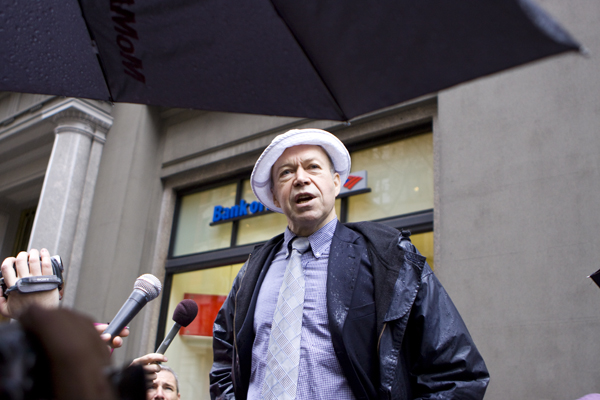
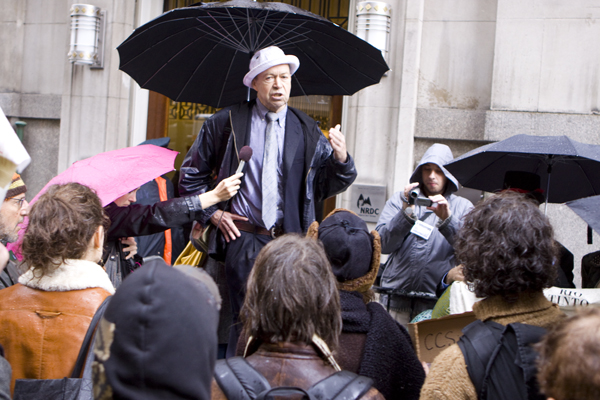
Jim Hanson speaks to activists outside NRDC building in New York

Scientist Dr. Jim Hansen speaks to activists outside NRDC building in New York

“Cap and trade with  offsets would guarantee that we pass climate tipping points, locking in climate disasters for our children. Cap and trade benefits only Wall Street and polluters, sacrificing humanity and nature for their profits.” Dr. Jim Hansen

Will the media and policy makers finally wake up and pay attention after the world’s leading global warming scientists takes the extraordinary and unprecedented step to publicly criticize US national environmental groups for their lax posture on global warming?

Or will the mighty Obama Administration, Democratic Washington DC beltway, and corporate PR Wurlitzer continue to dominate US public opinion?

[Update: NYC Independent media: NRDC Protested For Greenwashing and Support of Carbon Trading and Coal!

Alternet: Activists Protest Environmental Agency for Collaborating With Polluters

After years of battling NJ environmental groups for their support of the symbolic political gesture known as the NJ Global Warming Response Act (see NJ Star Ledger Op-Ed: "No teeth in "tough" pollution law" ) and the fatally flawed Regional Green House Gas Initiative (RGGI) cap and trade program (e.g. see "Lame Global Warming Bill Goes to Governor", and see this and this) (both supported by NRDC), I am so glad that someone is now calling out national environmental groups for similar sell outs.

That much needed criticism could not have come from a more credible source or at a better time - Dr. James Hansen, world renown global warming scientist.
IMG_4458Today, in an effort to pierce the mounting propaganda war in the run up to the global warming treaty negotiations in Copenhagen, world renown atmospheric scientist Jim Hansen broke new ground by calling out both the Bank of America (for financing coal power) AND the Natural Resources Defense Council (NRDC) for supporting fatally flawed "cap and trade" legislation.

I know I was livid when I learned that NRDC supports "carbon capture and storage" (CCS), when NJ Activists are fighting to block a massive $5 billion coal plant called "PurGen" planned for Linden, NJ. That CCS plant would pipe CO2 70 miles out and "store" it 1 and 1/2 miles deep under the ocean.Recently, I wrote:

Why are national “environmental groups” supporting new coal power plants and so called  “clean coal technology”? (link)

I refer to Senate testimony yesterday by Environmental Defense Fund (EDF) and Natural Resources Defense Council (NRDC) in support of the so called “clean coal technology” incentives in the Kerry Senate global warming bill:

Here’s the testimony of NRDC:

I was even angrier at NRDC when I learned that they had done an end run around Copenhagen global negotiations and worked with China on a bilateral US - China coal and CCS deal.

Scientist Jim Hansen speaks to crowd in front of Bankf of America - 5th Avenue and 15th, NYC.

Scientist Jim Hansen speaks to crowd in front of Bank of America - 5th Avenue and 15th Street, NYC.

On the 10th anniversary of the “Battle of Seatle” protests against the WTO, Hansen joined Climate Justice activists in New York as part of a nationwide mobilization and explained why the world is at a critical juncture that requires mandatory steep cuts in emissions, not the flawed market based cap and trade approach of the pending Waxman-Markey and Kerry -Boxer bills. (see this YouTube “The Huge Mistake” for explanation of flaws in cap/trade). Hansen said:

“Cap and trade with  offsets would guarantee that we pass climate tipping points, locking in climate disasters for our children. Cap and trade benefits only Wall Street and polluters, sacrificing humanity and nature for their profits.”

xxxxxx

Dr. James Hansen, one of the world's leading global warming scientists. It is impossible to overstate the courage and integrity of this man

Hansen has joined AL Gore and called for civil disobedience to stop mountaintop mining, block construction of new coal power plants, and force the shut down of existing plants.

Let’s hope that Hansen’s groundbreaking truth telling move to call out big national environmental groups is a game changer.

And let’s hope that the media pierces the spin machine in the run up to Copenhagen and critically scrutinizes government claims. Thus far, it seems like there are major efforts underway, including those by the Obama administration, to spin failure as a success.

Check out photo’s from today’s NYC protest event below:
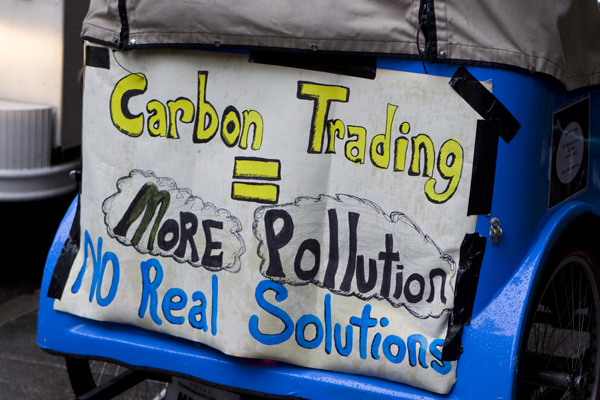
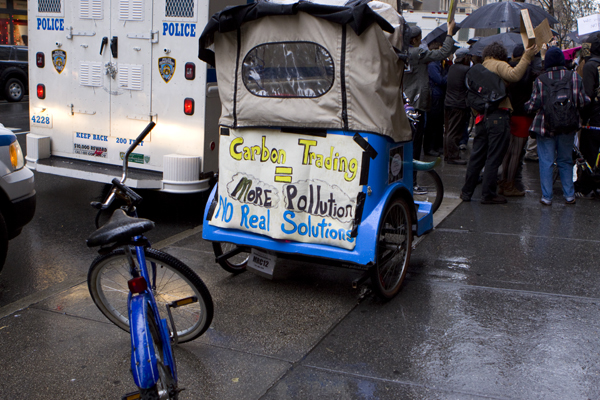
Hansen joined activists to oppose the so called "cap and trade" approach

Hansen joined activists to oppose the so called "cap and trade" approach

Hansen joined activists to oppose the so called "cap and trade" approach

Hansen joined activists to oppose the so called "cap and trade" approach

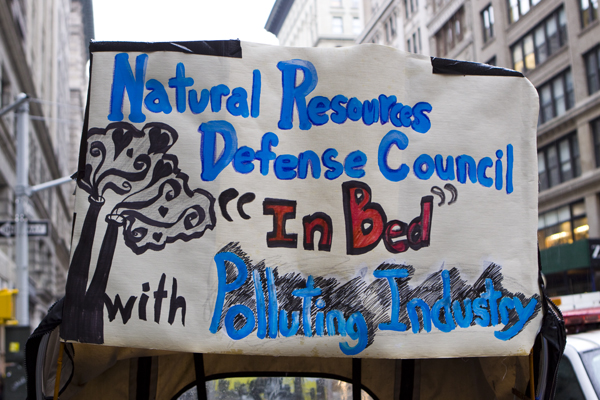
NRDC came in for harsh criticism
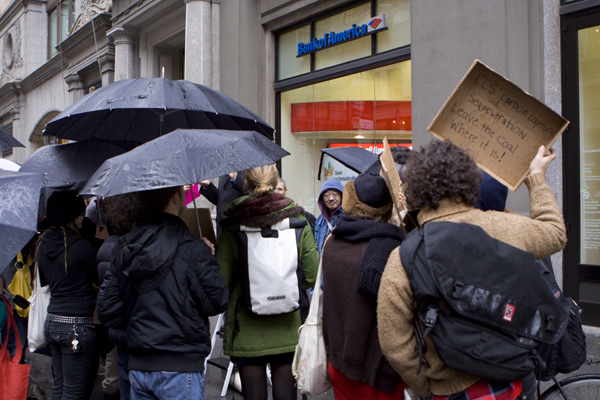
NRDC came in for harsh criticism

carbon capture and storage was called a sham
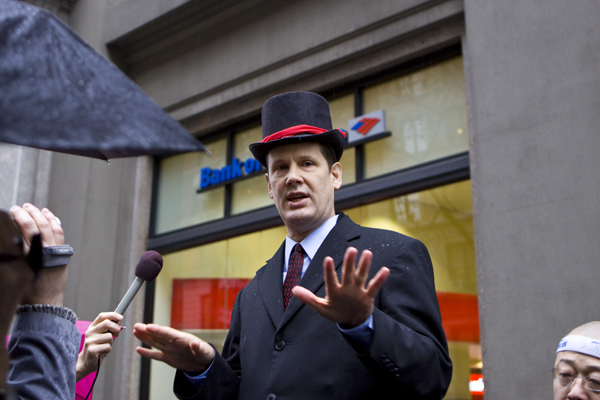
carbon capture and storage was called a sham

bankers in top hats hope to see cap and trade the next speculative bubble
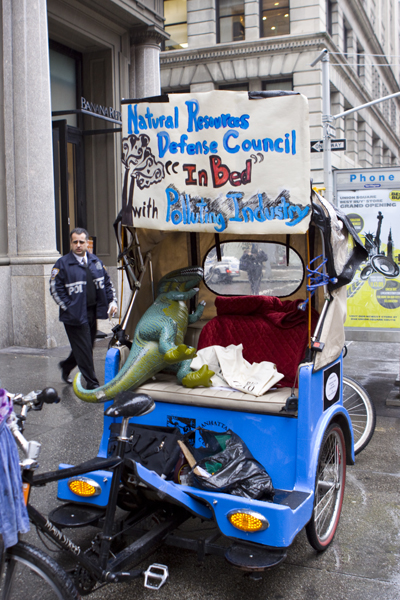
bankers in top hats hope to see cap and trade the next speculative bubble

NRDC was harshly criticized
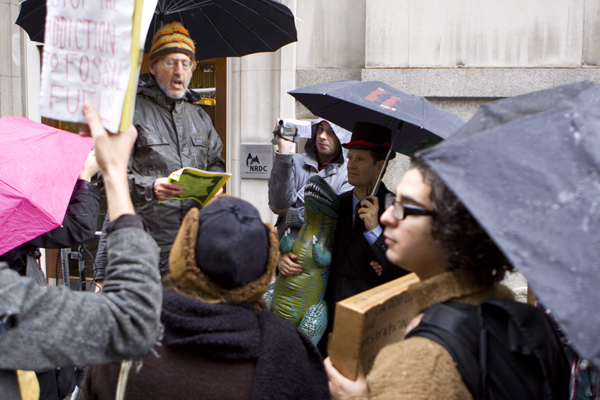
NRDC was harshly criticized

Charles Komanoff, envrioonmental economist adfn founder of teh Carbon Tax Center stressed the need for the proice of emissions to match their  true costs. He urged the need for a policy based on scientific truth, social justice, and democracy.

Charles Komanoff, environmental economist and founder of the Carbon Tax Center stressed the need for the price of emissions to match their true costs. He urged the need for a policy based on scientific truth, social justice, and democracy.

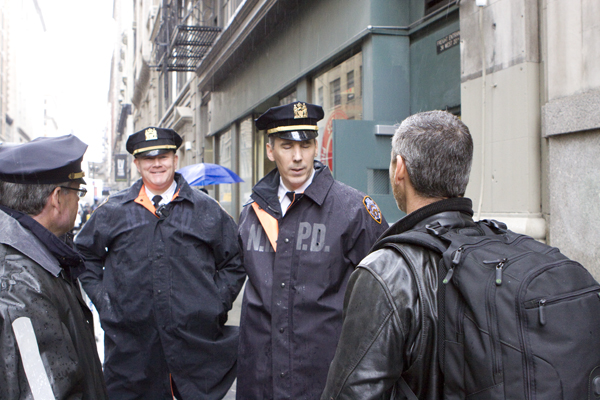
Police had the protestors surrounded at all times

Police had the protesters surrounded at all times
Tim Keating, Rainforest Relief, objects to police blockage of access to NRDC building
Tim Keating, Rainforest Relief, objects to police blockage of access to NRDC building

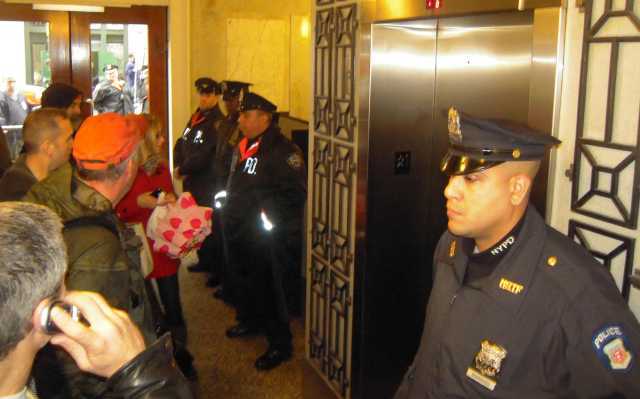
In the lobby of NRDC building - NYC police block access to NRDC offices (that's me in the orange hat!) Source: NYC Independent media story above - all other photo's are mine

In the lobby of NRDC building - NYC police block access to NRDC offices (that's me in the orange hat!) Source: NYC Independent media story above - all other photo's are mine

Categories: Uncategorized Tags:

Beyond Talk – Global Day of Action for Climate Justice

November 29th, 2009 Bill Wolfe 1 comment

If you can make it into Manhattan tomorrow, turn out to this event at noon, at 16th and 5th Avenue

Climate Pledge of Resistance Logo

NOVEMBER 30th – Global Day of Action for Climate Justice

Countdown to N30:

Actions for Climate Justice are Just 3 Days Away!

N30 Actions

The goal of our participation in the MCJ is to send a warning shot across the bows of corporate ‘greens’ who distort climate science on behalf of major polluters. As climate legislation gets redrafted next year, it is critical that these groups are challenged by a new more mobilized and informed environmental movement. We must make clear to them that we will not accept false solutions or inadequate targets, even after Copenhagen fails to result in a meaningful agreement. The new climate bill, which will be drafted for the next Congressional session (2010), must have science-based targets that give our planet and its species a fighting chance and don’t peg our survival on carbon markets, pie-in-the-sky techno-fixes, or ’solutions’ that guarantee the long-term viability of oil, gas, or coal industries.

Categories: Uncategorized Tags:

Passing The Straight Face Test

November 28th, 2009 Bill Wolfe No comments
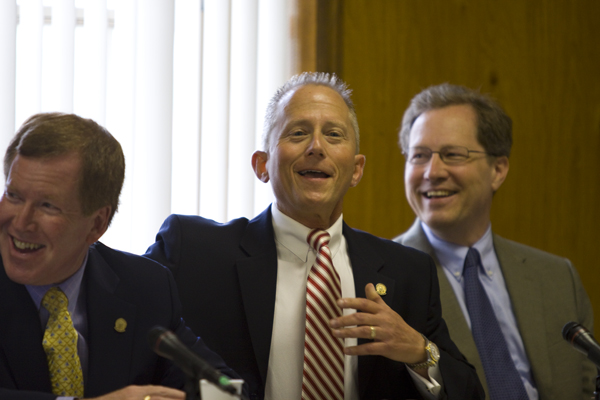
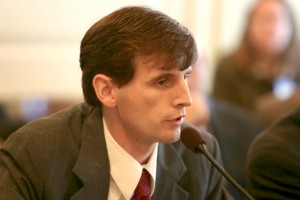
Senator Jeff Van Drew (D-Cape May)

Senator Jeff Van Drew (D-Cape May)

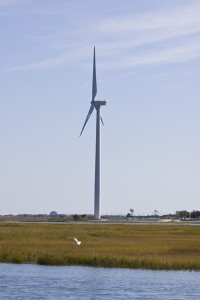
Wind turrbine, Atlantic CIty NJ

Wind turrbine, Atlantic CIty NJ

Senator Van Drew (D-Cape May) recently introduced legislation S3012 to promote wind power by easing current DEP coastal set back rules:

This bill allows construction of wind dependent energy facilities within 500 feet of the mean high water line of tidal waters pursuant to the “Coastal Area Facility Review Act,”(CAFRA)  provided all other requirements of law, rule or regulation are met.  Current DEP regulations permit only water dependent energy facilities to be constructed within 500 feet of the mean high water line.  This bill also directs DEP to adopt rules and regulations concerning such permits within 30 days after the date of enactment of the bill into law.

The intent of the Van Drew bill drew praise from Dave Pringle of the NJ Environmental Federation, who took the opportunity to blast DEP CAFRA wind rules:

Dave Pringle, NJ Environmental Federation

Dave Pringle, NJ Environmental Federation

David Pringle of the New Jersey Environmental Federation says despite concerns over the impact of windmills on migratory birds, the structures are less invasive than large housing developments, casinos or other structures built on piers. Pringle says current restrictions on clean energy are too stringent.

They (state government) hold clean renewables like wind energy to a higher standard than the Borgata (casino) or a large housing development,” he said. “That doesn’t pass the straight-face test.” [link to Philadelphia Inquirer article]

But we note that on September 9, 2009, DEP proposed new CAFRA regulations, which would ease current set back rules, among other things:

SUBCHAPTER 7. USE RULES
7:7E-7.4 Energy facility use rule

The Energy facility use rule contains the standards specific to various energy uses. N.J.A.C. 7:7E-7.4(b) contains standards relevant to siting of any new energy facilities, whereas N.J.A.C. 7:7E-7.4(d) through (s) contain standards specific to a particular type of energy use. The Department proposes to amend the energy facility siting standards at N.J.A.C. 7:7E-7.4(b) to reduce the existing setback for wind and solar energy facilities. The rule currently requires that new energy facilities that are not water dependent be located at least 500 feet inland of the mean high water line of tidal waters. Proposed N.J.A.C. 7:7E-7.4(b)3 would reduce the setback to 50 feet for wind and solar energy facilities, since these facilities would not be anticipated to have the same mass and impact as other energy facilities addressed by this rule. The Department believes that reducing the setback from 500 to 50 feet will facilitate siting of these renewable energy facilities while providing an adequate setback for wildlife use of tidal waters.

The DEP CAFRA rules are virtually identical to the Van Drew bill with respect to easing the current 500 foot set back to promote wind and solar power.

The Van Drew bill drew support of Pringle – the DEP CAFRA rules were denounced by Pringle.

We realize that there may be other provisions of the DEP CAFRA rules that are not addressed by the Van Drew bill. But as a matter of good government, such technical issues should be resolved by DEP in regulations, not micromanaged by legislative amendments.

Regardless, passing the straight face test requires that one read the Van Drew bill and the DEP rules, and understand the issues.

Additionally, Governor Elect Chris Christie’s proposed moratorium on new regulations would block adoption of the proposed DEP CAFRA wind rules.

Yet the Van Drew bill directs DEP to adopt rules within 30 days of passage.

In the unlikely event that the Van Drew bill were to pass quickly, it too would be blocked by the Christie moratorium.

Passing the straight face test requires full disclosure as well.


Categories: Uncategorized Tags:

New Jersey’s Steeples – Reaching Toward The Divine?

November 28th, 2009 Bill Wolfe No comments
groundwater monitoring well, symbol of pervasive toxic contamination (on farmland), forms foreground of church steeple (Hopewwell Borough)

groundwater monitoring well, has become NJ's symbol of pervasive toxic contamination (on farmland no less), forms foreground of church steeple (Hopewell Borough)

[Source: Wikipedia]

Steeple (architecture)

A steeple, in architecture, is a tall tower on a building, often topped by a spire. Steeples are very common on Christian churches and cathedrals and the use of the term generally connotes a religious structure. They may be stand-alone structures, or incorporated into the entrance or center of the building.

Architectural

Steeples generally serve as bell or clock towers. Towers were not a part of Christian churches until about AD 600, when they were adapted from military watchtowers. At first they were fairly modest and entirely separate structures from churches. Over time, they were incorporated into the church building and capped with ever-more elaborate roofs until the steeple resulted.

Towers are a common element of religious architecture worldwide and are generally viewed as attempts to reach skyward toward Heavens and the Divine.[1]

IMG_4242

IMG_4270

can you find the monitoring well?

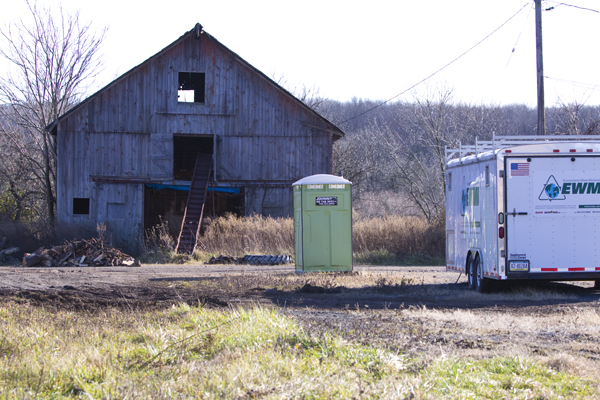
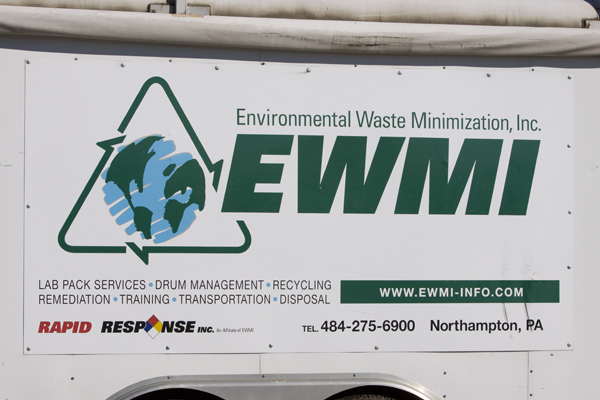
Old barn, porta pottie, and toxic site cleanup truck. Hopewell Borough, NJ

Old barn, porta pottie, and toxic site cleanup truck. Hopewell Borough, NJ

the old (background) and the new come together in Hopewell Borough, NJ

the old (background) and the new come together in Hopewell Borough, NJ

sign of the times -

sign of the times - are we reaching toward the divine?

IMG_4277

IMG_4300

Categories: Uncategorized Tags:

NJ’s Oyster Creek Poster Child for “Zombie Nuke Plants”

November 27th, 2009 Bill Wolfe No comments
Salem, NJ nuke plant

Salem, NJ nuke plant

In a critically important article aptly titled “Zombie Nuke Plants“, The Nation magazine – spurred by recent radioactive leaks from the Three Mile Island plant – is focusing national attention and catalyzing a debate on the risks from aging nuclear power plants.

And  NJ’s own Oyster Creek is the poster child for the problem:

Oyster Creek Generating Station, in suburban Lacey Township, New Jersey, opened the same month Richard Nixon took office vowing to bring “an honorable peace” to Vietnam. This nuke plant, the oldest in the country, was slated to close in 2009 when its original forty-year license was ending. It had seen four decades of service, using radioactively produced heat to boil water into high-pressure steam that ran continuously through hundreds of miles of increasingly brittle and stressed piping.

If constructed today, Oyster Creek would not be licensed, because it does not meet current safety standards. Yet on April 8 the Nuclear Regulatory Commission (NRC)–the government agency overseeing the industry–relicensed Oyster Creek, extending its life span twenty years beyond what was originally intended.

Nuclear power has been spun as a technological solution to the global warming crisis.  But regardless of the debate about the so-called “nuclear renaissance”, (which we wrote about in “Final Nair In Nukes Coffin?”), far more significant risks are posed by the nation’s aging fleet of 1960’s and 1970’s designed nuclear power plants that are operating beyond their design life.

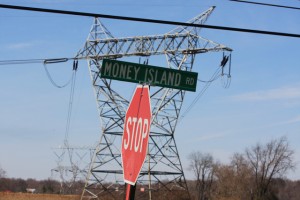
Money Island - distribution lines just north of Salem plant

Money Island - distribution lines just north of Salem plant

Nuclear industry capture of and control over the Nuclear Regulatory Commission (NRC), a lax safety culture, deregulation, and economic drive for profits are creating huge risks as these plants age and are “up-rated” to produce far more power and operate at unsafe levels.

Read the complete article here:

And a few words while  we are on the topic of Oyster Creek.

BEFORE the election, I received the below “Vote Christie”  statement from the NJ Environmental Federation.

Note the deceptively parsed language alleging a contrast with Corzine on installation of cooling towers at Oyster Creek nuclear power plant to protect Barnegat Bay:

On Election Day Vote Environment-Vote Chris Christie

Contrary to Corzine, Christie has committed to the following as you already know:
• Increasing protections for our most vulnerable and important waterways through the state’s Category 1 program;
• Replenishing the state’s bankrupt open space program;
Requiring the state’s nuclear plants to stop their destruction in and around Barnegat Bay and the Delaware River;
• Opposing the proposed coal plant in Linden; and
• Issuing an executive order to reduce killer diesel soot pollution.

Noting a lot of ambiguity and unsure of what NJEF meant by the weasel words “stop their destruction“, I went over to the Christie web page and – curiously – found a much clearer commitment with respect to the Oyster Creek cooling tower issue. Christie strongly implied a promise to install cooling towers, although the word smithing still gave him an out on the basis of “putting the taxpayers on the hook”. Regardless, one still must ask: why would a candidate – a person expected to hedge on controversial issues – express a clearer commitment than an environmental group?

Here’s what Christie promised on cooling towers:

Restoring the Delaware and Barnegat BayI will make it a priority to identify and implement strategies for better cooling systems at Oyster Creek and Salem. We cannot ignore this issue. I will not. There has to be a better way to cool Oyster Creek and Salem without putting – New Jersey taxpayers on the hook, and we will do it.

But JUST DAYS AFTER the election, Christie was asked point blank by Kirk Moore (environmental writer for the Asbury Park Press) about his views on cooling towers at Oyster Creek, to which Christie replied:

“For Barnegat Bay, Christie said he will seek a solution for the issue of cooling water discharge from the Oyster Creek Nuclear Generating Station, though he stopped short of an outright commitment to requiring that cooling towers be built at the 40-year-old reactor.”

So, WTF is going on here?

1. Why has Christie been given a pass from running away from a major – and one of his only environmental – “commitment” upon which the NJEF endorsement was based?

2. The Asbury Park Press has extensively covered and editorialized on the Oyster Creek cooling tower issue. Yet it looks like the Kirk Moore story with the Christie Oyster Creek statement was not published in the APP. It instead ran in the Nov. 7 Courier Post under an inflammatory and diversionary headline: “Christie: COAH “has to be gutted”.

Why didn’t this story run in the APP? (the headline could have been “Christie Waffles on Oyster Creek Cooling Towers”

3. Why is no one calling out Christie and NJEF for this deception?

Categories: Uncategorized Tags:

Token “environmentalist” appointed to Christie Transition Team

November 25th, 2009 Bill Wolfe 1 comment

[12/5/09 update: Mixed reviews for Christie environmental group

Yesterday, we were disappointed but not surprised by the NJ Environmental Federation's press remarks. NJEF joined the chemical industry, NJ Builders Association, and business groups in supporting Governor elect Chris Christie's controversial proposed moratorium on state regulations and state mandates. Dave Pringle of NJEF seems to fail to understand the difference between refraining from criticizing Christie, versus supporting his policy. Guess Dave will have to learn the hard way - and do some thinking on where his loyalties lie. Credibility is at stake as well, because the policies Christie has already announced have long been condemned by NJEF when implemented by Christie Whitman and prior Governors.

We assumed that this rancid political cover was a result of the NJEF endorsement of Christie.

Dave Pringle - token enviro on Christie transition team

Dave Pringle - token enviro on Christie transition team

But today we learn things are both more complex and corrupt – Dave Pringle of NJEF was named as the token enviro on the Christie “Environmental Protection” transition team. Previously, we wrote about the lack of balance and environmental representation on the original Transition Team announced by Christie (see: “Christie Transition Team – MIA on the Environment”)

No wonder Pringle provided cover on the regulatory moratorium – the transition team appointment was the reward for the  endorsement. Of course Dave couldn’t be expected to tell the inconvenient truth about his new boss or get out front of his new corporate pals on the “team” .

The environmental committee is chaired by Marcia Karrow, who we described last week here:

Christie, by the way, just announced that Marcia Karrow, a Hunterdon County legislator and vigorous opponent of the Highlands Act and DEP regulations, will chair the transition team’s environment subcommittee.

(see this for an example of Karrow’s style and take a look at some of the bills she sponsored: 1) an overt attempt to gut DEP rulemaking or 2) this radical property rights bill or 3) the Polluters Defense Act) or 4) this all out attack on the Highlands Act, the Council and DEP regulations: 0r 5) repeal of core elements of the Highlands Act and DEP water regulations; or 6) farmers water giveaway (and I left out lots of other crazy right wing stuff, like mandating English as the “official” state language (I wonder how environmental justice advocates feel about that), restoring the death penalty, expanding gun rights, radical property rightsattacks on urban NJ and public employees, and promotion of the dysfunctional California minority rule.)

So, meet the Christie environmental transition team – we must note one error: I worked with John Trela while he was at DEP and he was never DEP Commissioner. I worked with John Spinello while he was at DEP (before he went to EPA with Christie Whitman) – he is highly competent, but has been known to be an “environmental hitman“. I worked with Rhea Brekke while she was at DEP and will be kind and just say I am not impressed. Anthony Mauro has right wing tendencies – he accused NJ environmental groups of “providing cover for eco-terrorists“. See this blog post and exchange I had with Mr. Mauro.

We will be writing more about the backgrounds of each member in subsequent updates – I’ve provided quick Google links below to corporations (warning: these are not confirmed). My initial take is that this looks like a high powered corporate anti-environmental group.

Environmental Protection
Chair, The Honorable Marcia Karrow
Former State Senator, 23rd District

John Abene President,
Delphi Energy

Peter deNeufville
Chairman, Voltaix, L.L.C.

Anthony Mauro, Sr.
Chairman, New Jersey Outdoor Alliance

David Pringle Campaign Director,
New Jersey Environmental Federation

Steve Santola, Esq.
Executive Vice President/General Counsel, Woodmont Properties

John Spinello, Jr., Esq.
Former Associate General Counsel, U.S. Environmental Protection Agency

Edward Walsh
President, The Walsh Company

Anthony Slimowicz
Director, WCD Capital Partners, LLC

John Trela, Ph.D.
Former Commissioner, Department of Environmental Protection

Rhea Brekke
Executive Director, New Jersey Corporation for Advanced Technology

Tony Monteiro
CEO, Dynamic Insurance Inc.

John Sartor
Exectuvie (sic) Vice President, Paulus, Sokolowski & Sartor, LLC

Joseph Riggs
Group President, K. Hovnanian Homes

Bruce Katcher, Esq.
Partner, Manko Gold Katcher & Fox LLP

Categories: Uncategorized Tags:

Environmental Federation Joins Chemical Industry, Builders, & Business Groups in Support of Christie Rule Moratorium

November 24th, 2009 Bill Wolfe 2 comments
Dave Pringle, NJEF - providing political cover for Christie already

Dave Pringle, NJEF - providing political cover for Christie already

It is no secret that the NJ Environmental Federation (NJEF) endorsement of Chris Christie prompted harsh criticism by environmentalists.

It is also no secret that, during the campaign Christie sent some extremely disturbing signals about his environmental policy.

Since the election, Christie’ two most concrete acts of concern are an early betrayal of his promise to require installation of cooling towers at the Oyster Creek nuclear plant to protect the aquatic life of Barnegat Bay; and his plans to impose a moratorium on regulations and state mandates to make it “easier for business” (while seeking “horror stories” about rules from the Chamber of Commerce, and appointing fiercely anti-environment Hunterdon County legislator Marcia Karrrow to Chair the environment transition team).

In the clearest indication of the shape of things to come, remarkably NJEF today joined the chemical industry, NJ Builders Association, and business groups in supporting Christie’s controversial proposed rule moratorium. Today’s Asbury Park Press reports:

Eco-Lobby frets over rules freeze

By TODD B. BATES • ENVIRONMENTAL WRITER • November 23, 2009

Gov.-elect Chris Christie won a surprise endorsement from an environmental group during his campaign, but some activists are wary of his plan to freeze proposed state rules and review red tape. …

But business and builder groups like Christie’s stance.”We applaud the governor-elect’s efforts to do what he can to streamline Trenton,” said Amy J. Whilldin, communications director for the New Jersey Builders Association. … Hal Bozarth, executive director of the Chemistry Council of New Jersey, an industry trade group, thinks the rule freeze and red tape review are good ideas and hopes the focus will be on things that make New Jersey anti-competitive.

Not surprising, exposing the game early, the Christie folks used the NJEF endorsement as cover for their clearly anti-environmental policy, choosing not to defend that policy and instead to rely solely on the NJEF endorsement as political cover for the regulatory moratorium:

Obviously, Chris has a strong commitment to environmental protections” that was demonstrated by the New Jersey Environmental Federation’s endorsement of him, said Maria Comella, Christie’s spokeswoman.

And NJEF went right along with the charade – a transparent attempt to avoid embarrassing criticism for their hugely mistaken endorsement:

David Pringle, campaign director for the New Jersey Environmental Federation, said “the state has a lot of inefficiencies and overlapping and conflicting rules, and there’s plenty of things that have absolutely no impact on environmental and public health protection.”

But flat out contradicting Pringle’s spin, the APP reports on just some of the DEP environmental rules that would be impacted (for a full list, see this post)

The Department of Environmental Protection, for example, has 18 proposed rules, including one that would cover wind turbines and solar panels in the coastal zone. …

In a letter last week, Christie asked Corzine to freeze all pending regulations that would result in additional spending.

Pending DEP proposals would readopt safe drinking water and water pollution control rules; require lower-sulfur, less-polluting fuel oil; set standards for wind and solar facilities in the coastal zone; and set a limit for perchlorate, a rocket fuel chemical, in drinking water.

Something is seriously wrong when a purported environmental  group becomes incapable of telling the truth, and instead engages in all sorts of  political spin to mislead the public and avoid criticism of their guy, Chris Christie.

Telling the truth would amount to self criticism for their endorsement – and I guess, in politics, that’s too much to ask.

But, NJEF is a purportedly democratic organization.

So those that are members of NJEF or that write checks for financial support to NJEF fundraisers should let the NJEF Board know about their concerns.

PS – Pringle thinks NJEF has some kind of “assurance” from the Christie folks -

We’ve received assurances and are confident that whatever transpires will not (undermine) environmental and public health protection,” he said.

Hey Dave, if you have that deal locked up, then why didn’t the Christie’s spokesperson confirm it? Hell, they didn’t even acknowledge it! (or are you still naive enough to think they will go against their business backers and side with protecting the environment?)

Notice that Camela, Christie’s spokesperson said NOTHING about any commitment to NJEF or plans to exclude environmental rules from the moratorium.

You got suckered, plain and simple. Best to admit that now, tell the truth, and stop digging the hole you’re in deeper.

Categories: Uncategorized Tags:

The Case For Government Regulation

November 23rd, 2009 Bill Wolfe No comments

Last night, I watched (and strongly recommend) C-SPAN’s tape of former NY Governor Eliot Spitzer’s address at Harvard,  “On Government and the Market Economy” (Spitzer’s suggested title, which I like better than CSPAN’s, was: “From Ayn Rand to Ken Feinberg: How Quickly the Paradigm Shifts“).

Spitzer spoke about 3 things:

1) parameters and principles to justify government intervention in the market;

2) the current financial crisis, major flaws in the Wall Street bailout, and the need for specific reforms, particularly to promote jobs; and

3) flaws and needed reforms in corporate governance.

I will focus here only on the first, the justification for government regulation.

Given that I’ve spent my career in government on regulatory policy, and recently have been writing about our new Governor’s environmental policy, I thought it might be a good opportunity to lay out Spitzer’s justification for government intervention. His arguments have direct relevance not only to current policy debates over financial markets and regulation, but for drug safety, consumer protection, and environmental protection regulation as well, which are driven by the same market forces. The transparency, integrity, and market failure issues are broadly relevant to even the field of science, which relies on complete disclosure of data. Spitzer illustrated this with a disturbing drug safety case, where the pharmaceutical industry failed to disclose adverse health effects data from clinical trials.

I also can’t avoid taking this opportunity to note the huge intellectual and ideological contrasts between Spitzer (a former NY Governor and 2 term Attorney General) and the NJ Governor elect, a former US Attorney. Hands down, Christie is far outmatched by Spitzer – it’s like the NY Giants versus the local high school team. If you don’t want to take my word for it, just consider the simple contrast that Spitzer has spent his career prosecuting big time Wall Street fraud, while Christie has focused on small time local government crooks. Or watch the C-SPAN show (link above) and decide for yourself.

Whether you agree with Spitzer or not on policy, you must agree that he is both far more articulate and intellectually powerful than Christie, who comes off as a lightweight by comparison.

Spitzer managed to be substantive and accessible, without being theoretical, pedantic or lawyerly. While he focused on policy, he didn’t hesitate to talk about the political aspects, including calling out those personally responsible for policy and market failures, as well as the flawed and failed theory and public policy that caused the current financial collapse.

His inside story about a personal threat from lawyers from Merrill Lynch was chilling. A ML lawyer tried to intimidate Spitzer and back him off his prosecution with the mob-like threat: “Be careful, we have powerful friends“. (I wonder, were they the ones who arranged for Spitzer’s prostitution wire taps et al?)

Spitzer began by noting the collapse of financial institutions, which he attributed to failures of government regulation and markets. He stressed the need for analysis and dialogue of the causes of these failure, and for reform. But, in a somewhat elitist fashion, he found the voices of those he called “the angry populists” as unhelpful as the ideological libertarian followers of Ayn Rand who caused the problem.

He traced the recent policy history, and noted the vast shift in the intellectual paradigm from Reagan free market libertarianism to a far more interventionist approach, which he illustrated by a government bureaucrat, Ken Feinberg, controlling Wall Street CEO compensation. He used this observation to note how quickly the paradigm had shifted, given the financial collapse.

He then laid out 4 parameters that justified government intervention in the economic marketplace:

1. Only government can enforce rules related to integrity and transparency in the marketplace.

Spitzer rehashed his successful criminal investigations of Wall Street fraud and corruption. He outlined gross conflicts of interests and lack of transparency that corrupt market transactions. Basically, when faced with the choice of integrity or profits, or integrity and market share, Wall Street chose profits. The market drove those rational decisions, which destroyed the integrity of the market, and created systemic risks, which in turn ultimately led to market failure and financial collapse. Individual firms could not be honest, because that would put them at a competitive disadvantage. They needed system-wide rules. Competition and the drive for profits and market share led firms to lie.

Transparency, honesty, and integrity are preconditions of functioning markets. Contrary to libertarian and free market ideologists, the market can not police itself. Only government can police the market.

2. Only government can prevent exercise of monopoly power and ensure effective competition through anti-trust law enforcement.

Markets tend toward monopoly. Monopoly is inefficient, blocks technological innovation, reduces productivity, and deprive consumers of the benefits of vibrant competition.

3. Only government can intervene to change the way the market behaves and mitigate externalities.

Externalities are costs (or benefits) that are not accounted for in a market transaction (i.e the price of a good or service). Spitzer spoke of a classic example of air pollution from mid-western coal power plants. To meet local air quality standards in Ohio, those plants built tall smokestacks that shifted pollution costs from Ohio to NY state. This externalized the costs or electric power. As NY Attorney General, Spitzer sued these plants under the Clean Air Act. Only government can mitigate externalities, which are pervasive in the environmental policy arena.

(Note: although Spitzer didn’t specifically mention them, there are at least two additional solid justifications for government intervention. The first is what economists call “public goods“, like clean air or clean water. The second is what is called “inter-generational equity” or considerations of the future. Residents of the future can’t participate in current market transactions.)

The aggregate of excess debt is an externality. Too much debt is a threat, or systemic risk. Government has to intervene.

4. Only government can protect core social values from the ravages of the marketplace

Spitzer called this the most elastic of the justifications, but the most important. He used discrimination and minimum wage as examples.

Free market theorists’ arguments that discrimination is inefficient and therefore will be eliminated by competitive markets is just wrong. Social factors over-rode market  rationality, so discrimination persisted. Only government intervention via laws was effective. Similarly, we have made a societal value judgment in minimum wage, There is no market justification for social policy. Ayn Rand and the libertarian free market fundamentalists are wrong. The angry populists are equally wrong. Government must be active in protecting  consensus core social values.

On the whole, I found Spitzer’s policy diagnosis right on the mark and his aggressive prescription refreshing, especially compared to the weak kneed response of the Obama Administration, which is captured by Wall Street.

The only thing I was turned off by was his politics, which amounted to an elite dismissal of the “angry populists”, who I think are an important allie and required to create the bottom up movement like political pressure to force a policy solution.

Categories: Uncategorized Tags: