Archive

Archive for August, 2011

Christie Administration Dodges Water Infrastructure Deficits, Blames Regulatory Oversight
August 31st, 2011 No comments
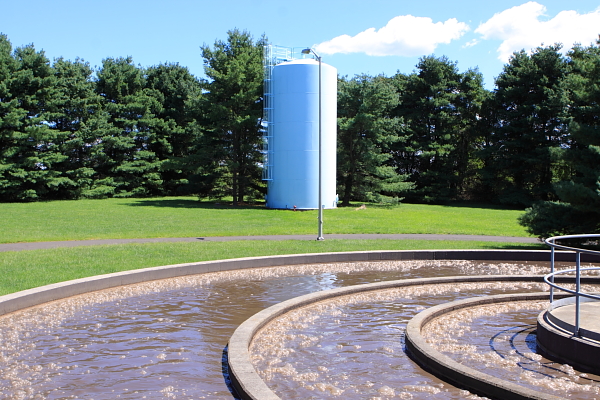
wastewater treatment plant - over 30 year old technology in need of upgrades

wastewater treatment plant - over 30 year old technology in need of upgrades

Higher Water Rates – Bigger Profits – Dirty Water – Less Accountability on The Horizon

Tom Johnson at NJ Spotlight writes today about a Christie Administration proposal to reduce Board of Public Utilities (BPU) regulatory oversight of how private water companies and public authorities recover the costs of investments in infrastructure upgrades (see:

Water Utilities May See Faster ROI for Infrastructure Upgrades -State agency’s proposal would mean speedier recovery of costs and less regulatory oversight

The proposal grew out of the Christie Administration’s infrastructure asset management and financing” initiative discussed at last October’s Clean Water Council annual public hearing at DEP.  BPU President Lee Solomon spoke at that hearing – see:

Clean Water Council Considering Privatization

At that time, the Gorilla in the Room shining a bright light on NJ’s aging infrastructure was not a huge hurricane and severe flooding, but the emergence from another serious statewide drought (see:

The Christie proposal amounts to another incremental (and stealth) step down the road of privatization and deregulation.

Again, the Christie Administration misdiagnoses public policy problems and diverts the focus, thus frustrating real reform.

This misdiagnosis is the result of pervasive themes in the Christie Administration, including:

  • a deep hostility to government, regulation, and independent local public authorities
  • a fact free faith in private sector and markets
  • ideological opposition to raising public sector revenues (AKA “starve the beast”)

The basic problem is underinvestment, not regulatory oversight.

Slogans like cutting “Red Tape” will not close NJ’s $28 billion water infrastructure deficit.

Drinking water infrastructure deficits exceed $8 billion and waste-water exceeds $20 billion.

So, if, as Tom Johnson reports, the private water companies and the Administration are seeking a “regulatory mechanism” to “minimize impacts on customers”, then I say retain the current traditional rate base rate of return regulatory oversight mechanism.

But, if what they really seek are higher profits while dodging public accountability and avoiding raising the money to finance needed investments, then by all means proceed with the Christie proposal.

That will produce higher profits for private corporations, while consumers will pay higher bills for the status quo.

The policy discussion must include DEP mandates for utilities to conduct infrastructure assessments and then make necessary upgrades.

There must be DEP enforcement driven mandates for investment in infrastructure.

If not, our huge infrastructure deficits will continue to go unaddressed, as the private sector will not make these investments and public authorities will not take on the fight due to local political pressure to control user rates.

But, of course these views were not considered, as I’ve been blackballed from participation in any Christie hand picked “Stakeholder group”.
Categories: Uncategorized Tags:

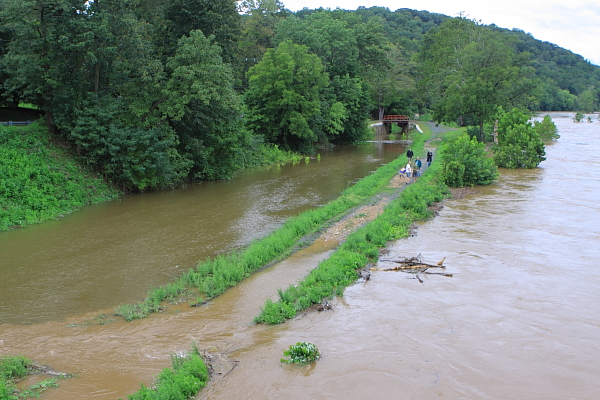
Some Delaware River Scenes From Irene

August 28th, 2011 1 comment

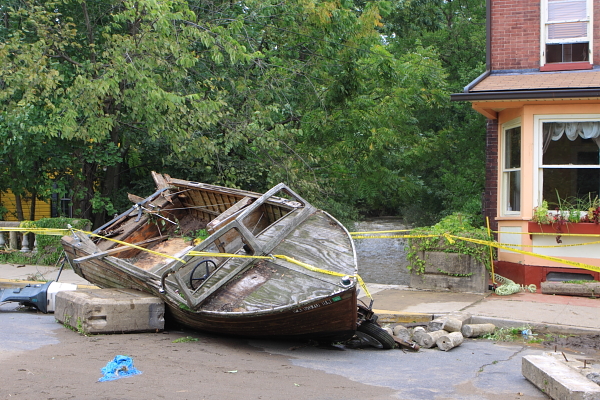
[Update 4 - 9/2/11 - Did a United Water reservoir dam release cause a "wall of water" to flow down Swan Creek? (see boat in road below). see:

One thing is for sure, if a United Water dam release caused the flash flood, it certainly does matter, suspending parking fees is what doesn't matter, and Mayor Delvechio will eats these words:

“We’ve asked them [United Water] in writing. There’s only one way to be sure. When we hear back, we’re happy to make that public. We have three hills and the water came off all three hills.There are enough people with concerns about it that saw the flow.”

In the meantime, DelVecchio said, there are more pressing tasks.

“We have to question formally, but now we go back to the cleanup, because in some ways … it doesn’t matter,” he said. DelVecchio has ordered that all parking meter fees in the city be suspended a few days so residents can mobilize to repair the damage.

Residents should file OPRA requests to DEP and United Water to get a hold of the emergency response plans, United operating logs, and documentation of all communications between United and DEP. – end update]

Update 3 – 8/30/11 – River crested at Stockton at 18.6 feet, more than 5 feet less than the prediction I originally quoted of almost 24 feet. I wonder what explains that?

These photos are shot traveling by bicycle – I’ll try to head south today to see Rt. 29 washout in  Hopewell. Gotta wait for morning rush chaos to diminish, because I need to travel by road at least 8 miles to reach the Canal Town Path. But my favorite route is to take back road to Hunter Road, bomb down that hill (by Wheelfine bike store on Rt. 518), wind up behind Howell History Farm, and then shoot down Pleasant Valley Rd to Rt. 29.]

Update 2 – 8/29/11additional photos below]

Update 1: Monday, 8/29/11 8:30 am- Looks like good news, but George Orwell must be in charge of NOAA’s “Advanced Hydrological Prediction Service” – the peak flood stage has been reduced several feet (20.6 feet), yet you’d never know that. Yesterday’s projections are down the memory hole. Pretty nifty, eh? Errors never made!

Away, You Rolling River! - end update.]

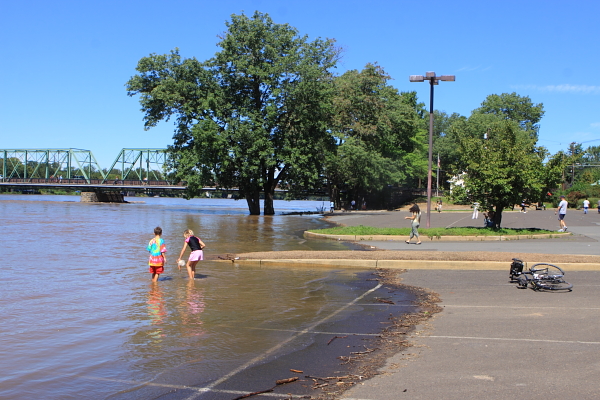
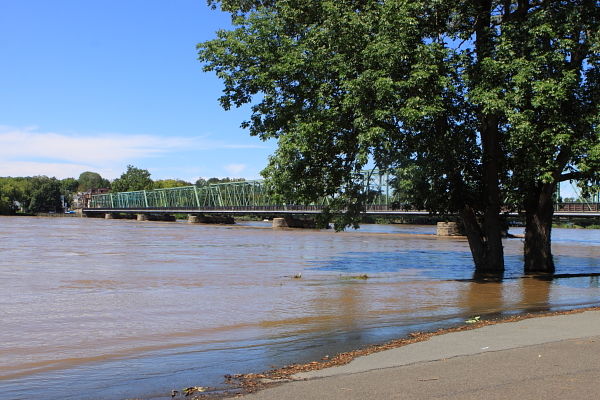
Got out of the house mid morning and did a local tour. Delaware River flood-waters are projected to peak tomorrow at Stockton at about 5 am at 24 feet, 6 feet above flood stage and a major flood event.

That would rank Irene as the sixth highest flood elevation ever -

In the last decade, the Delaware has seen 4 of its top ten record floods in over 170 years of records posted (see this history)

Think of the interaction of global warming (more frequent and intense storms) and destruction of the landscape and natural hydrological cycle by development (more and faster stormwater runoff), which vastly increase risks and storm damage.

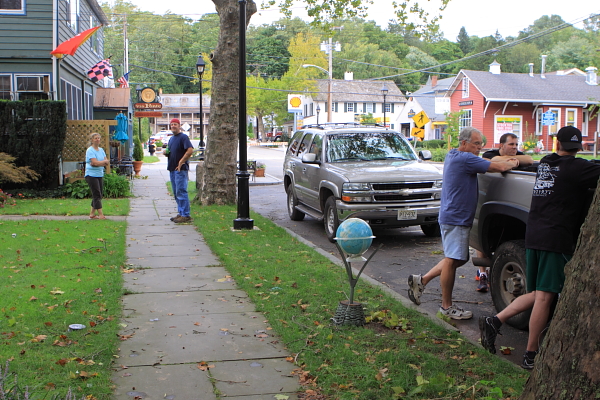
But enough with the data – ever notice that disasters are one of the few times that neighbors talk to each other and people freely congregate in numbers on the street?

It was one of those days on Main Street in Delaware River communities Stockton and Lambertville today. Take a look:

Stockton – Stockton got hit hard last night with flash floods, but folks were out chatting about the rising river. A “major flood” 24 foot stage is predicted for tomorrow morning, triggering a mandatory evacuation by 4 pm today.

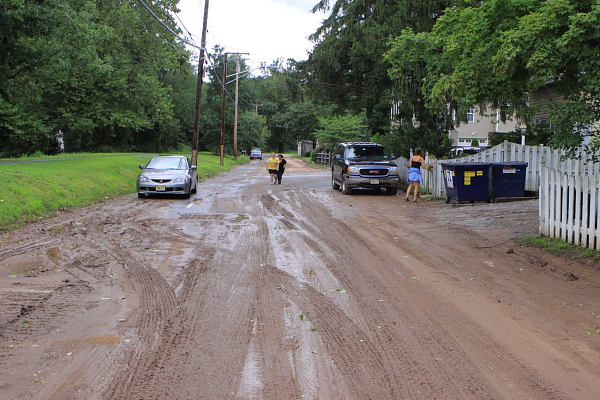
(N Railroad Ave.) Cars were floating in several feet of water here last night

(N Railroad Ave.) Cars were floating in several feet of water here last night

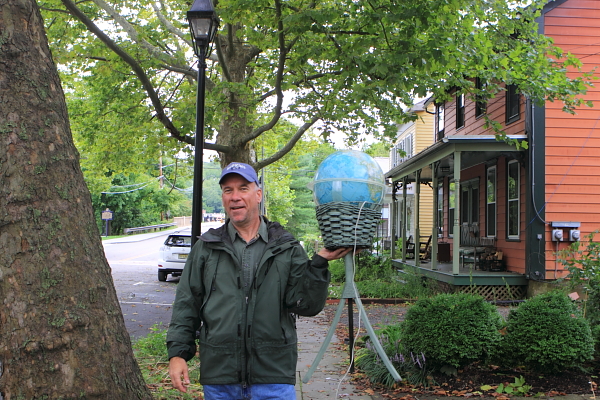
I came across this globe, in a plant stand. Is an upside down planet a distress signal, like an upside down flag? Was this some kind of creative statement about global warming?

upside down globe at curb is ignored, as neighbors chat. What's up with that?

upside down globe at curb is ignored, as neighbors chat. What's up with that?

Nope – it was just being thrown out.

But maybe that is the statement? The Earth is trashed – we’re fucked!

So I picked it up! (and the light even works!) – Hell, tell Bill McKibben to relax: I got the whole world in my hands!

Irene4

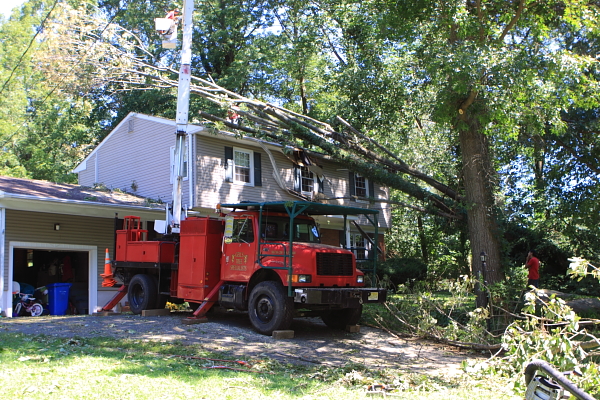
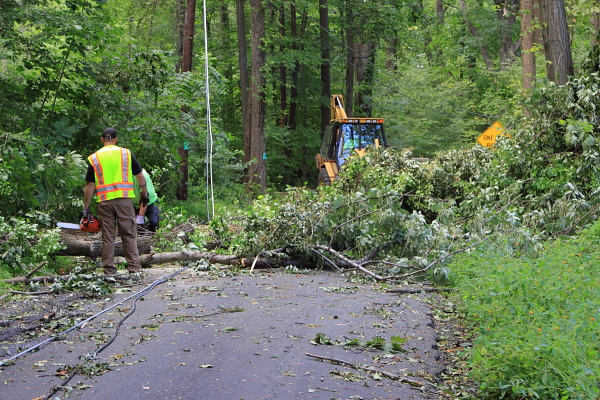
Rt 29 and 519 - Overall, surprisingly few trees down

Rt 29 and 519 - Overall, surprisingly few trees down

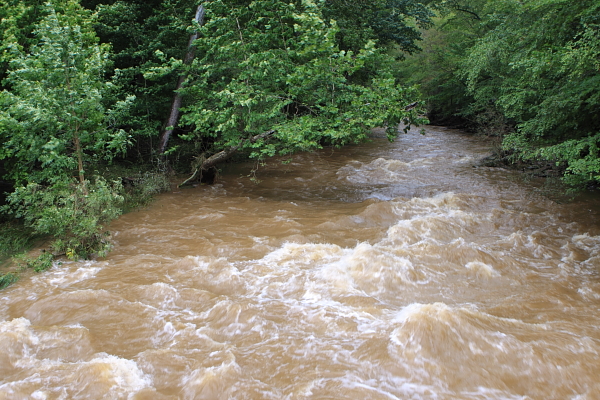
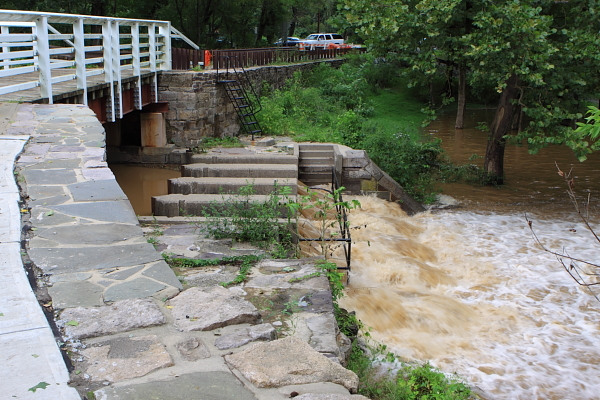
Wickecheoke Creek is roaring, just north of Rt. 29 and Prallsville Mills

Wickecheoke Creek is roaring, just north of Rt. 29 and Prallsville Mills

Lambertville

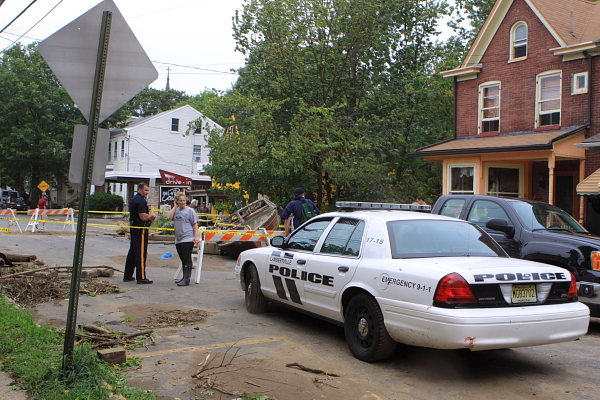
(South Union Street). Boat washed up in road, over bridge across Swan Creek, in background

(South Union Street). Boat washed up in road, over bridge across Swan Creek, in background

South Union Street, at Swan Creek bridge.

South Union Street, at Swan Creek bridge.

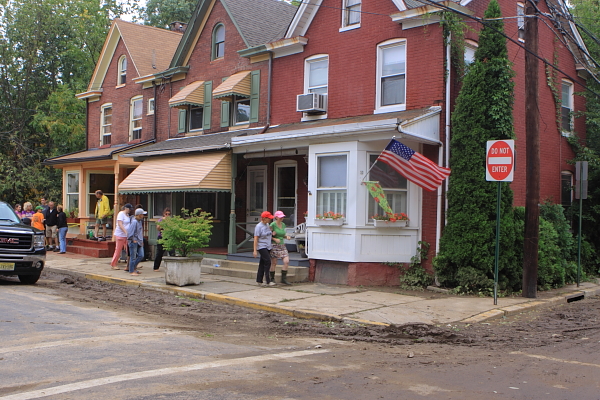
All American flood scene - this spot will be under 2-3 feet of water by tomorrow morning. Get used to it.

All American flood scene - this spot will be under 2-3 feet of water by tomorrow morning. Get used to it.

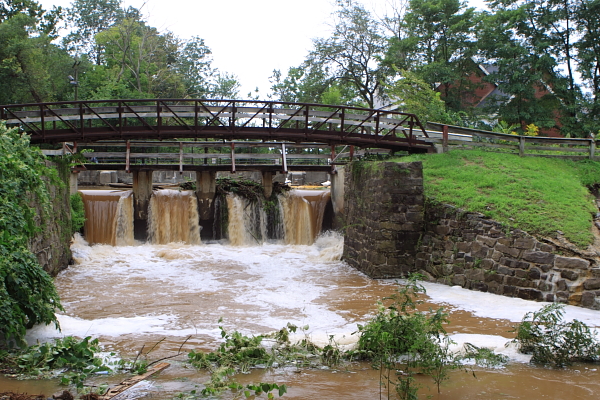
D&R Canal discharging into Swan Creek, on way to the Delaware. Bridges serve Tow Path.

D&R Canal discharging into Swan Creek, on way to the Delaware. Bridges serve Tow Path.

West Amwell

Rocktown - Lambertvile Road closed

Rocktown - Lambertvile Road closed

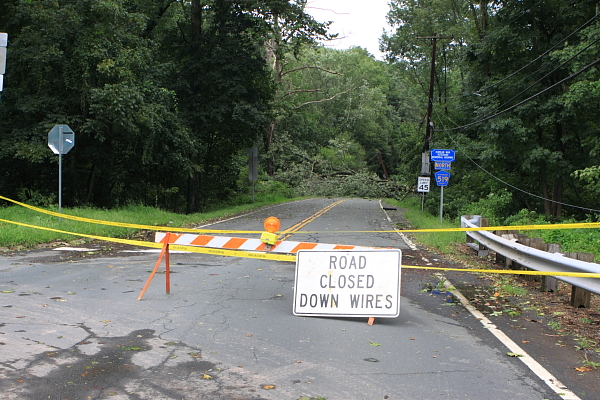
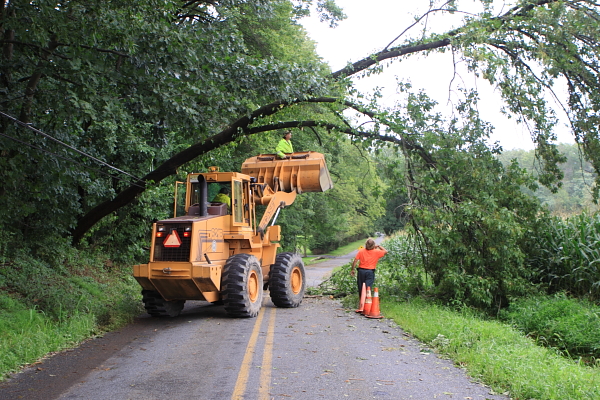
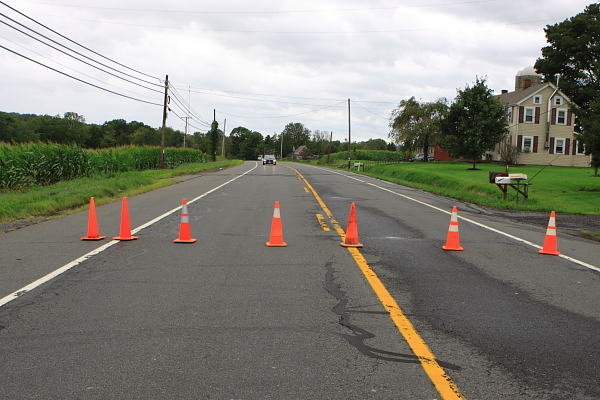
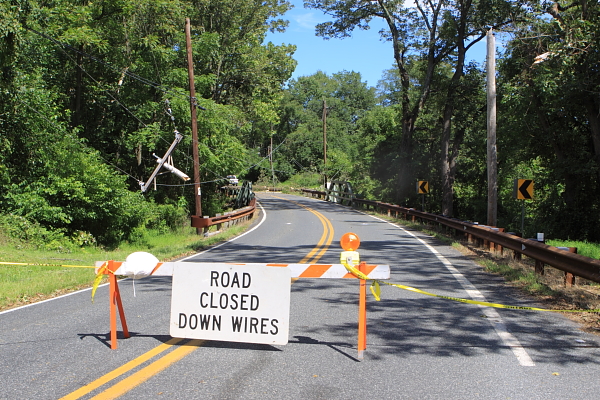
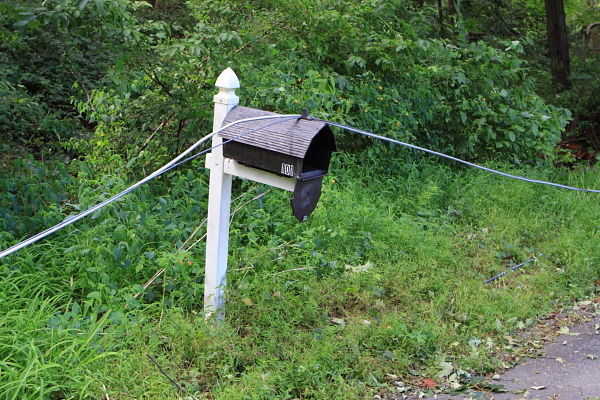
Rt. 179 closed by downed wires

Rt. 179 closed by downed wires

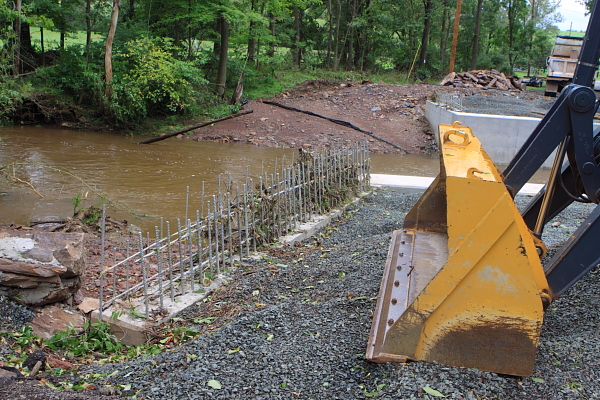
Alexauken Creek floodwater overtop new bridge abutments, adn almost wash away cosntruction equipment

Alexauken Creek floodwater overtops new bridge abutments, and almost wash away construction equipment

Bulls Island State Park

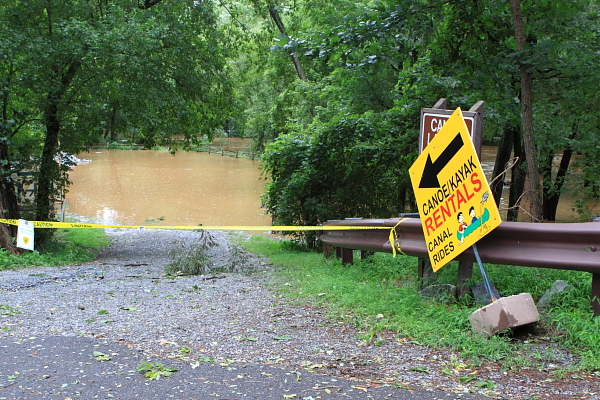
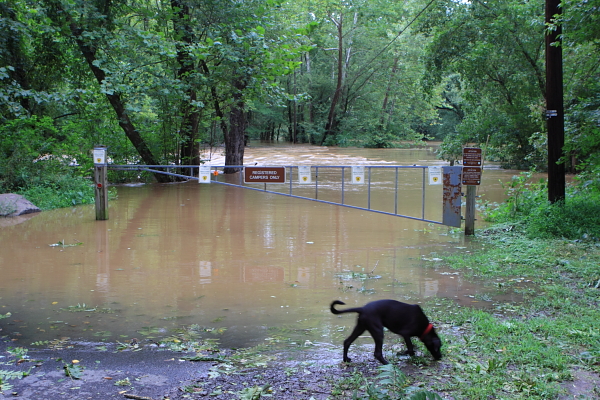
Signs say "Area closed". 3 State park cops later told me I was tresspassing.

Signs say "Area closed". 3 State park cops later told me I was trespassing.

irene14

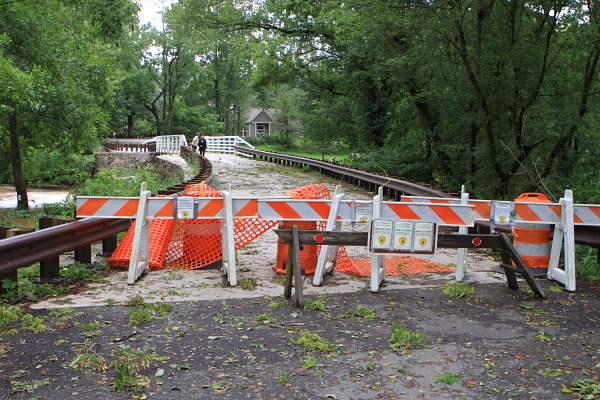
looks like that new over-engineered bridge is working

looks like that new ugly over-engineered bridge is working

Campers need canoes - "No Pets in Campground"! Can't you read the sign!

Campers need canoes - "No Pets in Campground"! Can't you read the sign!

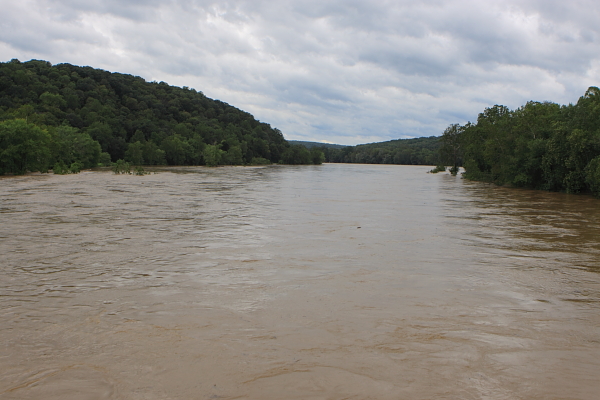
View north from footbridge -

View north from footbridge -

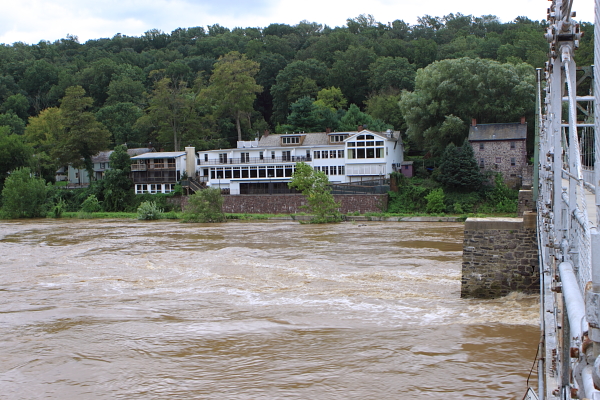
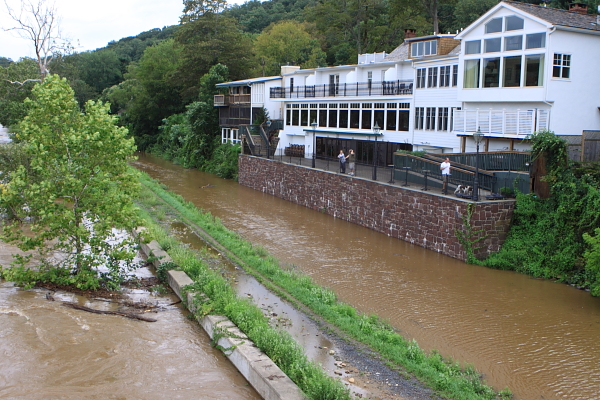
Black Bass Inn- Lumberville, Pa. River is projected to rise 10 more feet, possibly overtopping wall at Inn.

Black Bass Inn- Lumberville, Pa. River is projected to rise 10 more feet, possibly over-topping wall at Inn.

River and Canal (PA side) are one (view north)

River and Canal (PA side) are one (view north)

Black Bass Inn - canal - river (looking south from same spot)

Black Bass Inn - canal - river (looking south from same spot)

Updated – photos – 8/29/11 Rocktown

Rocktown - Lambertville Road

Rocktown - Lambertville Road

East Amwell

Wertsville Road closed (at bridge just past Rocktown Road)

Wertsville Road closed (at bridge just past Rocktown Road)

Rocktown Road closed

Rocktown Road closed

"You've Got mail!"

"You've Got mail!"

Lambertville lambertville

lambertville2

Categories: Uncategorized Tags:

Storm Damage Assessment

August 28th, 2011 2 comments
home, unscathed

home, unscathed

My cabin is surrounded by large mature trees – with the ground saturated by historically high August rainfall, I really feared that one would fall and maybe kill Buoy (my pup) and I.

But, my biggest storm scare and damage was cleaning up the crap my puppy took on the floor.

He’s been housebroken for weeks, but the storm disrupted our routine.

The wind was howling so bad last night that he was scared.

High winds and heavy rain made our before bed piss walk impossible.

Despite that, we did manage a quick piss in the front yard bushes though, and since he never craps at night, I thought that was adequate.

But, pup would not settle down in bed and go to sleep.

I assumed it was the same fear of the storm I felt (that I got hammered to avoid thinking about), so I put him out of my bed and into the rear bedroom.

My cabin is surrounded by large mature trees – with the ground saturated by historically high August rainfall, I really feared that one would fall and maybe kill us both.

So, with fear and many beers rattling my addled brain, I failed to realize that earlier in the day, I had taken the food and water bowls (both full) inside to the rear bedroom (where I had just put the pup!).

As a result, pup ate a bellyful, and predictably crapped his ass off an hour or so later.

My bad!

Just goes to show, dogs are smarter than people.

Still pretty good gust with light rain, but I’m now headed out – down to look at Alexauken Creek and Delaware – I assume the Delaware will crest high with flooding.

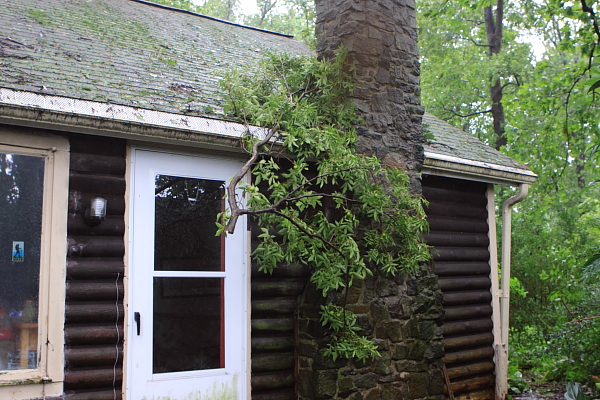
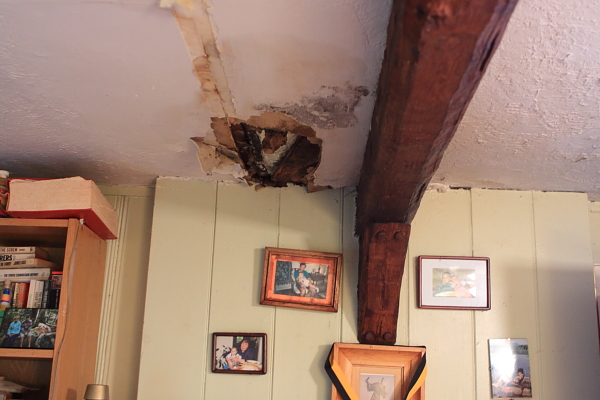
[Update - looks like I spoke too soon – just returned from my local tour, and noticed that part of my ceiling fell, due to roof leak around chimney:

irene22

Categories: Uncategorized Tags:

Many Rivers to Cross

August 27th, 2011 No comments
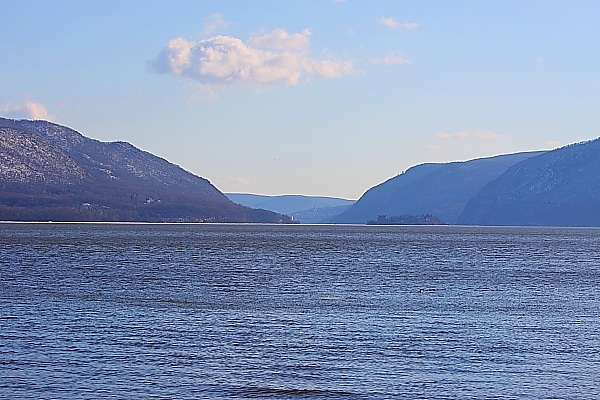
Hudson River

Hudson River

Hurricane Irene has me as a captive Rider on the Storm right now and literally Waiting for the Sun, but I’m feeling like Jimmy Cliff - Listen

Many rivers to cross
But I can’t seem to find my way over
Wandering I am lost
As I travel along the white cliffs of dover

Many rivers to cross
And it’s only my will that keeps me alive
I’ve been licked, washed up for years
And I merely survive because of my pride

[EndNote: hit all these links to listen to some special stuff , when I was back at school, and read of  current affairs.

This is especially provided for a nostalgic trip for my Salem NY reader - a Wild Child .

Salem is a special place with lots of memories, if only for our brief afternoon - on love street, in light on the experiences of a changeling.

It sure would be lovely to see you again my friend (cause you know I've always been your man - and gone to great lengths to prove it , so touch me! - and don't ask why, but tell all the people that you see).

No regrets Coyote!

This is the End, so when the music's over, turn out the light, but not before listening to my friend Neil Young, just for old time's sake:

The world is turnin',
I hope it don't turn away,
The world is turnin',
I hope it don't turn away.
All my pictures are fallin'
from the wall where
I placed them yesterday.
The world is turnin',
I hope it don't turn away

[...]

Get out of town,
think I’ll get out of town,
Get out of town,
think I’ll get out of town.
I head for the sticks
with my bus and friends,
I follow the road,
though I don’t know
where it ends.
Get out of town, get out of town,
think I’ll get out of town.

‘Cause the world is turnin’,
I don’t want to
see it turn away.

~~~ “On the Beach” Neil Young (1974) (listen)

Categories: Uncategorized Tags:

Real Recent Fracking News

August 26th, 2011 No comments

A Fracking Ponzi Scheme on Steroids

In case you got diverted by environmentalists criticizing Governor Christie’s conditional veto of a meaningless fracking ban bill (a political stunt by Democrats), you might want to know that there have been extremely important revelations regarding the fundamental economic viability of natural gas fracking.

The NY Times has written devastating investigative stories on the gas fracking industry (see “Drilling Down” series).

In the wake of stories that suggest that the fracking industry exhibits the economics of a “Ponzi scheme, yesterday, the Times reported that previous estimates of gas reserves were off by 80%:

WASHINGTON — Federal geologists published new estimates this week for the amount of natural gas that exists in a giant rock formation known as the Marcellus Shale, which stretches from New York to Virginia.

The shale formation has about 84 trillion cubic feet of undiscovered, technically recoverable natural gas, according to the report from the United States Geological Survey. This is drastically lower than the 410 trillion cubic feet that was published earlier this year by the federal Energy Information Administration.

As a result, the Energy Information Administration, which is responsible for quantifying oil and gas supplies, has said it will slash its official estimate for the Marcellus Shale by nearly 80 percent, a move that is likely to generate new questions about how the agency calculates its estimates and why it was so far off in its projections.

The decision by the agency to lower the estimates comes amid growing scrutiny from Congress about how the administration calculates its numbers and why it depends on outside and industry-tied consultants to produce some of its reports.

Wow! Wonder if Chesapeake Energy stock price dropped by 80%, given that they hold almost 16 million acres of shale gas, and especially in light of Forbes’ report on the NY Attorney General subpoena of natural gas drillers).

With all that, it’s no wonder Chesapeake stock in on price alert.

In light of these new facts, will Governor Christie re-assess the promotion and huge reliance on natural gas in his Energy Master Plan?

Do we still need all those massive gas pipelines?

Looks like gas may not be the “transition” fuel. Some “game changer” ey, oilman Jim Benton?

The revised estimate confirms major problems the Times previously disclosed, that suggest that the economics of fracking are a Ponzi schme:

Insiders Sound an Alarm Amid a Natural Gas Rush

Natural gas companies have been placing enormous bets on the wells they are drilling, saying they will deliver big profits and provide a vast new source of energy for the United States.

But the gas may not be as easy and cheap to extract from shale formations deep underground as the companies are saying, according to hundreds of industry e-mails and internal documents and an analysis of data from thousands of wells. …

In the e-mails, energy executives, industry lawyers, state geologists and market analysts voice skepticism about lofty forecasts and question whether companies are intentionally, and even illegally, overstating the productivity of their wells and the size of their reserves. Many of these e-mails also suggest a view that is in stark contrast to more bullish public comments made by the industry, in much the same way that insiders have raised doubts about previous financial bubbles.

“Money is pouring in” from investors even though shale gas is “inherently unprofitable,” an analyst from PNC Wealth Management, an investment company, wrote to a contractor in a February e-mail. “Reminds you of dot-coms.”

“The word in the world of independents is that the shale plays are just giant Ponzi schemes and the economics just do not work,” an analyst from IHS Drilling Data, an energy research company, wrote in an e-mail on Aug. 28, 2009.

Now that is NEWS!

Categories: Uncategorized Tags:

Dirty Water Deal Derailed in Hopewell Township

August 25th, 2011 No comments

Sewer Authority in DEP Commissioner’s Home Town Balks at Cost of Pollution Controls for Toxic Arsenic

Stony Brook Regional Sewerage Authority Pennington plant

Stony Brook Regional Sewerage Authority Pennington plant

[Update: 9/2/11 - Jim Waltman reports that last night in Hopewell Borough, he was able to convince Council to edit out all the bad stuff, similar to Hopewell Township Resolution.

The ball is now in DEP's court - let's hope they agree to hold a public hearing and stand by their draft NJPDES permits for the Hopewell plant and the Pennington plant. - end update]

Last Monday night (8/22/11), a stealth move by the Stony Brook Regional Sewerage Authority (SBRSA) to convince the Hopewell Township Committee  to back their attack on a draft DEP clean water permit failed.

Fortunately, the SBRSA’s move was detected by Stony Brook Millstone Watershed Association Director Jim Waltman.

Waltman forwarded a proposed Township Committee Resolution to me late Monday, just prior to the Committee’s hearing.

I was able to attend the hearing and – after extended debate – ultimately convinced the Township Committee, with the help of Committee-woman Vanessa Sandom, to significantly revise the proposed Resolution that had been placed on the agenda at the request of the SBRSA.

(water wonks out there can watch debate. I introduced the issue during the general public comment period from time 55:55 – 59:10. Later, there was an extraordinary more detailed 50 minute debate on the resolution from time 2:37: 40 until 3: 25:00).

Before we get to the specifics of the DEP NJPDES permit dispute, some history and context is in order.

Ironically, Hopewell Township – locus of the infamous mid 1990′s Merrill Lynch, State Plan, ELSA Sewer Line land use water resource battle -  has long been a leader in water resource protection.

The Hopewell  local Master Plan and zoning code are based on protection of water quality and quantity.

In fact, the Hopewell zoning scheme serves as a statewide model, having survived legal challenge and been upheld in a precedent setting decision by well respected Mercer County Superior Court judge Linda Feinberg.

Hopewell also has a reputation for open and deliberative decision making, based on respect for public input, science, and facts.

So, I was somewhat surprised by what was going down. Here’s the story.

In the course of routine 5 year renewal of their water pollution permits, the DEP had proposed a revision to the NJPDES permit effluent limits for the SBRSA’s Pennington and Hopewell plants.

The permit renewals noted that important previous water quality restrictions of phosphorus discharges had been “stayed” by a DEP March 2007 letter.

The DEP permit also postponed important needed treatment upgrades until the long delayed “Raritan TMDL” was completed. That TMDL study is almost a decade old, and many years behind schedule (the Raritan was a priority on the DEP’s 2004 2 year TMDL scheule).

So in my view, the SBRSA was inappropriately rewarded for a strategy of foot dragging, using a series of delaying legal and technical challenges to all DEP efforts to upgrade the SBRSA antiquated 30 year old treatment plants.

On top of this “flexibility” by DEP, SBRSA was being rewarded by an almost 50% expansion in pollution discharge. The DEP was allowing the SBRSA Pennington plant to increase its flow from 300,000 gallons per day, to 440,000 GPD, thereby greatly magnifying pollution impacts on the already impaired Stony Brook and spurring new development that would provide additional non-point source pollution.

But, the SBRSA didn’t see it this way.

In response to DEP’s permit renewal, the SBRSA attempted to make a frontal assault on numerous DEP clean water policies, surface water quality standards, and permit regulations.

SBRSA strongly objected to the DEP’s proposed arsenic limit, and in doing so challenged the way statewide water quality standards are set and implemented in the permit program.

This challenge was based solely on the costs of compliance, which SBRSA claimed would cost $15 million for construction of a reverse osmosis treatment system.

Given the current debate on Christie’s policies to relax environmental regulations to reduce compliance costs, the SBRSA move was a significant threat  not only to the local streams that receive discharges from the SBRSA plants, but also to DEP’s statewide water quality standards and permit regulations and policies.

Those historically stringent DEP standards and policies are under attack right now on similar cost grounds.

Because the SBRSA serves the home town of DEP Commissioner Bob Martin,  local threat was magnified greatly.

It was obvious that the Committee was unaware of the issues at play in the complex DEP permit and SBRSA drafted Resolution .

The originally proposed SBRSA drafted Resolution openly attacked DEP standards:

Whereas, the NJDEP has issued draft permits which include discharge parameters that will obligate the SBRSA to significant plant upgrades which could cost between $10 nd $20 million and which costs will be born, in part, by Hopewell rate payers; and

Whereas, the SBRSA has represented to Hopewell Township that some of the discharge criteria are more restrictive than NJDEP drinking water standards, that no consideration has been given by the NJDEP to dilution in the waterways receiving treated effluent discharges that is prior to any potable water intake and that these factors contribute greatly to the cost of upgrades.

Now Therefore be it Resolved by the Township Committee as follows:

1. That the Hopewell Township supports the SBRSA’s request and comments that the NJDEP consider establishing a more reasonable discharge criteria in its draft NJPDES permits for the SBRSA Hopewell and Pennington treatment facilities..

The SBRSA and Hopewell Township engineer Paul Pogorzelski quietly drafted a Resolution opposing a new pollution discharge permit for the Pennington sewage treatment plant.

Although the wording of the proposed Resolution was extremely broad and could have applied to numerous pollutants discharged by SBRSA, the main controversy involved the effluent limit DEP set for arsenic, a known human carcinogen.

Arsenic is naturally occurring in the geology under Hopewell Township, and I’ve been told that the natural background concentrations found in all local drinking water is 2 parts per billion (ppb).

The NJ surface water quality standard for arsenic in 0.017 parts per billion. The SWQS standard is based on lifetime individual cancer risk of 1 in a million, using scientific risk assessment methodologies that assume long term consumption of contaminated drinking water.

The NJ drinking water standard for arsenic is 5 ppb.

DEP proposed a SBRSA effluent limitation of 0.07 parts per billion for arsenic.

That is almost 100 times lower than the 5 ppb drinking water standard, but  4 times higher than the DEP surface water quality standard for arsenic.

The conflict between DEP surface water quality standards and drinking water standards has long been a matter of dispute.

That dispute is now being driven by Governor Christie’s “regulatory relief” policies.

SWQS are set by DEP scientists based exclusively on science – they do not consider compliance costs, analytical detection limits, or the availability of treatment technology to meet the standard.

In contrast, NJ drinking water quality standards explicitly consider treatment technology and analytical detection limits.  Because drinking water standards are developed by the NJ Drinking Water Quality Institute, an external policy group that includes representatives of the water companies, they  indirectly consider costs.

DEP recently proposed a “waiver rule” to allow the Commissioner to waive certain regulatory requirements.  Confirming our fears, the SBRSA representative stated that they had met with DEP upper management and been promised a waiver from these requirements.

Just as troubling, DEP Commissioner Bob Martin has ordered complete review and reconsideration of all DEP standards, and questioned their scientific basis.

Commissioner Martin has tasked at least 2 work groups within DEP to consider the economic costs of compliance with standards.

Governor Christie issued Executive Order #2 which adopts a policy of “regulatory relief” and mandates that all regulatory standards be based on cost benefit analysis.

So this SBRSA permit dispute could be used by industry lobbyists as a “horror story” to influence ongoing and very controversial policy deliberations.

At the same time, at the local level, the SBRSA had long delayed and dragged their feet in upgrading pollution control treatment technology required to restore the polluted Stony Brook, and meeting a TMDL schedule.

I reminded the Township Committee of all this history, context, and regulatory complexity.

I urged the Committee to stay out of this complex regulatory dispute, which was exclusively DEP’s job, not the Township’s.

That approach was rejected.

So I urged the Township to revises the Resolution to be more balanced in the public interest, and to ask DEP to hold a public hearing so that facts could be developed and residents have an opportunity to participate.

Thankfully, Committee woman Sandom agreed, and the Resolution was revised in a way that eliminated the SBRSA criticism of DEP and merely requested a public hearing .

The public comment period on the DEP SBRSA NJPDES permit apparently closes September 6.

I have not had a chance to review the NJPDES permit yet, so we hope to bring you more detail in future posts.

We dodged a bullet here, but the larger policy problem will not go away.

Lets hope that DEP grants the public hearing request and supporters of clean water turn out.

Stony Brook at Pennington - high turbidity (8/23/11)

Stony Brook at Pennington - high turbidity (8/23/11)

Categories: Uncategorized Tags:

“Freedom of Speech” (denied)

August 25th, 2011 No comments

Give Me that Paintbrush – Sign Says No Paintbrushes Allowed Here

rockwell_speech

True story – no paintbrushes – and no cameras allowed either! See:

Citizens’ Cameras Taken During Rep. Chabot (R-OH) Town Hall


Please don’t think these outrageous police state tactics just happen out in Red State Ohio.

Similar things have happened right here in liberal Blue state NJ at recent:

Categories: Uncategorized Tags:

A Fracking Political Joke – Ban Bill A Hollow Gesture

August 25th, 2011 No comments

[Update #2 - 8/26/11 - Bergen Record coverage puts Christie if a favorable light by a headline that makes it appear that he was initiating positive action, instead of reacting to and opposing a legislative initiative. Story also makes enviro's look silly for making such a big deal out of nothing: Christie proposes 1-year gas drilling ban.

Writer Scott Fallon buried the most significant news - broken by another devastating NY Times story: Geologists Sharply Cut Estimate of Shale Gas, a followup on recent story that exposed fracking as a "Ponzi scheme" -  in the final paragraphs:

Christie’s action comes as federal scientists have discovered the amount of natural gas in the Marcellus Shale, which stretches from upstate New York to Tennessee, is about 80 percent less than originally estimated.

OOPS! Reserve estimates off by 80%! Economics of a Ponzi scheme!

So this is ANOTHER example of how NJ ENGO's - via their "ban campaign"" - are diverting from the real issues about fracking.

Instead of NJ press reporting on 80% errors and Ponzi schemes, they cover meaningless symbolic gestures that make Christie look good. Heckofa job! - end]

Update #1: The Governor issued his CV, but initial press reports were inaccurate. The moratorium is 1 year, not 5.

Please read the CV (click here). The CV will frame the media coverage.

Note, how cleverly the Governor points out the fact that there are no fracking drilling proposals in NJ.

Observe how he deflects accountability by pointing the finger at Washington DC by noting the ongoing federal EPA study, knowing full well that Obama supports fracking.

Note that,  just as I feared, how the bill and the ban strategy by enviro’s actually allowed  the Governor to dodge the following points, all of which are the most important. :

1) DRBC vote

2) management of billions of gallons of toxic and radioactive waste-water;

3) intensive use of water – billions of gallons – needed for NJ water supply and ecological and recreational uses of the Delaware River

4) huge amount of land disturbance – which will harm habitat, reduce Delaware River water quality, and increase already unacceptable  downstream NJ flooding risk

5) significant negative economic effects on investments in efficiency and renewables

6) huge disruptions and destruction caused by pipeline construction

7) the CV mentions, but in error, alleged lower greenhouse gas emissions – end update

News reports indicate that today Governor Christie will conditionally veto the bill that would ban fracking in NJ.

Instead of a ban, the Gov. reportedly will issue a Conditional Veto (CV) in support of a 5 year moratorium.

The Democratic legislature would then have 3 options: 1) seek an over-ride of the Gov.’s CV and impose the ban (an over-ride is highly unlikely to prevail; 2) concur with the Gov.’s CV and go with a 5 year moratorium; or 3) do nothing and let the measure die.

So, I thought I’d try to get the real story out ahead of all the spin that is bound to ensue.

We testified on and wrote about that bill as it moved through the legislative process (see: NJ Legislators Look To Block Fracking to Protect Delaware River)

Based on that testimony, we were asked by the Committee Chair to draft amendments that would have put teeth in the bill by banning importation of fracking wastewater (see: Assembly Committee Hears An Unacceptable Fracking Compromise

Wow – a ban. That sounds like a tough pro-environmental measure, right?

Wrong. This is not a half measure “step in the right direction” – this is a no measure, or arguably a setback.

It is a symbolic gesture  that actually has negative consequences – a fracking  political disaster. Here’s why:

1. The bill would have no impact on fracking in NJ.

NJ does not have economically recoverable gas to frack. The bill would ban something that would never happen.

The bill is a symbolic gesture. Both sponsors have admitted that in open legislative hearings.

Even the AP is now reporting that in today’s set up story:

The measure is largely symbolic. Experts say there’s not enough natural gas under New Jersey to drill for.

There is no economically recoverable frack gas in NJ. There are tremendous gas reserves in neighboring NY and PA. There will never be any fracking in NJ.

2. The bill diverts attention from the real fracking issues NJ faces

The real threat to NJ from fracking is from NY and PA drilling in the Delaware Watershed (oh, and did I mention gas pipelines? Or the way artificially cheap gas will kill efficiency and renewables?  Or that the climate benefits of gas are greatly exaggerated and lifecycle carbon emissions may be as high as coal? )

The Delaware River Basin Commission (DRBC) has a moratorium on fracking in the watershed in place right now.

That moratorium would end upon adoption of proposed flawed regulations.

Christie’s DEP Commissioner sits on the DRBC and is supporting proposed draft DRBC regulations.

Those DRBC regulations are seriously flawed and their adoption by DRBC would end the current DRBC moratorium on fracking.

Lifting the current DRBC moratorium would open the door to over 18,000 wells in NY and Pennsylvania, according to DRBC. Those wells would use over 100 BILLION gallons of water; generate more than 25 BILLION gallons of toxic hazardous wastewater with unsafe levels of radioactive contaminants; and destroy over 150,000 aces of forests and farms, more than all the land protected by the NJ Highlands Act.

3. The bill provides political cover for Democrats.

Both Senate and Assembly Democratic prime sponsors of the NJ fracking ban bill had introduced other bills that would have prevented DEP from approving DRBC regulations  (see point #2 above).

Both legislators abandoned that far tougher bill after pressure from oil, gas, and chemical industry lobbyists.

The Gov.’s Office threatened to veto that bill as an encroachment on his Executive powers.

The Dems were not willing to fight and abandoned that bill – that was the real protection for NJ drinking water and the Delaware River.

To make matters worse, the Dems killed amendments to the symbolic ban bill that would have put teeth in it by banning importation of fracking wastewater. That is a real possibility, as the gas industry seeks options to dispose of hundreds of millions of gallons of wastewater.

The NJ enviro’s did not criticize those moves by the Dems.

4. The bill would have no legal or political impact on other states or the federal government

The only credible argument in support of this symbolic gesture was that it could be a precedent and have an impact on other states.

But PA is strongly backing fracking and NY Governor Cuomo recently cut a deal to greatly expand fracking in NY.

The Obama administration already came out in support of fracking.

5. The bill ends up politically rewarding Governor Christie

ENGO’s drew a line in the sand, really ramped up this issue with flame throwing rhetoric, and demanded a ban. A ban is publicly perceived as an extreme measure.

A 5 year moratorium sounds far more reasonable.

In the press and court of public opinion, Christie will now look like a pro-environment moderate by seeking a 5 year moratorium.

Net result: Christie gets credit for doing nothing, the public is duped, and real problems go unaddressed.

This is what happens when the advocates play these kind of political games. [Clarification:politically, setting the bar so low and rewarding Dems for doing nothing sends a message that you are weak and willing to be used. At the same time, scathing attacks on the Gov. for a CV of a meaningless bill reinforces his belief that enviro's are lightweights on policy, dupes of the Dems, and that other legitimate criticisms are non-substantive and partisan.]

Worst of all possible worlds here – we all get fracked.

[Update: 9/15/11: As we predicted, Christie accused enviro’s of being partisan and political in today’s APP story on nutrients:

Christie argued that the criticism was political.“There are some folks in the environmental movement who will never give me credit for anything I do, because they didn’t support me in the election and they’re Democrats, so they’ve got a political agenda,” he said.

Categories: Uncategorized Tags: