Archive

Archive for the ‘personal’ Category

State Line Trail – AT

December 13th, 2011 Bill Wolfe No comments

This hike is one of the best – see NY/NJ Trail Conference for info:

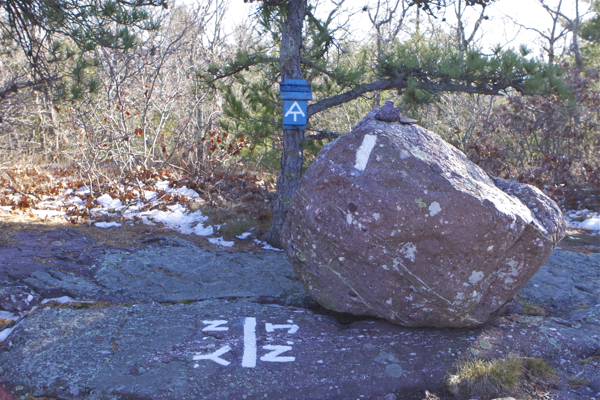
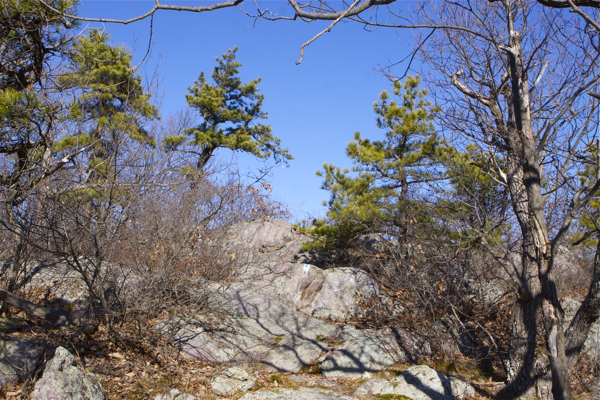
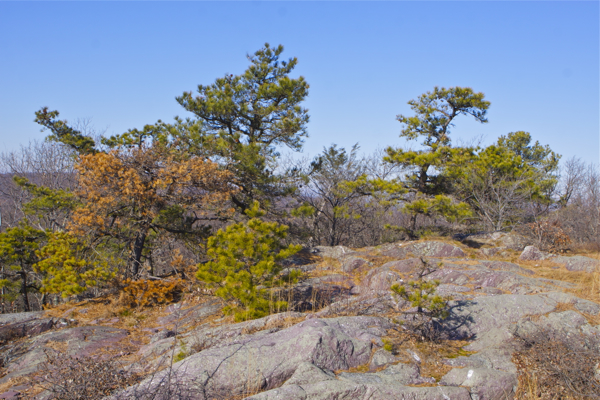
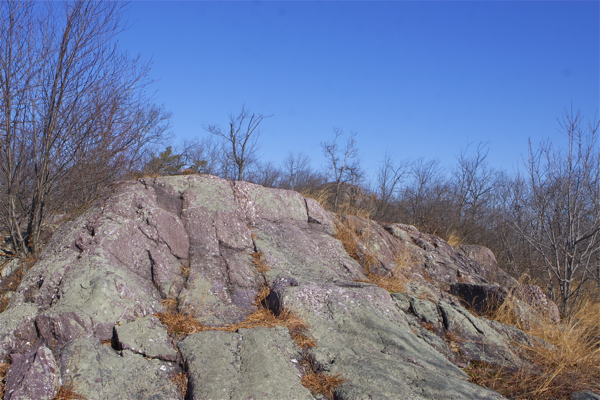
I set out from the trailhead just west of (above) Greenwood Lake marina.

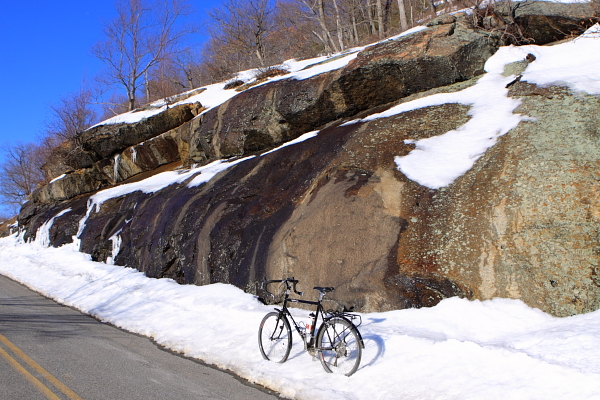
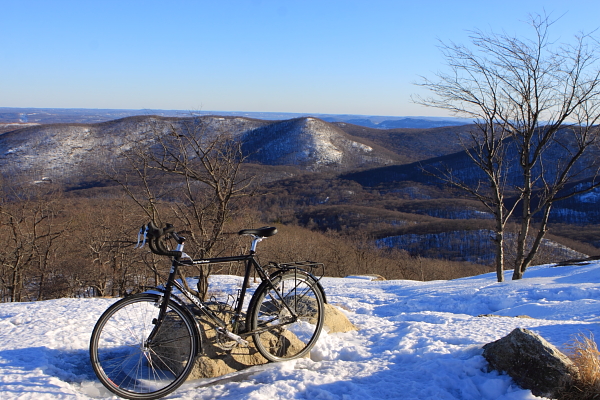
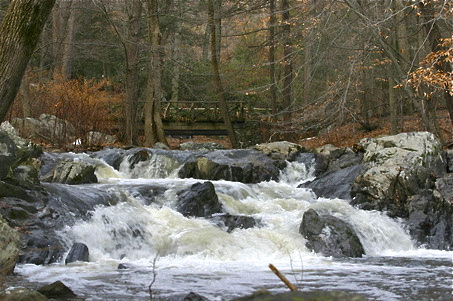
Appalachian Trail - at NY/NJ Border

Appalachian Trail - at NY/NJ Border

Perfect day – some ice on rocks in the morning, but it warmed up pretty quickly.

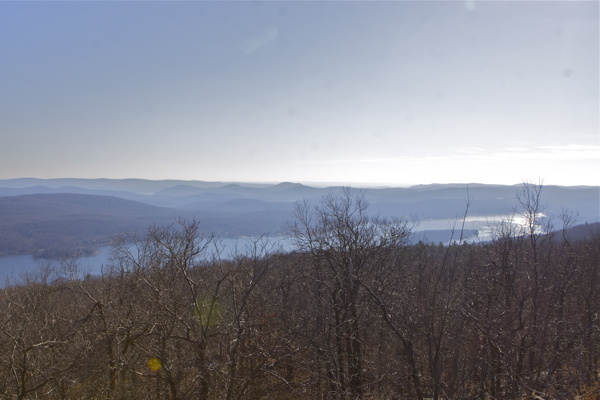
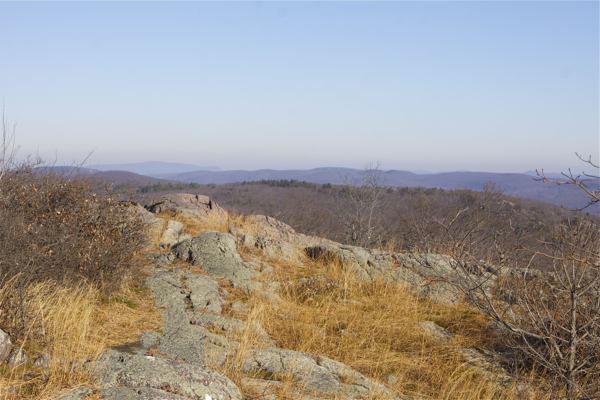
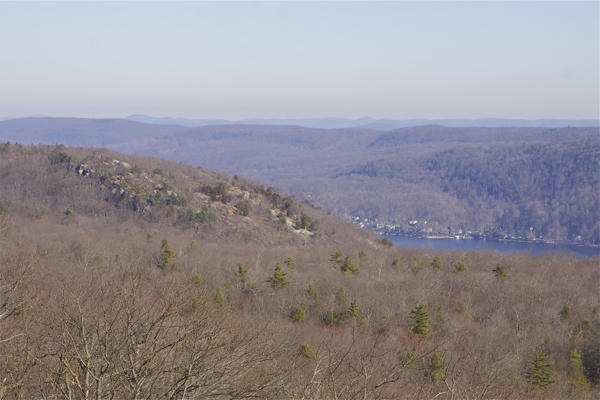
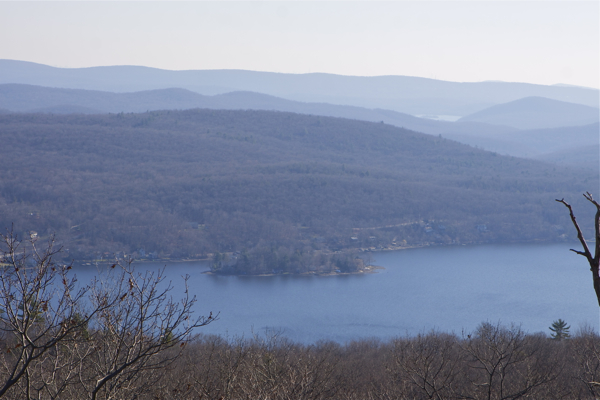
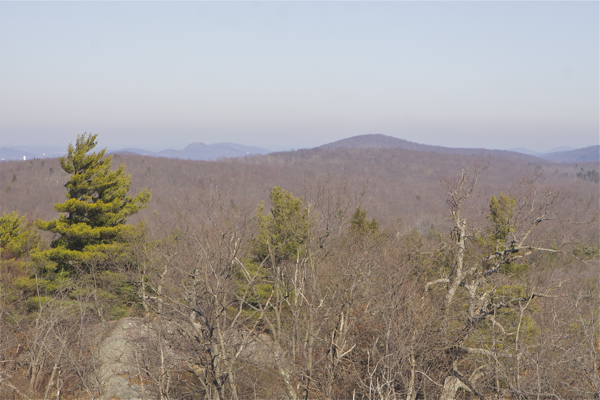
Superb views of Greenwood Lake, and north towards Bear Mountain. Too bad that high ozone haze impeded views somewhat.

Managed to re-sprain my ankle along the AT just about a mile north of the state line (I sprained it a little over a month ago playing soccer with kids next door).

So it was tricky coming down, as I had to “club foot” as I rock hopped along downhill portions of the trail that were flowing streams and/or leaf covered rocks.

After I got back in the car, needed some refreshments, but the Rainbow Inn was closed for the season, so, had to drive home hungry and with a stiff ankle! Check out the show:

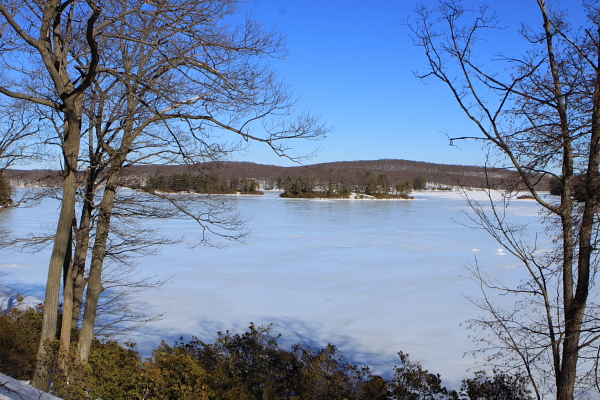
Greenwood Lake

Greenwood Lake

at3

at4

at5

at6

at7

at9

at8

Categories: Family & kids, personal Tags:

Ode to a Chainsaw – My “Sleepy Hollow Moment”

December 3rd, 2011 Bill Wolfe No comments

Pocantico River - North Tarrytown, NY. Site of Washington Irving's classic story:"The Legend of Sleepy Hollow"

Pocantico River - North Tarrytown, NY. Site of Washington Irving's classic story:"The Legend of Sleepy Hollow"

[Update: 12/7/11: check out both a remarkable resonance and a remarkable moment. Philip Glass spoke to the OWS at Lincoln Center. There is an echo of themes from the below post. The moral of the below post was about literature, sounds, and our discovery of virtue.The "machine" can "occupy" the "garden", and encroach on intellectual and artistic space (i.e the pastoral ideal). I believe in the need to restore notions of republican virtue and the public interest. Here is what Glass said, the closing lines in the play Satyagrapha: watch the episode:

"When righteousness withers away and evil rules the land, we come into being, age after age, and take visible shape, and move, a man among men, for the protection of good, thrusting back evil and setting virtue on her seat again."


Of Chainsaws and Virtue - My "Sleepy Hollow Moment"

I often have "Sleepy Hollow moments" - and am sure you do too.

What the hell is a "Sleepy Hollow moment" you say?

Bear with me as I explain and we explore the meaning.

I'm sure you'll agree that there's some powerful and important stuff going on here.

The Sleepy Hollow Moment defined

I hate chainsaws.

They are loud, destructive, and dangerous. Operating one absolutely terrifies me.

Following in the footsteps of the axe, chainsaws - by orders of magnitude - have aided the destruction of countless acres of magnificent forests.

Nothing -  save an all terrain vehicle or the blast of a shotgun - can more completely destroy a tranquil walk in the woods.

Chainsaws are an almost perfect symbol of what Leo Marx wrote about in his masterpiece on the technological sublime and the pastoral ideal: The Machine in the Garden - Technology and the Pastoral Ideal.

Marx (no relation to Karl), prefaces that superb book with a quote from Washington Irving's 1820 tale "The Legend of Sleepy Hollow" (I'm an Irving homeboy, from Tarrytown NY, a graduate of Sleepy Hollow High School):

I mention this peaceful spot with all possible laud; for it is in such little retired valleys that population, manners and customs remain fixed; while the great torrent of migration and improvement, which is making such incessant change in other parts of this restless country, sweeps by them unobserved. They are little nooks of still water which border a rapid stream…  (Irving - 1820)

At the outset of the book, Marx distinguishes two very different forms of American pastoralism - the first he calls "popular and sentimental", the second "imaginative and complex".

The sentimental version is nostalgic: "a flight from the city":

An inchoate longing for a more "natural" environment" enters into the contemptuous attitude that many Americans adopt toward urban life (with the result that we neglect our cities and desert them for the suburbs). Whenever people turn away from the hard social and technological realities, this obscure sentiment is likely to be at work. We see it in our politics, in the "localism" invoked to oppose an adequate system of national education, in the power of the farm block in Congress, in the special economic favor shown to "farming" through government subsidies … It manifest itself in our leisure activities, in the piety towards the out-of-doors expressed in the wilderness cult, and in our devotion to camping, hunting, fishing, picnicking, gardening, and so on.

Marx concludes that this sentimental form is:

generated by an urge to withdraw from civilization's growing power and complexity. What is attractive in pastoralism is the felicity represented by an image of a natural landscape, a terrain either unspoiled or, if cultivated, rural. Movement towards such a symbolic landscape also may be understood as a movement away from an "artificial" world … away from sophistication towards simplicity … away from the city towards the country …a vehicle of escape from reality.

Marx then contrasts this sentimental form of the pastoral with his "imaginative and complex" form. But he doesn't use a specific definition or criteria, instead he relies on an illustration from a passage by Nathaniel Hawthorne.

Marx develops what he calls "the Sleepy Hollow moment" or motif. To do this, he refers to Hawthorne's own experience of a place called "Sleepy Hollow".

The signal event transpires on the morning of July 27, 1844 in the woods near Concord, Massachusetts.

Hawthorne's notes of that day set out to describe a tranquil moment. Marx interprets the larger significance:

…  he [Hawthorne] sat in solitude and silence and tried to record his every impression. One incident dominates his impressions. Around this “little event” a certain formal – one might say almost dramatic – pattern takes shape. It is to this pattern that I want to call attention. […]

Hawthorn is using natural facts metaphorically to convey something about the human situation. From several pages in this vein, we get an impression of a man in almost perfect repose, idly brooding upon the minutia of nature, and now and then permitting his imagination a brief flight. … Hawthorne is satisfied to set down unadorned sense impressions, especially sounds – sounds made by birds, squirrels, insects, and moving leaves.

But then, after a time, the scope of his observations widens. Another kind of sound comes through. He hears the village clock strike, a cowbell tinkle, and mowers whetting their scythes.

Without any perceptible change of mood or tone, he shifts from images of nature to images of man and society. He insists that “these sounds of labor” do not “disturb the repose of the scene” … He is describing a state of being where there is no tension either within the self or between the self and its environment. Much of this harmonious effect is evoked by the delicate interlacing of sounds that seem to unify society, landscape, and mind. What lends most interest, however, to this sense of all encompassing harmony and peace is a vivid contrast:[Marx excerpts excerpts Hawthorne]

But, hark! there is the whistle of the locomotive – the long shriek, above all other harshness, for the space of a mile cannot mollify it into harmony. It tells a story of busy men, citizens, from the hot street, who have come to spend a day in a country village, men of business; … and no wonder that is gives such a startling shriek, since it brings the noisy world into the midst of our slumbrous peace. [end Hawthorne]

[…]

…There is something arresting about the episode: the writer sitting in his green retreat dutifully attaching words to natural facts, trying to tap the subterranean flow of thought and feeling and then, suddenly, the startling shriek of the train whistle bearing in upon him, forcing him to acknowledge the existence of a reality alien to his pastoral dream.  What begins as a conventional tribute to the pleasures of withdrawal from the world – a simple pleasure fantasy – is transformed by the interruption of the machine into a farm more complex state of mind.

Our sense of its evocative power is borne out by the fact that variants of the Sleepy Hollow episode have appeared everywhere in American writing since the 1840’s. We recall the scene from Walden where Thoreau is sitting rapt in a revery and then, penetrating the woods like the scream of a hawk, the whistle of the locomotive is heard; or the erie passage in Moby Dick where Ishmael is exploring the innermost recesses of a beached whale and suddenly the image shifts and the leviathan’s skeleton is a New England textile mill; or the dramatic moment in Huckleberrry Finn when Huck and Jim are floating along peacefully and a monstrous steamboat suddenly bulges out of the night and smashes straight through their raft. More often than not, the machine is made to appear with startling suddenness.

[…]

What I am saying … is that Hawthorne’s notes mark the shaping of a metaphorical design which recurs everywhere in our literature. They are a paradigm of the second kind of pastoralism mentioned at the outset. By looking closely at the way these notes are composed we can begin to account for the symbolic power  of the “little event” in Sleepy Hollow”

[…]

Since Jefferson’s time the forces of industrialization have been the chief threat to the bucolic image of America. The tensions between the two systems of value had the greatest literary impact in the period  between 1840 and 1860, when the nation reached that decisive stage in its economic development which W.W. Rostow calls the “take-off”… In America, according to Rostow, the take-off began about 1844 – the year of the Sleepy Hollow episode – just at they time our first significant literary generation was coming to maturity.   … The locomotive appears in the woods, suddenly shattering the harmony of the green hollow, like a presentiment of history bearing down on the Amercian asylum. The noise of the train… is a cause of alienation …. and so it estranges [Hawthorne] from the immediate source of meaning and value in Sleepy Hollow. In truth, the “little event” is a miniature of a great – in any ways the greatest -event in out history.

That Hawthorne was fully aware of the symbolic properties of the railroad is beyond question. Only the year before he had published “The Celestial Railroad”, a wonderfully compact satire on the prevailing faith in progress.

[...]

In its simplest, archetypal form, the myth affirms that Europeans experience a regeneration in the New World. They become new, better, happier men – they are reborn. In most versions the regenerative power is located in the natural terrain: access to undefiled, bountiful, sublime Nature is what accounts for the virtue and special good fortune of Americans. It enables them to design a community in the image of a garden, an ideal fusion of nature with art. The landscape thus becomes the symbolic repository of value of all kinds – economic, political, aesthetic, religious. …

…The sudden appearance of the machine in the garden is an arresting, endlessly evocative image. It causes the instantaneous clash of opposed states of mind: a strong urge to believe in the rural myth along with an awareness of industrialization as a counterforce to the myth.

My Sleepy Hollow Moment

So, with Marx’s observations in mind, let me rehash my own recent “Sleepy Hollow moment”, and suggest productive avenues of future pursuit.

As I sat on the porch with a contented dog and sipping coffee, it was the incessant whine of the chainsaw that broke the moment and drew me to the woods behind my house on an otherwise fine Saturday morning.

Those woods are preserved and adjacent to a State Wildlife Management Area.

So, could my disruptor of the peace be so bold as to be poaching wood too?

My mind ran wild and my blood began to boil, as I set out into the woods, in the direction of the racket.

Upon arrival, I met “Mr. G”.

No confrontation – after a brief conversation, it was clear that he was no defiler of nature or poacher of wood, but a gentle man of virtue.

I immediately discovered that Mr. G. was a volunteer trail builder.

When I asked Mr. G about his volunteer work, he began by noting that although not many people now hiked in these recently preserved woods.

But he quickly emphasized that “people 50 years from now sure will appreciate this trail“.

Yes, surely Mr. G: “these sounds of labor” do not “disturb the repose of the scene” -  “sounds that seem to unify society, landscape, and mind”.

And therein lies the moral of our tale of our Sleepy Hollow moment:

Our discovery of virtue: consideration for the future, the wellbeing of the landscape and natural world, and selfless work in the public interest.

Mr. G.

Mr. G.

So what went so wrong historically?


Why is the relation between technology and the garden so screwed up today?

To probe those questions, next time, we being that exploration, based on the work of historian Joyce Appleby (Capitalism and a new social order).

We focus on Appleby’s analysis of how the concept of virtue was redefined and perverted in the 1790’s.

Virtue was redefined: from Classical republic virtue defined as selfless public service, to  one based on individual private gain.

And the rest, as they say, is history.

Categories: Politics, Uncategorized, personal Tags:

Love Gets in the Way

February 28th, 2011 Bill Wolfe No comments

I’m All Wild in Places I Wasn’t Before

Sorry Joni Mitchell, I still love your work, but this is the best love song ever (beyond dancin’ up a river in the dark).

And No Regrets Coyoteit’s from a Jersey girl (listen live).

i’ve made love with one eye on the door
i’ve left good rooms with nothing to say
i wanted to love them
but love got in the way
i wanted to love them
but love gets in the way
and so what if everything’s changed
and so what if i’ve held out for more
i’m all wild in places i wasn’t before
i’m wild in places where i wasn’t before
so come on and make a mess of me
i won’t walk away
i’m ready as i’ll ever be
i won’t walk away
i want to be fed by you
i want to be led by you
i thought i wanted freedom
but love got in the way
i went looking for freedom
but love got in the way
so come on and make a mess of me
i won’t walk away
i’m ready as i’ll ever be
i won’t walk away  ~~~~ “
Love Gets in the Way” (Dayna Kurtz – 2002)

Categories: personal Tags:

Truckin’

February 17th, 2011 Bill Wolfe No comments
View from Bear Mountain - LHT, Hudson River in background

View from Bear Mountain - LHT, Hudson River in background

You’re sick of hangin’ around and you’d like to travel;
Get tired of travelin’ and you want to settle down.
I guess they can’t revoke your soul for tryin’,
Get out of the door and light out and look all around.

Sometimes the light’s all shining on me.
Other times I can barely see.
Lately it occurs to me,
what a long strange trip it’s been.  
~~~  Truckin” (Grateful Dead - 1970).

Sorry I’ve been away for the last few days.

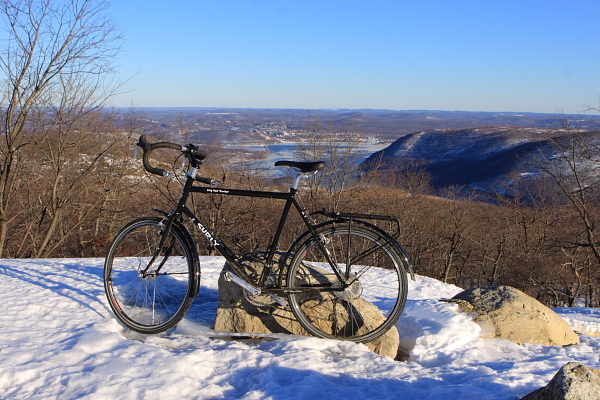
I’ve been riding my new touring bike – a Surly Long Haul Trucker. Did a maiden voyage on Tuesday to Bear Mountain.

Perkins Drive was closed, so the climb to the top was superb. But patches of ice slowed down the descent.

The incredible weather and new ride have dominated my consciousness! I’ve done 120 miles in the last few days.

I’ve been fantasizing about training for a few serious long haul adventures this summer – starting with the Adirondack Park Loop.

Hard to work under these conditions!

Perkins Drive, Bear Mountain State Park

Perkins Drive, Bear Mountain State Park

 LHT9

Ice fishing - Lake Titoratti, Harriman State Park

Ice fishing - Lake Tiorati, Harriman State Park

Lake Titoratti - Seven lakes Drive, Harriman State park. Doesn't get any better than this. o

Lake Tiorati - Seven lakes Drive, Harriman State park. Doesn't get any better than this.


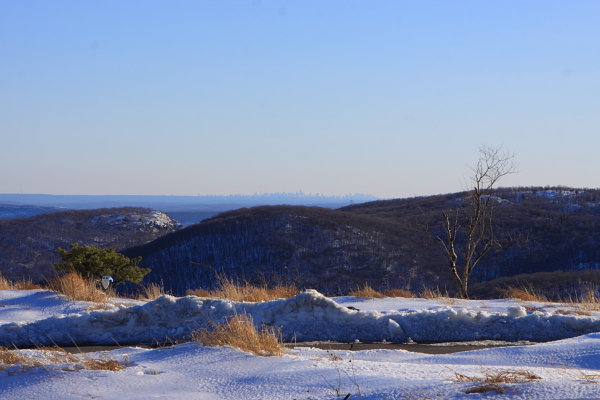
O  aclear day, you can se forever. Manhattan skyline in distance, from Bear Mountain.

On a clear day, you can see forever. Manhattan skyline in distance, from Bear Mountain.

Categories: personal Tags:

“This is Not A Trail”

October 14th, 2009 Bill Wolfe No comments

IMG_2801

“I shall be telling this with a sigh
Somewhere ages and ages hence:two roads diverged in a wood, and I –
I took the one less traveled by,
And that has made all the difference.”   Robert Frost “The Road Not Taken“ 

The boulders, trails, trees and sky of Sourland Mountain Preserve, East Amwell, NJ

IMG_2843
IMG_2807
IMG_2788

IMG_2771

IMG_2770
IMG_2762

IMG_2759
IMG_2881
IMG_2818

IMG_2822
IMG_2813

Categories: Family & kids, personal Tags:

Corzine applauds New Carbon Control Corporation – Cash for Clunkers at Home. Major Benefits for NJ

September 14th, 2009 Bill Wolfe 1 comment

[Update: Intro warning: If it is not obvious, this is snark! That's why the original piece closed with reference to Yesmen!)

Washington – Harkening back to President Roosevelt’s New Deal, the Obama administration today announced a new federal agency, the ”CCC” - Carbon Control Corporation. The new CCC was modeled on FDR’s Civilian Conservation Corps and the Tennessee Valley Authority, depression era agencies that spurred employment, conservation of the nation’s natural resources, and brought affordable electric power to millions of homes.

Obama, joined by Treasury Secretary Geithner and Energy Czar Carol Browner, said the CCC would manage and finance energy and global warming policy goals, while spurring employment. Headed jointly by internationally recognized Princeton Professors Cornel West, and Nobel Prize winning economist Paul Krugman, the $250 billion per year CCC program will make massive federal infrastructure investments and be funded by three major sources: 1) a surcharge on carbon intensive fuels – domestic coal and oil imports; 2) full refund of the $700 billion Wall Street bailout money; and 3) savings from phase out of the AfPak and Iraq wars and redeployment of 250,000 US troops stationed at over 725 foreign military bases in 120 countries, including Germany, Japan, and North Korea.

“Today, we take the first large step on the sustainable energy path, and call an end to US military empire” said Obama. “The CCC will restore US manufacturing sector jobs and jump-start a socially  just and equitable jobs based economic recovery. The era of deindustrialization, deregulation, privatization, and finance based taxpayer subsidized speculative global trade schemes is over.”

“I have directed CCC head Cornel West  to begin immediately with an expanded “cash for clunkers” program for refrigerators, hot water heaters, and furnaces and energy efficiency in America’s homes.  We will channel $30 billion to US consumers in the next 30 days. We will have 10,000 wind, solar, and mass transportation projects underway before the snow falls. At the upcoming Copenhagen global warming conference, I will present a detailed plan to phase out the nation’s coal power plants over the next 10 years and construct a world class national inter-city rail and urban mass transit system.” he said.

Governor Corzine applauded the CCC, saying “Obama’s leadership will assure that NJ meets my global warming and energy efficiency and conservation goals, as well as avoid the need to finance implementation via a securitized gas tax revenue stream and expanded privatization initiatives” the NJ Governor said, referring to his prior controversial proposals to increase tolls, privatize the NJ Turnpike, and failed plan to fully fund the Transportation Trust Fund . “These are crucial positive developments in light of the upcoming election – I am so glad that we finally we can deploy NJ’s National Guard to serve our communities here at home, instead of killing innocent civilians in foreign lands” he concluded.  

IMG_6106Corzine was joined by a PSEG spokesman, who announced that PSEG would immediately develop plans to close all 4 NJ coal plants; cancel midwestern coal power energy importation contracts; end export of power to the NY City market; abandon controversial new power lines through the NJ Highlands , and south jersey; increase commercial rates and decrease shareholder profits; and provide rebates to low and moderate income families. “However, because of the ongoing environmental impacts of our power line operations and the way we corrupted and undermined trust in government, PSEG will continue the $18.6 million payment to the Highlands Council.” PSEG spokesman concluded. In a statement, other major NJ energy providers echoed PSEG, and pledged to shutdown the aging Oyster Creek plant, and cancel a controversial Linden coal plant and offshore LNG. “We will redouble our wind, solar, and conservation efforts” the energy industry said.

Conservative Republican challenger Christie blasted the Obama CCC as a government takeover, and opposed the thousands of  new jobs that would be created as “more bureaucracy”.

Independent challenger Daggettt urged Corzine to be “realistic” and repeated his claim that renewable energy is more expensive than coal.

The Obama move was applauded by NJ Environmental Czar Bill Wolfe, recently named to revitalize NJ’s hapless ENGO community. “Health, Beauty , Permanence, Jobs, Peace, and Social Justice are now guiding our government policies and programs, as well as our personal aspirations” said Wolfe.”Like we’ve been saying for 40 years: “Small is Beautiful“ and there really are “Limits to Growth“.

 This post was brought to you in the spirit of The Yesmen

“WolfeNotes” blog launched – We aim to hold corporate polluters and government accountable

August 31st, 2009 1 comment

Below is the post that got my blog banned by the Star Ledger on June 10, 2009. So I thought it would be a good first post to use to launch my new blog, “WolfeNotes.com” .

That banned post illustrates the reasons that I blog and some of what I hope to accomplish. I try to combine serious ideas, visual images, and analysis to call out the bullshit I see in government, politics, and media every day.

I will focus primarily on environmental issues, not only because I love the natural world, but because the same forces that are destroying the environment also are responsible for our current accelerating economic and political collapse.  Hopefully, I will remain too controversial for the Star Ledger. And perhaps someday we all will recall that I.F. Stone famously said, all governments lie. Yet our media institutions have lost touch with that fundamental truth and not only fail to hold government accountable, but often accept government spin at face value, which then becomes the dominant narrative (conventional wisdom, or propaganda) .

But, lets not blame government per se. Scratch the surface of  most government lies and you find a cover for corporate power and economic interests. As political scientist Sheldon Wolin wrote in “Democracy Incorporated: Managed Democracy and the Specter of Inverted Totalitarianism” (excellent review here), our democratic institutions have been hijacked by corporate interests and our Republic transformed to a global empire. And there is little indication that the Obama “change”  is anything more than rhetoric. According to a Wolin interview in Chris Hedges’s new book “Empire of Illusion: The End of Literacy and the Triumph of Spectacle” (Hedges interview here):

The basic systems are going to stay in place; they are too powerful to be challenged.” Wolin to me when I asked him about the Obama administration. ”This is shown by the financial bailout. It does not bother with the structure at all. I don’t think Obama can take on the kid of military establishment we have developed.  This is not to say that I do not admire him. …I think he is well meaning, but he inherits a system of constraints that make it very difficult to take on these major power configurations. I do not think he has the appetite for it in any ideological sense. The corporate structure is not going to be challenged. There has not been a word from him that would suggest an attempt to rethink the American imperium.” 

So, this is the frame of reference I will try to apply to the more circumscribed world of NJ environmental issues and politics. Let me know what you think – one of my aims is to spur dialogue.

Thrifty Individual Reducing Carbon FootPrint

“In our time, political speech and writing are largely the defense of the indefensible. Things like the continuance of British rule in India, the Russian purges and deportations, the dropping of the atom bombs on Japan, can indeed be defended, but only by arguments which are too brutal for most people to face, and which do not square with the professed aims of the political parties. Thus political language has to consist largely of euphemism., question-begging and sheer cloudy vagueness. Defenseless villages are bombarded from the air, the inhabitants driven out into the countryside, the cattle machine-gunned, the huts set on fire with incendiary bullets: this is called pacification. Millions of peasants are robbed of their farms and sent trudging along the roads with no more than they can carry: this is called transfer of population or rectification of frontiers. People are imprisoned for years without trial, or shot in the back of the neck or sent to die of scurvy in Arctic lumber camps: this is called elimination of unreliable elements. Such phraseology is needed if one wants to name things without calling up mental pictures of them.”
George Orwell, “Politics and the English Language,” 1946
http://www.mtholyoke.edu/acad/intrel/orwell46.htm

Vacationing close to home – camping in public parks

(warning – graphic images on the flip)

Read more…

New national mercury research confirms NJ’s experience – another nail in coal’s coffin?

August 30th, 2009 Bill Wolfe No comments
Pennsylvania coal power plant on the Delaware River

Pennsylvania coal power plant on the Delaware River

Think coal: Global warming. Mountaintop removal. Sludge impoundment blowouts. Poisoned waterways. Acid rain. Smog. Unsafe mines. Exploited workers. Devastated communities.

The most recent nail in coal’s coffin?

An important new study by the US Geological Survey was released this week. The study documents extensive mercury pollution due to coal power and provides a huge test of the Obama administration’s commitments to develop strict new mercury emissions controls at the nation’s dirty coal power plants. The key policy issues? The inside political history?

Will EPA Administrator Lisa Jackson propose the equivalent of NJ’s strict State emission standards on the nation’s coal power plants?

What was Christie Whitman’s role in the NJ mercury issue? How did it shape her response as EPA Administrator to accommodate energy and coal interests during the Bush years (recall the Orwellian “Clear Skies” that was slammed by NJ officials)?

Here’s the newes coverage:

WASHINGTON –

No fish can escape mercury pollution. That’s the take-home message from a federal study of mercury contamination released Wednesday that tested fish from nearly 300 streams across the country.

The toxic substance was found in every fish sampled, a finding that underscores how widespread mercury pollution has become.

The study by the U.S. Geological Survey is the most comprehensive look to date at mercury in the nation’s streams. From 1998 to 2005, scientists collected and tested more than a thousand fish, including bass, trout and catfish, from 291 streams nationwide.

“This science sends a clear message that our country must continue to confront pollution, restore our nation’s waterways, and protect the public from potential health dangers,” Interior Secretary Ken Salazar said in a statement.

Mercury consumed by eating fish can damage the nervous system and cause learning disabilities in developing fetuses and young children. The main source of mercury to most of the streams tested, according to the researchers, is emissions from coal-fired power plants. The mercury released from smokestacks here and abroad rains down into waterways, where natural processes convert it into methylmercury — a form that allows the toxin to wind its way up the food chain into fish. (read full story here)

This USGS study also confirms scientific research and regulatory standards adopted in NJ over 15 years ago.

Few are aware of this history. It can provide important insights into the current national policy debate.

Fifteen years ago, former Bush EPA Adminsitrator Chritie Whitman had extensive direct involvement with mercury as NJ Governor. Whitman’s NJ role foreshadowed her actions as head of the Bush EPA, which delayed and then proposed a weak mercury emission rule that was overturned by the courts.

Current EPA Administrator Lisa Jackson served as NJ DEP Commissioner. Jackson was Assistant Commissioner for Land Use when her boss, Brad Campbell led NJ DEP to adopted a strict emission standard for coal plants in 2004. Jackson’s EPA is now considering that same issue and developing a national proposal to regulate mercury emissions at the nation’s dirty coal plants.

So, with the former and current head of EPA both coming from NJ, I’m sure we will hear the standard line about NJ’s environmental leadership.

But instead of the press corps merely parroting this talking point on NJ’s leadership, the press and the public should be doing some digging and asking tough questions.

So, let’s take a closer look at the NJ history in light of the current debate.

The mercury issue first arose in NJ in the late 1980’s in the fight against garbage incinerators. In 1990, Governor Florio Administration issued an Executive Order that imposed a moratorium on garbage incinerators and created a Mercury Task Force. In 1993, the Florio Task Force issued a 3 Volume Report that provided the public health and scientific bases for DEP to adopt what was then the strongest mercury air emissions standards for garbage incinerators in the world. While the initial focus was of the Task Force was on garbage incineration, the Report also announced plans to expand emission standards to coal fired power plants, another major mercury source. At the same time, DEP engaged the Philadelphia Academy of Natural Sciences to study levels or mercury in freshwater fish across the state.

The Florio policy and plans to regulate coal plants were derailed in 1994 by the Whitman Administration and new DEP Commissioner Bob Shinn. Their actions set back NJ for over a decade. It took 10 more years before NJ got back on track and finally adopted standards on coal plants in 2004. Because of that Whitman/Shinn delay, we will be paying for that with our children’s neurological impairment as a result of mercury poisoning.

Shinn was a strong supporter of garbage incineration and personally reversed the Florio policy. Shinn was also close to the state’s recreational fishermen, who were hotly opposed to the fish studies. Whitman was “Open for Business” and politically sympathetic to PSEG and state power utilities that operated coal plans. A major new coal plant was proposed along the Delaware River (Crown Vista). Mercury was a fly in the Whitman/Shinn ointment.

In early 1994, at the start of Whitman/Shinn regime, a DEP study conducted by the Philadelphia Academy of Natural Sciences was leaked to the media and reported widely. The leaked study was page one news. The study documented statewide unsafe levels of toxic mercury in NJ freshwater fish.

Widespread press coverage cast DEP and the Whitman administration in a negative light. In response, Governor Whitman sought to downplay the risks of this study. 

Environmentalists accused the state of ignoring its mercury problem, and the press blasted the Governor.

Whitman responded and compared the mercury in fish risks to the recent public reaction (”scare”) to media reports of the health risks of the pesticide alar on apples. The apple industry suffered huge economic losses as demand fell in response to the alar story. Whitman felt the public’s reaction was unwarranted, and unfair to the apple industry. Whitman sought to avoid a similar situation in NJ.

To do this, the Governor and DEP Commissioner came up with a plan to mislead the public by saying that the Philadelphia Academy study was preliminary and inconclusive. The Whitman scheme relied on a bogus and knowingly false claim that the form of mercury found in the fish was unknown and therefore required further research before taking any action. Whitman and Shinn did not make honest mistakes or minor misstatements.

Whitman’s public statements, extensively quoted in the press, were part of a strategy to falsely inject scientific uncertainty and minimize health risks in order to avoid taking regulatory against specific pollution sources of mercury (garbage incinerators and coal fired power plants). Whitman was denounced by environmentalists in the press for this. When this scientific research was leaked and a coverup strategy memo were disclosed to the public by the press, Whitman not only repeated the lies but also retaliated against a career DEP employee who called her on those lies.

In addition to Whitman being scolded fro her errors by academic scientists in the press, scientists in DEP called the Governor out on her lies – Here is the DEP memo:

STATE OF NEW JERSEY,
DEPARTMENT OF ENVIRONMENTAL PROTECTION AND ENERGY,

March 28, 1994.

CONFIDENTIAL MEMORANDUM

TO: Commissioner Robert Shinn.
THROUGH: Robert Tucker, Ph.D., Director.
FROM: Leslie McGeorge, Assistant Director.
SUBJECT: Information on Mercury in Fish.

Over the past several weeks, it has been observed that information attributed by the press to the Governor’s Office on the issue of mercury in fish has contained some technical inaccuracies. We offer the information in this memorandum for your consideration in providing the Governor’s Office with further clarification of this issue.

As was stated by the Governor’s Office, there are three forms of mercury:
* Elemental Mercury (metallic mercury). This is the type of mercury used in thermometers.
* Inorganic Mercury (mercury salts). An example is mercuric chloride.
* Organic Mercury. Methylmercury is the most important organic mercury compound in terms of environmental exposure.

Contrary to the statements reported in the press, all three forms of mercury are toxic to humans. Elemental mercury is volatile, and it is toxic when breathed from the air; exposure to elemental mercury can cause effects on the central nervous system.

The toxicity of the other two types of mercury (inorganic and organic) can occur through ingestion, which is the exposure route relevant to mercury in fish. Inorganic mercury is toxic to the kidney. Methylmercury, the organic mercury of primary concern, is toxic to the central nervous system. The most sensitive toxic effect of Methylmercury in non-pregnant adults is paresthesia (abnormal sensations in the skin). Methylmercury is also toxic to the developing fetus, and causes defects in the development of the nervous system. This developmental toxicity is the most sensitive effect of exposure to methylmercury.

Of the different forms of mercury, all scientific data indicate that essentially all of the mercury in fish is methylmercury. The most recent and reliable investigation into the occurrence of methylmercury in fish conducted under ultraclean laboratory conditions (Bloom, 1992) showed that almost all of the mercury in the edible portion of fish and shellfish (muscle tissue) is in the form of methylmercury. This study included multiple samples (at least 3) of 15 species. For all species, the average percentage of methylmercury was at least 91 percent of total mercury, and for all freshwater fish species, methylmercury was 96 percent or more of total mercury. These results are generalizable to all marine and freshwater fish.

Information attributed to the Governor by the press indicated that there may be a marked difference in the ease of metabolism of different forms of mercury, and that the toxicity of mercury is-dependent on whether it is released naturally or by man-made processes. Actually, the time required for the body to rid itself of a dose of mercury is generally similar for all three forms of mercury. Additionally, the toxicity of a given form of mercury is not dependent on whether it originated from natural or man-made processes. Any type of mercury released may undergo changes from one form to the other in the environment. The mercury in fish may have come from either source, but the origin of the mercury in the tissue is not relevant to the potential for toxicity to humans.

In summary, there are three forms of mercury. For all intents and purposes the only form of mercury found in fish is methylmercury. Exposure to methylmercury through fish ingestion can pose a significant potential for adverse human health effects.

Mercury in fish may originate from human or natural processes, but this distinction is not relevant from a human health perspective.
The Division of Science and Research has additional information on all of the points mentioned above. We would be happy to discuss these issues further with you at your convenience if you so desire. (1)” [end]