Archive

Archive for December, 2010

Pay to Play at DEP

December 31st, 2010 No comments

Christie “Reform NJ” Contributor Langan Dominates DEP Toxic Site Cleanup “Reforms”

[Update: 1/2/11: Star Ledger editorial Gov. Chris Christie's double standard on political money. 

christie7The Ledger is sounding like Wolfenotes on this one! Ledger:

"The organization calls itself Reform Jersey Now, a grand irony when you consider that its main purpose is to end-run campaign finance laws that Christie supposedly supports ....only a practiced politician would have the chutzpah to make such an implausible claim. ... He understood that it’s a sleazy practice that puts both parties within winking distance of a bribe, and that it engenders widespread mistrust. ... But this episode tarnished the governor’s reputation. He behaved like a perfect hypocrite.

Wolfenotes:

"Boldly oblivious to the irony and with no sense of shame, that sleazy pro Christie group is named “Reform Jersey Now”. ... 

The only honorable thing to do at this point – given that appearance of a conflict of interest is the legal standard in NJ - is to immediately resign from the LSP Board.

As you know, in addition to the SRRA LSP professional standards, the ethical standard in NJ law is “a justifiable impression among the public that such trust is being violated.” (NJSA 52:13D-12) (see: http://www.state.nj.us/ethics/statutes/conflicts/

Check out this comment on the Star Ledgger editorial, obviously from a DEP employee:

"Langan has been given unprecedented access to DEP records and computer databases that their competitors do not have. The big "joke" at DEP is that we work for them. This despite the fact that everyone in the Site Remediation Program (hundreds of scientists and engineers) can give examples of shoddy, unprofessional, inaccurate, and even unethical product from Langan over the years." End update]

Yesterday the Star Ledger broke the pay to play abuse story that:

Contractors paid hundreds of millions of dollars by state agencies were among the top donors to a group that has been publicly promoting Gov. Chris Christie’s legislative agenda for the past six months.

We wrote about the DEP related aspects of one of those major contributors, Langan Engineering (see this).

But there are far larger Langan links at DEP.

Today, we note that on December 9, we testified before the Senate Environment Committee on how private consultants and polluters were literally re-writing the DEP regulations governing toxic site cleanup (listen to testimony, which runs from time 1:26:00 - 1:34:00)

It turns out that Langan Engineering just happens to dominate that effort with nine (9) represetnatives involved!   This is in addition to Langan senior associate Jorge Berkowitz’ access and influence as an LSP Board member (see this link for the DEP SRRA stakeholder groups and their composition).

Langan’s ”Reform NJ” contributions, provided at the same time Langan secured preferential access and influence at DEP, raises major ethical issues that could compromise the independence of and taint the objectivity of DEP.

So we call on DEP Commissioner Martin to respond – see letter below.

December 31, 2010
 
Dear Commissioner Martin: 
 
Re: Langan and JM Sorge involvement with DEP SRRA 
 
As you know, I testified on December 9 to the Senate Environment Committee’s oversight hearing on DEP implementation of the Site Remediation Reform Act (SRRA).
 
I noted, among other things, that the composition of DEP SRRA “Stakeholder” groups was “95% or more dominated by industry” and that these groups were re-writing the technical requirements for site remediation in a way that violated the premises of and undermined commitments of the SRRA, while weakening transparency, accountability, and public health and environmental protections.


Since then, we learned that Langan Engineering and JM Sorge are two groups named in the “Reform NJ” pay to play scandal. Both are heavily represented on DEP SRRA stakeholder groups I criticized in testimony.

Remarkably, Langan has nine (9) members and JM Sorge has one.
This is in addition to Langan’s senior associate Jorge Berkowitz, who was nominated by Governor Christie and now serves on the SRRA LSP Board.
 
In addition to looking into state contracts with “Reform NJ” contributors, I request that you conduct an investigation into Langan’s influence on DEP SRRA, LSP Board, and LSP programs. An audit of Langan’s SRP LSP cases pending before the Department also is warranted to assure that their access has not resulted in favorable treatment.
 
As you know, in addition to the SRRA LSP professional standards, the ethical standard in NJ law is “a justifiable impression among the public that such trust is being violated.” (NJSA 52:13D-12) (see: http://www.state.nj.us/ethics/statutes/conflicts/
 
We believe that “Reform NJ” actions, in concert with DEP SRRA and LSP Board involvement, has violated this ethical standard and that the situation warrants investigation in order to preserve the Department’s integrity.
 
We also request your support for calling for the resignation of Mr. Berkowitz of Langan from the LSP Board and termination of involvement in DEP SRRA stakeholder processes.
 
I appreciate your timely and favorable consideration of this request.
 
Happy New Year!
 
Bill Wolfe, Director,
NJ PEER
PO Box 112
Ringoes, NJ
609-397-4861
Categories: Uncategorized Tags:

“I Stand On My Credentials”

December 30th, 2010 1 comment
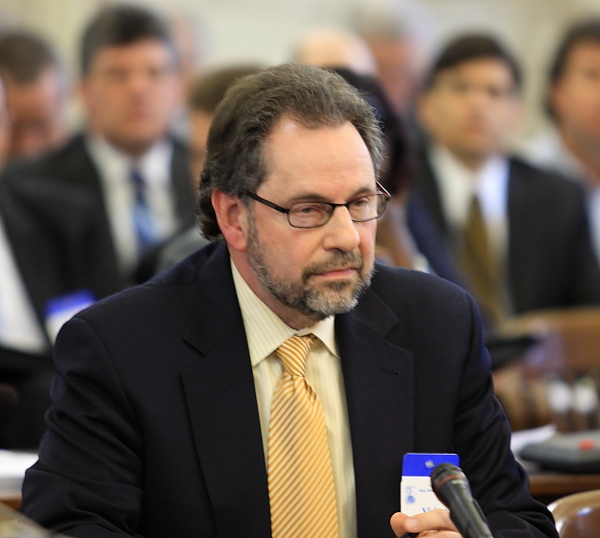
Jorge Berkowitz testifies in support of Licensed Site Professionals bill

Jorge Berkowitz testifies in support of Licensed Site Professionals bill (4/15/08)

“I am not a crook, … I have earned every cent. And in all of my years of public life I have never obstructed justice.”

~~~ (Richard M. Nixon)

Jorge Berkowitz is a senior associate with Langan Engineering. He works as a consultant to responsbile parties (polluters) in cleaning up toxic waste sites.

In 2008-09, Berkowitz testifed in support of legislation to privatize the NJ toxic site cleanup program and create so called “Licensed Site Professionals” (LSP).

At the time, we testified that an LSP program would result in gross conflicts of interest and invite corruption and abuse.

The LSP bill was signed into law in 2009 and on May 11, 2010 Berkowitz was nominated by Governor Christie to the Site Remediation Professional Licensing Board, where his conflicts of interest have multiplied vastly. The LSP Board oversees the LSPs, including enforcement of ethics, conflicts of interest and professional standards. 

The old cliche about the fox guarding the henhouse doesn’t begin to describe the swamp that Berkowitz is up to his eyeballs in. 

We wrote about all this in: Privatization of NJ Toxic Cleanup Law Reveals a Systematic Collapse“Forget it, Jake. It’s Chinatown.”

Well we now learn – SURPRISE, SURPRISE! - according to today’s Star Ledger - that Berkowitz’ firm, Langan, has been pumping big money into a political operation that supports Governor Christie.

Boldly oblivious to the irony and with no sense of shame, that sleazy pro Christie group is named “Reform Jersey Now” - did you get that?:

List of biggest donors to pro-Christie group includes contractors paid millions by N.J.

TRENTON — Contractors paid hundreds of millions of dollars by state agencies were among the top donors to a group that has been publicly promoting Gov. Chris Christie’s legislative agenda for the past six months.

Reform Jersey Now, a nonprofit organization, voluntarily released its list of donors Wednesday. The release came as the group simultaneously announced it was ceasing operation effective Friday. …

Among its top donors: …

  • Langan Engineering & Environmental — $25,000. The firm received about $2 million from various state government departments last year. Jorge Berkowitz, a senior associate with the company, is on the state’s Site Remediation Professional Licensing Board. “I’ve never heard of (Reform Jersey Now) before,” said Berkowitz, “I know nothing about what Langan donates. I will stand on my credentials and record.”

Jorge, you might as well stand on your credentials, because their ain’t much else left.

The only honorable thing to do at this point – given that appearance of a conflict of interest is the legal standard in NJ - is to immediately resign from the LSP Board.

The whole world is watching, Jorge.

[Update - Note also, Section 3 of SRRA provides the Governor with an ethical resolution:

 d. (1) The Governor may remove a member of the board for cause, after a public hearing.

Also, Section 16 provides

p. A licensed site remediation professional shall not allow the use of his name by a person, and shall not associate with a person in a business venture, if the licensed site remediation professional knows or should know that the person engages in fraudulent or dishonest business or professional practices regarding the professional responsibilities of a licensed site remediation professional.

[ps - here's how the game works - purely hypothetically of course - the pay-to play contribution to Christie gets a bigger payback than just a seat on the LSP Board (which amounts to immunity from license revocation or professional sanctions). Berkowitz' cleanup cases can expect to get very little scrutiny at DEP and he can use his access and influence with the Administration to stand down any negative DEP audits or hostile enforcement actions. So, similar to a kickback scheme, some of the money that polluters can save in cutting corners on cleanup costs can be plowed back to Berkowitz' firm with little risk of detection or sanctions by DEP. Just imagine having the cops, the  prosecutor, and the judge on a leash! Not bad, eh? Goes to show, you get what you pay for!] 

Categories: Uncategorized Tags:

A Year When Slogans Masked Policy: “Red Tape” – “Commmon Sense Regulation” – “DEP Transformation”

December 29th, 2010 No comments

We continue the 2010 year in review today, starting with a brief discussion about the ways the environmental rollback has been publicly justified by slogans used by Governor Christie, his DEP Commissioner Bob Martin, and the Red Tape Czar, Lt. Governor Guadagno. 

The little media coverage there has been has mostly uncritically parroted these slogans, media thereby abdicating their role as truthtellers in favor of stenography.

So let’s start by briefly describing the Christie slogans, explore their deeper meaning, and expose the policies they mask and the special interests they benefit.

Slogans are intended to shut down thought. Slogans are a very different form of rhetoric than the traditional practice of spin.

Spin at least remains tethered to underlying reality: it seeks to interpret reality and persuade through rational argument. But slogans are not grounded in interpretation of reality or a form of persuasion. 

Slogans are empty – they displace the substance of reality, and fill it with a myth that appeals to irrational motives or fears. Slogans are designed not to seek truth or persuade, but to hide the truth and manipulate thought and emotion by creating a false perception of reality.

Slogans are made necessary because of the strong public support for protecting public health and the environment.

Obviously, a DEP Commissioner is not going to simply say we are going to make it easier and more profitable for developers to rape the landscape and reduce the pollution control cost of oil and chemical companies so they can dump more toxic crap in your air and water while making record corporate profits (all while emulating Dupont, who according to the Associated Press is off shoring US jobs, disinvesting in the US, and massively investing in third world countries:

“Take the example of DuPont, which wowed the world in 1938 with nylon stockings. Known as one of the most innovative American companies of the 20th century, DuPont now sells less than a third of its products in the U.S. In the first nine months of this year, sales to the Asia-Pacific region grew 50 percent, triple the U.S. rate. Its stock is up 47 percent this year.

DuPont’s work force reflects the shift in its growth: In a presentation on emerging markets, the company said its number of employees in the U.S. shrank by 9 percent between January 2005 and October 2009. In the same period, its work force grew 54 percent in the Asia-Pacific countries.

“We are a global player out to succeed in any geography where we participate in,” says Thomas M. Connelly, chief innovation officer at DuPont. “We want our resources close to where our customers are, to tailor products to their needs.”

So instead we have slogans, founded on either false premises or outright lies.

The worst false premises and outrights lies that Christie has manufactured to mask and support his agenda are that:

  • environmental and public health protections are related to the economic recession, unemployment, and State budget crisis (Slogan: “Common sense regulation“);
  • that regulations drive companies out of NJ and create barriers to new investment (Slogan: “Red Tape“); and
  • that DEP bureaucracy is preventing the private sector from creating jobs and improving NJ’s environment  (Slogan: “DEP Transformation“)

These slogans serve a dual purpose.

In addition to being used to mask and justify a rollback agenda, slogans are deployed to redefine problems and pre-empt solutions by diverting attention from the real underlying causes of serious problems: 

  • instead of going on offense and talking about ways to respond to global warming; cleanup air, water, and land pollution; or preserve remnants of vanishing open space, our collective focus, resources, and advocacy efforts are diverted. We are forced to play defense and defend existing weak and ineffective protections and programs from rollback;
  • instead of putting the flawed policies and those responsible for creating problems on the defensive and talking about the greed of Wall Street financial institutions and the failures of lax regulatory oversight, Christie scapegoats DEP and environmental protections (more subtly, but basically the same way he attacked the teachers union); and
  • instead of campaigns to shut down coal plants and make a rapid transition to renewable energy, we are consumed responding to straw men arguments are used to change the conversation and frame false choices like the need to reduce energy costs by ending subsidies to renewable energy and eliminating the Societal Benefits Charge.   

So the business community recieves a twofer: they dodge accountability for creating huge problems AND are provided “regulatory relief”.

Viewing developments through this lens, we present stories from the second quarter of 2010:

April

May

June

Tomorrow we’ll try to close out the year – and if space and time permit, highlight expectations and priorities for 2011.

Categories: Uncategorized Tags:

Year of Rollback, Retreat, and Appeasement – Christie Worse Than Whitman 1994

December 28th, 2010 No comments

The year 2010 began with low expectations for environmental progress. 

We started in the wake of Obama’s disaster at the global warming treaty collapse at Copenhagen; with deep disappointment with Congressional Democrats’ inability to enact real reforms despite huge majorities in both Houses; and under a dark cloud cast by the election of  NJ Governor Chris Christie.

But remarkably, events actually were worse than anticipated, while we broke new ground on the appeasement front.

Needless to say, we have been very closely following the Christie Administration – and we’ve exhaustively documented a monstrous record.

In sum, we see 5 deeply disturbing trends:

  • Christie is engaged in systematic environmental rollbacks and attacks on regulation and government. There are indications that Christie’s policy and politics have become a model for fellow Republican Governors and Tea Party extremists;
  • the environmental community’s largest groups are asleeep or in retreat (with the exception of Jeff Tittel of Sierra Club, Environment NJ, and, more recently, the Highlands Coalition); 
  • the NJ Environmental Federation is engaged in appeasement;
  • the press hasn’t even scratched the surface or tried to hold the Governor accountable;
  • the Democrats in the legislature either support the Governor or don’t have the spine to take him on (with the exception of Senate Majority Leader Barbara Buono).  

So here is the NJ 2010 year in review - a monthly calendar of major events followed by Wolfenotes.com (for national issues, visit the DC PEER site).

Our first installment covers the campaign, transition, and first quarter of 2010.

We set the stage for 2010 and begin with 2009 campaign and post election transition lowlights:

Campaign issues

Post Election transition: 

January

February

March

Come back tomorrrow, when we present the second quarter of 2010.

Categories: Uncategorized Tags:

EPA Administrator Jackson Has Longstanding Spotty Record On Toxic Chromium

December 27th, 2010 No comments

Last week, the Environmental Working Group (EWG) released a study that found widespread toxic hexavalent chromium in the drinking water in 35 US cities.

Curiously, NJ – a State with the worst chromium contamination in the country, a favorable precedent setting federal appeals court decision,  and a leader in the risk assessment science - was not part of the EWG study.

That’s like doing a study on the dairy industry and ignoring Wisconsin (aside from the fact that EPA Administrator Jackson was involved with chromium for 8 years in NJ, including direct involvement in a chromium whistleblower case.)

shocked, simply shocked to find chromium....

shocked, simply shocked to find chromium....

The EWG Report got great media play. The Washington Post story:  Study finds probable carcinogen in tap water of 31 U.S. cities had a big impact, forcing EPA Administrator Lisa Jackson to meet with 10 US Senators and issue a statement that EPA would develop standards and put in place interim protections (see: EPA urges testing for chemical in tap water

The press coverage of Jackson – or Jackson’s spin – seemed like a Claude Rains Casablanca redux: ”I’m shocked, just shocked, that chromium is in drinking water”.


So, I thought I’d remind folks of Jackson’s extensive experience in New Jersey with chromium - PLEASE HIT THE LINKS BELOW – let’s hope that her NJ record is not repeated at EPA.

News Releases

For Immediate Release: December 27, 2010
Contact: Bill Wolfe (609) 397-4861; Kirsten Stade (202) 265-7337

EPA’S JACKSON HAS CHECKERED CHROMIUM RECORD — New Jersey Tenure Marked by Stifling Health Warnings on Deadly Substance

Washington, DC — Three days before Christmas, EPA Administrator Lisa Jackson promised swift action on the presence of hexavalent chromium (or chromium-6, the substance made famous by Erin Brockovich in California) in drinking water after meeting with 10 U.S. Senators. During her tenure as the top environmental official in New Jersey, however, Jackson stalled or minimized health warnings on chromium-6, including those from her own staff, according to materials posted today by Public Employees for Environmental Responsibility (PEER).

Despite being seemingly taken by surprise by the Environmental Working Group findings of chromium in drinking water, from her very first until her last days as Commissioner of the New Jersey Department of Environmental Protection (DEP) from 2005 to 2008, Jackson wrestled with increasingly dire scientific findings that raised big questions about how protective her department’s policies were, including –

  • A DEP risk assessment that found current New Jersey standards for chromium 6 in soil are more than 200 times laxer than needed to protect public health. While this assessment was about soil, it pointed to risks from ingestion in water and recommended review of stomach cancer rates near contaminated sites. That assessment has yet to be translated into standards;
  • A DEP scientist-whistleblower who revealed state sampling data showing that individual cancer risks from continued presence of airborne chromium may be as high as 1 in 10 at some sites the state has declared to be clean. Nonetheless, Commissioner Jackson lifted the moratorium on chromium cleanups, thus allowing more inadequate site remediations to proceed;
  • A 2008 DEP health assessment that found heightened risks of lung cancer from exposure to airborne chromium in the Jersey suburbs of the New York metropolitan area; and
  • Newspaper exposés documenting that scientific fraud by consultants and improper industry influence led to relaxed DEP cleanup standards for chromium, saving corporate polluters hundreds of millions of dollars in reduced cleanup costs.

None of these developments were met with substantive reforms, however. “For years Lisa Jackson has reacted to blaring chromium alarms as if each one was news to her,” stated PEER Executive Director Jeff Ruch, pointing to cities like Garfield. “Thousands of people in New Jersey remain as vulnerable to chromium risks as they ever were.” Compounding the problem was that Jackson and her top deputies took actions to cut off the flow of new scientific information rather than addressing underlying risks, such as –

  • Abolishing the DEP Division of Science & Research which produced the chromium risk assessments and replacing it with an advisory body with industry representation;
  • Removing the DEP whistleblower, Zoe Kelman, from chromium-related assignments and denying her meaningful work. Kelman eventually resigned in disgust; and
  • Issuing “gag” orders prohibiting scientists from disclosing agency data to any outside parties “until it is ready for public distribution.”

“Chromium in water is a concern but it is also of concern in the air and soil. We need a comprehensive national response to chromium in all media,” added Ruch. “Our fear is that we will see the New Jersey pattern of promises but no follow-through repeated at EPA.”

###

View the 12/22/10 Lisa Jackson statement on chromium

Peruse delayed 2009 DEP chromium risk assessment

Look at Jackson lifting chromium site work moratorium 

Examine 2008 airborne chromium risk warning 

Revisit DEP chromium whistleblower isolated by Jackson 

Read unanswered PEER letter to Jackson on DEP whistleblower 

See Jackson chromium-inspired gag order

Review industry influence on chromium limits in New Jersey

Trace New Jersey chromium policy impasse


Categories: Uncategorized Tags:

What You Won’t Hear on TV News About the Blizzard

December 27th, 2010 2 comments

Exactly these extreme weather events are predicted by global warming models

[Update 3: 1/25/11 - The New York Times does an interesting story, as explanations and theories begin to emerge:  Cold Jumps Arctic ‘Fence,’ Stoking Winter’s Fury -

The deeper issue is whether this pattern is linked to the rapid changes that global warming is causing in the Arctic, particularly the drastic loss of sea ice. At least two prominent climate scientists have offered theories suggesting that it is. But others are doubtful, saying the recent events are unexceptional, or that more evidence over a longer period would be needed to establish a link.

Since satellites began tracking it in 1979, the ice on the Arctic Ocean’s surface in the bellwether month of September has declined by more than 30 percent. It is the most striking change in the terrain of the planet in recent decades, and a major question is whether it is starting to have an effect on broad weather patterns.

Ice reflects sunlight, and scientists say the loss of ice is causing the Arctic Ocean to absorb more heat in the summer. A handful of scientists point to that extra heat as a possible culprit in the recent harsh winters in Europe and the United States.

Their theories involve a fast-moving river of air called the jet stream that circles the Northern Hemisphere. Many winters, a strong pressure difference between the polar region and the middle latitudes channels the jet stream into a tight circle, or vortex, around the North Pole, effectively containing the frigid air at the top of the world.

[Update 2: 12/29/10 - Ed Rodgers of NJN TV does a story on NJ's extreme weather - but State Climatologist Robinson, as usual, rejects global warming links and actually says it is NOT climate change (while speculating about La Nina), says "meteorology trumped climatology".  Robinson should talk to Dr. Cohen, who has a very different analysis]

Update 1: 12/28/10Superb interview of Dr. Paul Epstein, associate director of the Center for Health and the Global Environment at Harvard Medical School. Click on and Watch it! (w/transcript]

Global warming is real and it’s already here. (see broader Northeastern US impact assessment).

While science can not say for sure that global warming (climate change) “caused” this specific blizzard (weather), the news media should try to begin to educate the public about the relationships between weather and climate; the differences between “warming” and “weather”; and inform people that the bizzard is exactly the kind of extreme weather event predicted by global warming models.

This is a teachable moment. Millions of people watch their local weatherman every day!

People don’t associate blizzards with “global warming”. They associate them with Ice Ages, a false perception that the global warming deniers are taking advantage of. 

But instead of doing this education, the public is getting bad information or having misperceptions reinforced and validated.

Here is Jim Hansen’s take:

“The standard scientist answer is “you cannot blame a specific weather/climate event on global warming.” That answer, to the public, translates as “no”.  However, if the question were posed as “would these events have occurred if atmospheric carbon dioxide had remained at its pre-industrial level of 280 [parts per million] ppm?”, an appropriate answer in that case is “almost certainly not.” That answer, to the public, translates as “yes”, i.e., humans probably bear a responsibility for the extreme event.“

“In either case, the scientist usually goes on to say something about probabilities and how those are changing because of global warming. But the extended discussion, to much of the public, is chatter. The initial answer is all important. Although either answer can be defended as “correct”, we suggest that leading with the standard caveat “you cannot blame…” is misleading and allows a misinterpretation about the danger of increasing extreme events.

I am not an expert on this stuff and don’t hang at weather or global warming sites, so I did a quick Google turned up this discussion of whether global warming “produced” last October’s Nor’easter, but not much on yesterday’s blizzard.

So I thought I’d provide relevant excerpts from the recent NY State Sea Level Rise Task Force Report to the Legislature (great timing, it’s draft and now open for public comment!) and NJ’s Coastal Assessment (known as the 309 Assessment, August 2010 draft)

The Sea is Rising

Our climate is changing, causing the world’s seas to rise. Since 1970, New York State has witnessed incrementally higher increases in average temperatures than the rest of the United States, an increase nearly twice the global average. These changes have resulted in warmer winters and hotter summers and other changes in the form of fewer, but heavier snows and heavier, more intense rainfall and storms. The warming produced by global climate change causes the sea level to rise because warmer water takes up more space and higher temperatures are melting ice sheets around the globe. New York Harbor has experienced an increase in sea level of more than 15 inches in the past 150 years, with harbor tide gauges showing a rise of between 4 and 6 inches since 1960.

Findings:

1. Sea level rise and coastal flooding from storm surge are already impacting and will increasingly affect New York’s entire ocean and estuarine coastline from Montauk Point to the Battery and up the Hudson River to the federal dam at Troy. New York must act now to address the challenge of sea level rise.
 
2. The likelihood that powerful storms will hit New York State’s coastline is very high, as is the associated threat to human life and coastal infrastructure. This vulnerability will increase in area and magnitude over time.
 
 From NJ’s Coastal Zone Assessment, which classified coastal storms as a “hig risk” “high priority” concern:
Many parts of New Jersey’s densely populated coast are highly vulnerable to the effects of flooding, storm surge, episodic erosion, chronic erosion, sea level rise, extra-tropical, and to a somewhat lesser albeit not at all unimportant degree, tropical storms. The risk to the State’s coast posed by each of these particular hazards is also likely to be complicated by anticipated changes in regional climate in the future. Hazards identified as a high level of risk have been so identified through historical experience and vulnerability to coastal hazards as documented within each county’s Multi-Hazard Mitigation Plan (produced in accordance with Federal Emergency Management Agency guidance under the Disaster Mitigation Act of 2000) and assessments produced by both the federal government and regional academic institutions.
 
New Jersey’s coastal area is comprised of a variety of different landscape types ranging from elevated headlands to wave-dominated and mixed-energy barrier islands to extensive mosaics of tidal and freshwater wetlands. Although each of these areas has evolved uniquely in response to their respective environmental conditions over many millennia, the entirety of New Jersey’s coastal area is subject to the damaging impact of coastal hazards including riverine and coastal flooding and gale-force winds from hurricanes, nor’Easters and extreme rain events. Although the scale, duration and seasonality of each of these coastal hazards varies by storm, the proximity of much of New Jersey’s coastal population and infrastructure to areas impacted by these hazards, as well as long-term hazards such as chronic erosion, has resulted in the potential for damaging consequences to the welfare of people and property during future storm events. This circumstance is exacerbated by long-term biophysical and climate trends which indicate that New Jersey will likely be subject to higher sea levels, an accompanying loss of natural coastal buffers (leading subsequently to more extensive overland storm surges and periodic inundation/flooding) as well as a trend toward stronger storm events, albeit occurring with greater irregularity and/or frequency. The sum consequence is the need for coastal managers and planners to accurately identify natural hazard risks and vulnerabilities throughout New Jersey’s coastal area in order to provide proactive guidance in planning and mitigating against potentially damaging future events.

A recent characterization of the anticipated coastal impact of sea level rise was produced by Princeton University researchers in 20051. The researchers created projections of future sea level rise based on a combination of a derivation of the combined sea level rise from global and local factors, yielding an estimated range of between .31 and 1.10 meters by the year 2100. The researchers then applied sea level rise inundation levels considered to be most likely (.71 meters, which, due to limits in data precision at the time, was approximated as .61 meter/2 feet) and highest end (1.10 meters, approximated to be 1.22 meter/4 feet) upon available state elevation data. The result was that 1 – 3% of New Jersey’s land area would likely be subject to permanent inundation by the end of the century. Projecting these same sea level rise estimates onto the base flood elevations of present special flood hazard areas, the researchers concluded that 6.5 – 9% of the State would thus be subject to special flood hazard area designation.

Categories: Uncategorized Tags:

Ducks Cross The Delaware

December 25th, 2010 No comments

ducks

Breaking: Ducks Cross Icy Delaware River Waters

Trenton, NJ – Six ducks were seen crossing the Delaware River at Titusville early this morning, as a Christmas nor’easter continued to dump heavy rains on the region. The lone female was accompanied by five male ducks, reportedly not her brothers. Flocks of geese also were seen flying overhead.

The Times sent a team of investigative reporters and artists to monitor duck developments and bring you exclusive coverage of this breaking news story (enjoy our exclusive illustrations!)

dReligious leaders complained that publication of the illustrations would send the wrong message to young women about multiple sex partners and sex outside of marriage.

Government officials also opposed publication on the grounds that the ducks’ locations would compromise national security and be used by colonial insurgents as a recruitment tool.

Although no ducks were seen in the river by Trenton, Times reporters that are embedded with British Troops in Trenton Barracks also contributed to this Report.

According to British officials in Trenton, troops have joined with Hessian coalition forces to celebrate Christmas. They continue to work effectively together in the joint “surge” strategy announced early last year by King George.

The “surge” has tamped down insurgent forces, leading to greater security throughout the colonies.

Princeton22Meanwhile, scientists at the College of NJ at Princeton warned that the rains could destroy vulnerable British forts and troop locations throughout the entire northeastern colonies. Such destruction would only work to build insurgent momentum, they say. Global raining models support their argument, they say.

Scientists noted that rainfall was the highest in a decade and that their calculations showed rainfall would increase. As rainfall continues to run off the ducks backs and feed floodwaters, this ultimately will devastate colonial military infrastructure, they claim.

Scientists’ models predict a humiliating defeat by insurgent colonists, whose momentum, military prowess, and support among flood victims and colonists are building.

The predicted destruction of British forces is caused by increasing rainfall levels, which fuel insurgents and lift the tide of the insurgency scientists conclude.  

“We are witnessing a colonial catastrophy that will lead to complete imperial collapse in North America - the surge is a failure and the King and his military leaders are incompetent hacks”, warned Dr. Bill Wolfe.

Note for Dave Pruingle - Major John Andre. A so called Princeton Grad like is well versed in this history. Do the Wiki if you forgot.

Note for Dave Pringle - Major John Andre. A so called Princeton Grad like you is well versed in this history. Do the Wiki if you forgot.

Wolfe is an expert in global raining and insurgency and a frequent critic of government policy.  

Wolfe claimed that his calculations projected that British control would be washed away and replaced by insurgents, who would establish a new North American government power that would dominate world affairs for the next 250 years, before collapsing from imperial over-reach, wars, greed, corporate control, and apathy sometime around 2000.

But the scientists views were scoffed at by the King’s spokesmen and high level British military and diplomatic officials, who requested to remain annonymous.

“The King’s surge in Trenton and throughout the colonies is working, particularly in the northeast colonies. The formation of our Hessian coalition and expanded security training of Hessian forces has shown great results“, a high level diplomatic source said.

“Our diplomatic and military counterinsurgency strategy has turned the corner and neutralized colonial insurgents. There is light at the end of the tunnel, and British prestige will be maintained” said British military leader, General Betray-Us.

“The King’s efforts are protecting the British homeland and are the glory of an expanding empire” concluded a high level King’s official.

PaineLast week the King himself  joked that the theory of global raining and the alleged power of  colonial insurgents is a total myth, with absolutely no supporting evidence. The King summarily dismissed the consensus view of scientists as “a big lie crafted by left wing insurgent propagandists, like Tom Paine.”

Dave Pringle of the NJ Environmental Federation agreed with the King’s controvesial remarks.

“The King was speaking off the cuff” Pringle said.”King George’s leadership has created a model of military effectivenesss. I have commitments from the King’s Administration that British interests will be protected in the colonies.” 

Pringle concluded that “We look forward to continue to work with the King and his officials in keeping Britain safe from insurgent forces.”

(see illustrations of river conditions below)


wc222

wc1

wc22

wc2

wc3

wc4

wc5

wc6

wc77

wc7

A more graphic depiction of the fate of the good Major Andre.

A more graphic depiction of the fate of the good Major Andre.

Categories: Uncategorized Tags:

EPA Greenhouse Gas Rules: A “Modest” and Empty Plan

December 23rd, 2010 No comments

[Update 3 - Bingo! at least the McClatchy story gets it right (McClatchy was the only news outlet with the integrity to expose the Bush Administration's Iraw war justification as a fraud too):

Existing plants — about 500 coal-fired power plants and 150 refineries — would continue to operate as usual until states impose their own regulations.

Does anyone think that new Republican Governors in Pennsylvania and Ohio will impose strong regulations on all their dirty coal plants? No way that happens. If you believe it will, I've got some real estate in Florida for you!

Update 2 - 12/24/10 - Consider this absurdity:

Under the Clean Air Air Section 108-110 NAAQS program, EPA strictly regulates billions of consumer products - from paints, hairspray, and deodorants to lawn mowers and ATV's - to get tiny emission reductions to reduce respiratory disease (via ground level ozone and fine particulate NAAQS).

I don't want to downplay the significance of respiratory disease, but if EPA can do all that to reduce human respiratory diseases, why can't EPA use the same strict regulations to reduce GHG emissions that are killing planetary scale ecosystems and thousands of people?

Why can't EPA do more than just "modest" regulations to only slightly reduce GHG emissions from 650 large industrial plants that produce less than 40% of GHG emissions (and with no specific emission reductions even specified)?

EPA has very successfully improved air quality over the ast 40 years using the CAA NAAQS approach.  So we know what works.

EPA's failure to invest same level of effort for GHG emissions using the same effective  NAAAQS tools is absurd and reflects not science, but anti-regulatory ideology and the political power of special interests to cow EPA (no pun) . 

Because yes, I favor regulating methane emissions fom cows too. There is lots we can do, from reducing the amount of meat and dairy we eat, to reducing the size of the herd and changing the way we feed and graze cattle.

And yes Obama supporters, I  know all about the EPA "Tailoring rule" and wrote a similar analysis last December: EPA Proposed Global Warming Rule Would Protect Polluters by Locking in Loopholes

Note - I changed the original title to avoid valid criticism of inaccurately comparing the Bush and Obama EPA. The Bush administration declined to regulate coal/oil power an refinery emissions at all - while the Obama EPA took a tiny "modest" step to do so (EPA's own words in EPA press release headline).  Plus, the EPA plan is only a schedule, it has no content and is thus by definition "empty". end update]

Update 1: There are different options under the Clean Air Act for regulating Greenhouse gas emissions. To understand the flaws in the EPA’s NSPS sector based approach announced today requires a broader discussion of alternative approaches to regulating GHG under the Clean Air Act discussed by the Bush EPA in the July 2008 ANPR. 

The Obama EPA took same wrong path Bush took. Obama EPA rejected the stronger, science based Section 108 National Ambient Air Quality Standards (NAAQS) criteria pollutant approach in favor of pursuing the ”flexible”, ”cost effective”, and “political feasible” Section 111 NSPS Sector approach.

Under Section 108 NAAQS: (page 44,367):

Section 108 of the CAA requires EPA to identify and list air pollutants that ‘‘cause or contribute to air pollution which may reasonably be anticipated to endanger public health or welfare.’’  For such pollutants, EPA promulgates “primary” and “secondary” NAAQS. The primary standard is defined as the level which, in the judgment of the EPA Administrator, based on scientific criteria, and allowing for an adequate margin of safety, is requisite to protect the public health. The secondary standard is defined as the level which is requisite to protect the public welfare. Within one year of EPA of a new or revised NAAQS, each State must designate its regions as nonattainment, attainment, or unclassifiable. Within three years from the NAAQS promulgation, States are required to adopt and submit to EPA a State implementation plan (SIP) providing for the implementation, maintenance, and enforcement of the NAAQS.  ….. the courts have held that when setting a NAAQS, EPA cannot consider important policy factors such as cost of compliance.  

Using the 108 NAAQS criteria pollutant approach would have allowed EPA to adopt 350 ppm as a NAAQS, set that standard irrespective of costs, defined the entire country as a non-attainmetn zone, and directly regulated all emission sources, not just 2 sectors that account for less thnan 40% of total emissions. Section 108 NAAQS is faster, science based, puts EPA in charge, does not consider costs, and is stronger overall than the EPA seelcted Section 111 NSPS approach.

The EPA NSPS Section 111(d) sector approach is flawed, as outlined by EPA ANPR (@  page 44,487). Basically, the NSPS consider costs and allow coal powered states with grandfathered existing soruces to take advantage of huge loopholes in EPA rules:

Instead of giving EPA direct authority to set national standards applicable to existing sources in the source category, section 111(d) provides that EPA shall establish a procedure for states to issue performance standards for existing sources in that source category. Under the 111(d) mechanism, EPA first develops regulations known as “emission guidelines”.  These may be issued at the same time or after an NSPS for the source category is promulgated. Although called “guidelines”,  they establish binding requirements that states are required to address when they develop plans to regulate the existing sources in their jurisdictions. These state plans are similar to [Note: not legally the same as] state implementation plans and must be submitted to EPA for approval. …. In the event that a state does not adopt and submit a plan, EPA has authority to then issue a federal plan covering affected sources.[Note: what happens if a state has a crappy plan?]…, both the statute and EPA implementing section 111(d) recognize that existing sources may not always have the capability to achieve the same levels of control at reasonable cost as new sources. The statute and EPA regulations in 40 CFR 60.24 permit states and EPA to set less stringent standards or longer compliance schedules for existing sources where warranted considering cost of control; useful life of the facilities; location or process design at a particular facility; physical impossibility of installing necessary control equipment; or other factors making less stringent limits or longer compliance schedules appropriate. [that spells LOOPHOLE]

The Bush EPA rejected the Section 108 NAAQS approach as too costly and politically infeasible.

So did Obama and Lisa Jackson. Same as Bush – this is not change we can believe in].

I just got off a press conference call on EPA’s announced new greenhouse gas (GHG) emissions standards.

Today, EPA announced that they would issue “New Source Performance Standards” (NSPS) under the Clean Air Act for GHG emissions from coal and oil power plants and refineries (see this for background on EPA’s approach to GHGs). 

EPA merely announced schedules for the new rules and refused to comment on any substance.

Oil/coal NSPS rules will be proposed by 7/26/11 and adopted by 5/26/12. Rules for refineries will be proposed by 12/8/11 and adopted by 11/15/12.

By way of background, the rules stem from the 2007 US Supreme Court’s decision in Massachusetss v. EPA that found that GHG are “pollutants” under the Clean Air Act. In that decision, the Supreme Court  directed EPA to make a regulatory determination under the Clean Air Act.

In response, EPA issued a finding that GHG emissions “endanger” public health and welfare. Several states and environmental groups then filed petitions to force EPA to enact meaningful regulations. 

Today’s announced plan to adopt NSPS rules result from Settlement agreements EPA entered into under that litigation. EPA entered into two settlement agreements to issue rules to address greenhouse gas emissions from fossil fuel-fired power plants and refineries.  These two industrial sectors make up nearly 40 percent of the nation’s greenhouse gas emissions.

So the take home point is that this is not about EPA leadership, but rather EPA response to litigation and Court mandates.  

There are about 500 coal or oil power plants and 150 refineries currently operating in the US that could be subject to the new standards IF they make “major modifications”, or IF states voluntarily decide to fully incorporate and apply federal emission guidelines.

Under the Clean Air Act, it is important to note that EPA national NSPS do NOT apply to exisiting plants, which are left to State programs under State plans. EPA issues emissions guidelines that states may consider in their State Plans (see above Section 111(d) looppholes).

EPA repeatedly refused to talk about any substantive aspect of the new rules or to estimate a range of potential GHG emissions reductions the rules might achieve.

During the press briefing, EPA’s Assistant Administrator for Air used all the code words that signal weakness and dodge Congressional minefields.

She repeatedly stressed that any new rules would be: 1) modest; 2) cost effective; 3) flexible; 4) common sense; 5) made part of existing EPA sector based NSPS air toxics and criteria pollutat permit programs; and 6) phased in by EPA and States. She repeatedly refused to estimate ANY level of emission reduction or how many existing plants the new rules could impact. 

In response to reporters who repeatedly asked the political hot button question about Republican opposition in Congress, EPA emphasized that: 1) the NSPS were NOT a cap and trade system; 2) did NOT establish a price on carbon; 3) did NOT involve EPA setting an overall emissions reduction goal: and 4) were based on the longstanding Clean Air Act NSPS program and therefore did NOT require new Congressional authorization (but this will not shield this proposal from Congressional oversight).

The new NSPS rules will be based on existing technology at existing coal and oil power plant and refineries.

In repeatedly downplaying the significance of the new rules (i.e. the EPA AA for air actually called the proposal ”business as usual“), EPA touted decades long experience with these “heavily regulated” sectors. During this period, EPA said they had documented several existing technologies that can provide significant opportunities to significantly reduce emissions cost effectively. Based on this regulatory experience, EPA estimated the significant GHG emissions reductions could be made by technology investments that had payback periods from at little as 3 months to 3 years.

Yet, despite this claimed extensive experience and well known cost effective GHG emission reduction opportunities, EPA refused to identify one technology or provide an estimate – or range – of potential GHG emissions reductions that were feasible or could be expected to result from the new rules.

The EPA NSPS limited sector approach is the worst of all possible  worlds, for at least three reasons:

1. It can not cap and reduce emissions, or get us to meaningful emissions reduction goals

The plan is a huge disappointment to any environmentalist who had hoped EPA would use existing authority under Section 108 NAAQS of the Clean Air Act to comprehensively and aggressively regulate GHG emissions in the wake of the death of the cap and trade legislation and new Republican control of the House of Representatives.

The flaws are several:

  • the approach is limited to just 2 industry sectors and will apply to only 40% of current GHG emissions
  • there are no overall GHG emission reduction goals or requirements linked to the individual plant specific NSPS permitting technology based approach. Thus, the rules can not block new coal power plants or increases in current GHG emissions.
  • EPA NSPS are based on costs factors and existing technology – they are not technology forcing.
  • EPA NSPS consider costs and States may balance plant specific costs and economic factors. This defaults to the lowest common denominator at the State level and which will undermine the ability to secure needed deep reductions. 
  • EPA national NSPS apply directly to only to new facilities or major modifications of existing facilities – states are given flexibility to apply EPA emission guidelines to existing facilities.
  • States have great flexibility to set standards for existing facilities, both in terms of the substance and the schedules to implement GHG emisison controls. So coal dominant states like Ohio, Illinois, Pennsylvania will not limit emissions from existing coal plants and EPA can not force them to do so.

2. It will prompt furious industry opposition and political attacks in Congress – all pain, no gain.

Regardless of these shortcomings, politically powerful coal and oil inteterests nonetheless will see EPA regulation as a potential threat and attack and oppose the proposal strenuously.

3. It is conceptualy flawed and can not be integrated into internation Climate Change treaty efforts

For policy wonks, the proposal is conceptually flawed, because the technology based approach under the Clean Air Act’s “New Source Perfomacne Standards” (NSPS) approach is not tied to any national  emission reduction targets (i.e it is NOT a cap). Thus, NSPS can not address the fundamental objective of a GHG policy: to cap and reduce overall current emissions to meet a numeric global warming goal (e.g. 350 ppm atmospheric CO2 concentration) or overall national reduction goal as part of an enforceale global warming initiative under UN processes.

This is go slow status quo – not change we can believe in.

It will be intersting to see how this plays ou in corporate press. All the big news outlets participated (WaPo, NY Times, Wall Street Journal, CBS, Reuters, Dow Jones, USA Today, LA Times, McClatchey, Politico, et al)  but all reporters asked questions that suggested they were deeply confused about basics, like how NSPS program works and how technolgy based emission controls compare to a cap and trade approach.

Interestingly, the EPA spokesperson was NOT Administrator Lisa Jackson – I sensed that using the EPA Assistant Administrator for Air as EPA spokesperson was an attempt to downplay this as “business as usual” to mute harsh Congressional and business community reaction.

My guess is that national enviro’s will salute it – warts and all – in an all too typical effort to build support, but really this stance is just a political compromise that reveals weakness and fear of Congress and industry oppostion.

[note: technical portions of the original post were slighyly revised and corrected. Conclusions have not been changed.]

Categories: Uncategorized Tags: