Archive

Archive for April, 2010

Earth Week Day 3: Clean Communities Cover

April 22nd, 2010 No comments
Trenton, NJ

Trenton, NJ

For the third installment in our Christie Earth Week series, we focus on DEP Commissioner Bob Martin KICKS OFF EARTH WEEK WITH TRENTON LITTER CLEANUP:

TRENTON -Department of Environmental Protection Commissioner Bob Martin kicked off a statewide celebration of this week’s 40th anniversary of Earth Day today when he joined a team of youths and adults at Trenton City Hall for the start of the annual Trenton Litter March.

Commissioner Martin provided opening remarks to the group, lauding their efforts as they embarked on a citywide cleanup – one of a host of events taking place statewide this week, which is designated as Environmental Education Week 2010 in New Jersey.

While we’re all for the Trenton Litter March (we marched in the first one in 1987 as a DEP employee, AND we picked up litter), we feel obligated to point out that the emperor has no clothes. None. Naked.

While I was not at this year’s march, it sounds like Mr. Martin merely spoke at “the start” of the event at City Hall, and didn’t walk Trenton’s neighborhoods and pick up trash (maybe he was afraid of the gangbangers – click on that link to see a racist stunt NJ Senate candidate Martin took right out of the Wallace/Nixon/Reagan “southern strategy” playbook).

There’s an awful lot of green-washing and hypocrisy going on in these events, so we thought we might briefly touch upon important material facts Martin left out of his press release and provide a glimpse of what Martin might have seen had he walked Trenton’s streets.

First of all, Martin failed to note that the Trenton Litter March (and hundreds of cleanup events just like it in communities across the state) is funded by DEP’s Clean Communities Grant Program , which is funded by a garbage disposal tax that goes to the State Recycling Fund. Governor Christie absolutely hates taxes so of course Mr. Martin simply fails to tell taxpayers about the popular and effective programs they get for their money.

Martin didn’t want to talk about taxes or about a Corzine achievement, who’s accomplishments Martin was taking advantage of. According to DEP:

Recycling Enhancement Act Becomes Law

Undoubtedly, January 14, 2008 will long be remembered as one of the most important days in New Jersey’s recycling history for it was on this date that Governor Jon S. Corzine signed into law the Recycling Enhancement Act. This landmark piece of legislation reestablishes a source of funding for recycling in New Jersey through a $3.00 per ton tax on solid waste accepted for disposal or transfer at in-state solid waste facilities. Solid waste being transported out of state, either directly or by railroad, is also subject to the new recycling tax. In such cases, the solid waste collector is responsible for paying the tax. The reestablishment of a funding source for recycling is especially significant, as inadequate funding has been considered one of the key reasons behind New Jersey’s declining recycling rates, which have dropped precipitously over the past decade. The New Jersey recycling community has looked forward to this day ever since the expiration of the recycling tax in 1996 and views the signing of this legislation as a watershed moment in our state’s recycling history.

But Martin had a far more important reason not to disclose the funding source, because Governor Christie’s budget slashes municipal aide, and, worse, it specifically raids $ 7 million from the Recycling Fund (source OLS Analysis of DEP Budget (@page 16)

So Martin is guilty of rank hypocrisy: celebrating the exact program Governor Christie’s budget is slashing and who’s funding the Governor opposes.

Second, Martin dodges the controversy (see: Asbury Park Press story: “Push for DEP to weigh economic impacts creates a stir“) Martin created by his plan to “make DEP a major player in economic development”, appoint an Assistant Commissioner for Economic Development, and fundamentally shift DEP’s mission. (see Asbury Park Press editorial “Aiding economy not DEP’s job“).  Note how Martin misleads on this issue by saying DEP’s goals remain unchanged – again, this is no accident (and maybe the harsh Asbury Park Press coverage is why Martin and Christie is doing all these shore events?):

The goals of the DEP, said the Commissioner, are much the same as they were in 1970, namely ensuring clean air and a clean water supply, preserving open space, cleaning up contaminated land, managing solid waste and managing land use.

Third, Martin again rhetorically emphasized his and Governor Chiriste’s “commitment” to the environment, but again leaves out key facts that flat out contradict the claim:

Governor Christie and I are committed to preserving the environment and natural resources of New Jersey, just as Governor Cahill did when he signed legislation to create the DEP on April 22, 1970,’’ said Commissioner Martin.

For the record, here are just a few of those inconvenient facts of rollbacks already done (for a longer list, see Sierra Club’s Report on Christie’s environmental record over his first 90 days)

“[DEP Commissioner] Martin’s “fresh look” at DEP science already: 1) killed a proposed greenhouse gas monitoring rule, 2) abandoned a drinking water standard for the chemical perchlorate, 3) twisted the findings of an EPA funded air toxics study in Paterson, 4) moved to gut DEP Vapor Intrusion requirements, 5) issued Administrative Order 2010-3 which delayed and weakened water quality management rules, and 6) signaled to a Court a plan to nix the Highlands septic density standards, the core of water resource and land protection in that region.

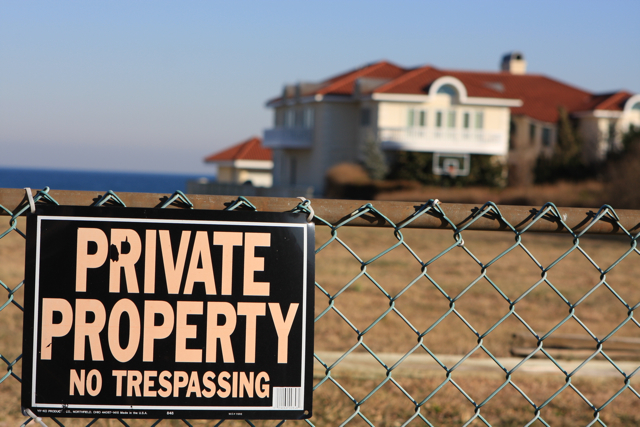
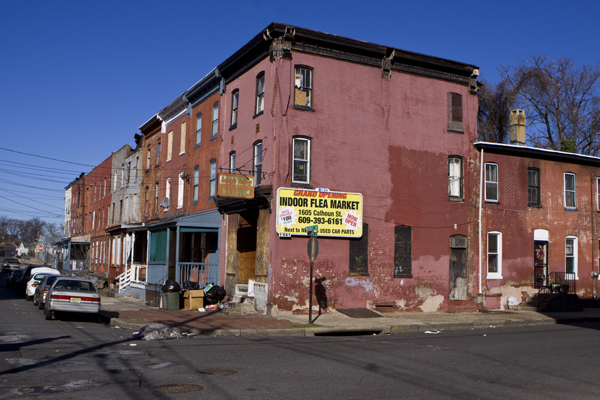
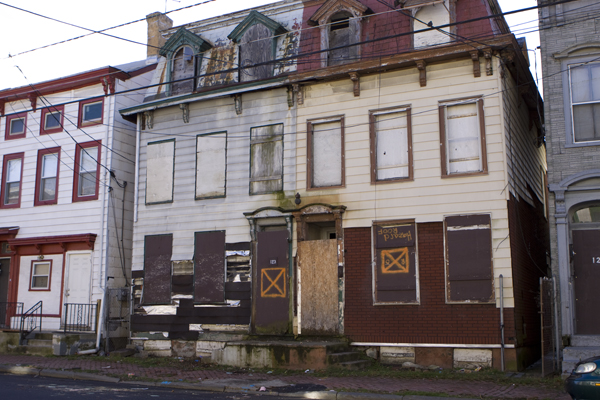
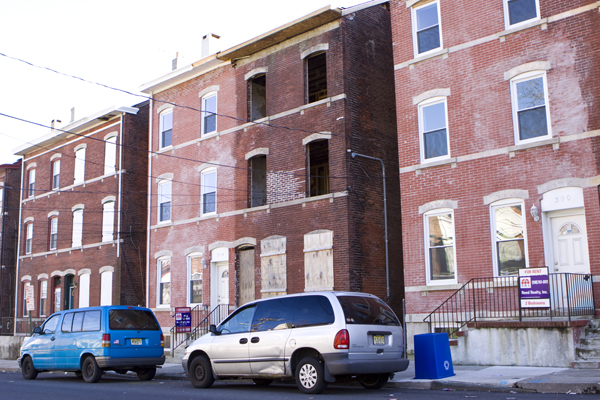
Last, here are a few shameful Trenton environmental issues Martin might have seen had he walked Trenton’s neighborhoods – all within a half mile of the Statehouse and DEP building. But to Martin and Christie, these problems are invisible (of course, Martin mouths empty “environmental justice” platitudes). And of course Christie’s budget, housing, transportation, education and social service policies will make these problems of deep poverty, disproportionate negative environmental and public health impacts, and injustice far worse:

IMG_5662

IMG_5663

IMG_5664

IMG_5665

IMG_5666

IMG_5671

IMG_5669

Categories: Uncategorized Tags:

Christie Earth Week Day 2: Back Door Man

April 21st, 2010 6 comments
Governor Christie takes the oath of office at his innagural. I wonder if he's given any thought to what kind of world will his children and grandchildren inherit?

Governor Christie takes the oath of office at his inaugural. I wonder if he's given any thought to what kind of world his children and grandchildren will inherit? Was that in the oath?

Christie’s did not discuss his cuts of $158 million from the Clean Energy Fund, which is funded by utility customers for programs that reduce greenhouse gases, and from other funds designated to save energy. He declined to take questions from reporters, leaving immediately after his speech via a back door. (Star Ledger 4/21/10)

I was going to write today about DEP Commissioner Martin’s games in Trenton yesterday, but just read that the Star Ledger reports that Governor Christie announced his new “business friendly” “energy and environment” policy at a highly unusual Rutgers “forum” yesterday.

The backdrop for the “forum” was Christie’s  wrecking ball to NJ’s renewable energy and global warming programs (see: CHRISTIE SHREDS NEW JERSEY CLIMATE CHANGE PROGRAMS — Kills Emission Reporting, Diverts Green Energy Fund & Defunds Climate Office and his assault on regulatory protections under the guise of eliminating “Red Tape” (see: CHRISTIE TO AXE JERSEY POLLUTION AND PUBLIC HEALTH RULES — “Red Tape Review Group” Issues Hit List of Regulations to Toss or Water Down

Let’s just say the Governor didn’t fool anyone, including Star Ledger reporter Abby Gruen, who rightly nailed the Governor multiple times in her story, in unusually good reporting.

Preferring to write my own material, I don’t usually do this kind of media analysis, but because this particular story raises so many important issues, lets break it down:

Right up front, the story sets the context for the speech, by providing an allusion to the elephants in the room I linked to above as the backdrop:

In one of his first policy addresses since presenting his budget, Gov. Chris Christie yesterday unveiled a business-friendly energy and environment plan at a forum sponsored by Rutgers University.

The unusual nature of the “forum” is made clear, properly informing readers and urging them to ask obvious questions:

Speaking to a small crowd at the State Theater in New Brunswick, Christie said that energy is an “engine of industry.”

Questions like: Why a small crowd small for such critical public policy issues during Earth Week? Rutgers knows how to turn out people for credible policy forums.

The NJ Environmental Federation, a panel member, knows how to organize and publicize an event and generate turnout. Why wasn’t this Governor’s policy level global warming related “forum” widely publicized by NJEF?

My sense is that this was a last minute, by invitation only, purely political event developed by the Governor’s Office and rammed down Rutgers’ throat in order to create a false appearance of academic legitimacy and substance to the Governor’s non existent “energy and environmental policy”. The Environmental Federation kept a low profile to avoid a protest by angry environmentalists, who can see through the spin and green cover that NJEF is providing the Governor.

The fact of the matter is that Christie – by his own admission – has no energy and environmental policy. His transition team recommended that he abandon the comprehensive Energy Master Plan developed over a 4 year period by the Corzine Administration, ironically with significant technical support from Rutgers University, the sponsor of this sham “forum”. Shame on Rutgers for legitimizing this political stunt!

He [Christie] said he and his administration will also be reviewing the 2008 Energy Master Plan over the next three months, but did not specify what changes would be made.

In addition to having no energy policy and abandoning good policy of the EMP, the Governor is slashing over $300 million in energy conservation, renewable energy, and global warming mitigation funds (not just the $158 million report by the Ledger). His budget zeroed the DEP Office of Climate Change, responsible for developing programs and regulations to implement the Global Warming Response Act and his regulatory moratorium killed a DEP proposed green house gas emissions monitoring regulation.

The Ledger story then captures the essence of this purely political stunt:

“The Lieutenant Governor and I are setting up a regulatory environment that is friendly to business,” Christie said.

In a nod to Earth Week, Christie said that his environmental policies will not be “incompatible to having a growing economy.”

Struggling to fill a $13 billion budget gap, and acknowledging that his cuts have made him unpopular in the polls, Christie said that when the state’s finances were in order he would move forward on other priorities, like the environment.

The emphasis on business in his energy address was welcomed by industry.

“We haven’t had that kind of attention paid to business in a while,” said Sara Bluhm, a spokeswoman for the New Jersey Business and Industry Association.

We heard the pretext about how the economy is driving his budget cuts and deregulatory moves on the environment. But the facts of the matter are:

1) because 80% of DEP’s budget comes from federal funds, and polluters fees and fines, there are virtually no taxpayer savings to be had by cutting DEP’s budget;

2) the Clean Energy Fund creates thousands of new jobs and supports hundreds of small businesses in NJ. These will be destroyed by the Christie cuts, thus harming the economy Christie claims to be promoting;

3) weakening DEP regulations costs NJ taxpayers and does nothing to stimulate economic development. NJ’s strict environmental regulations not only spur productivity growth and attract private investment in innovative technology, they match federal funds. Most importantly, strict regulations protect NJ’s “natural capital”, generating $20 billion/year in revenues and provide significant public health benefits – the best documented are the health care costs of hospital admissions triggered by air pollution, mostly in urban NJ. Those costs will rise substantially as New Jersey experiences far more 90-100 degree “bad air” days due to global warming (see this for complete NJ global warming impact assessment). Furthermore, there have been no credible studies that  show that NJ’s regulations harm the economy – instead, virtually all professional economists blame the Wall Street financial meltdown for causing the economic recession. Ironically, that Wall Street collapse was caused, in part, by the same deregulation and lax  government oversight policies Christie is promoting.

4) global warming is a crisis we are already experiencing in NJ, via increased coastal storm damage and major inland flooding. The economic costs of global warming will be in the billions, and the longer we delay responding, the larger those costs and impacts will get. So Christie’s policies are extremely shortsighted and highly irresponsible.

So, given how reckless and unjustified the Governor’s policies are on energy and the environment, we can understand why the Governor took the back door:

Christie’s did not discuss his cuts of $158 million from the Clean Energy Fund, which is funded by utility customers for programs that reduce greenhouse gases, and from other funds designated to save energy. He declined to take questions from reporters, leaving immediately after his speech via a back door.

But what we can’t understand is why Dave Pringle and the NJEF continue to provide cover for this Governor, given what we know thus far:

“It is significant and a positive sign that the governor sees energy policy as important and a means to grow us out of the economic problems we are in,” said David Pringle, campaign director for the New Jersey Environmental Federation, who was a panelist.

“That’s why we are so concerned about the cuts to the Clean Energy Fund because it is our seed money to grow the economy.”

That continuing cover is disgusting, because we know that Dave and the NJEF Board are aware of this (*Note: to avoid any confusion per anonymous comment, the below quote is from WolfeNotes.com not the above Star Ledger story, although this should be obvious to readers by how my original used the link and specification of the term and link to “of this” as a preface, which very clearly sourced and linked the quote below it to my own blog, not the Ledger piece. This is standard blogging convention and sound journalistic practice. Additionally, I prefaced virtually all of the Ledger story content with intro material clearly sourcing it. And if the “anonymous” commenter thinks I have no credibility, he/she should put their name on that kind of BS comment!)

“[DEP Commissioner] Martin’s “fresh look” at DEP science already: 1) killed a proposed greenhouse gas monitoring rule, 2) abandoned a drinking water standard for the chemical perchlorate, 3) twisted the findings of an EPA funded air toxics study in Paterson, 4) moved to gut DEP Vapor Intrusion requirements, 5) issued Administrative Order 2010-3 which delayed and weakened water quality management rules, and 6) signaled to a Court a plan to nix the Highlands septic density standards, the core of water resource and land protection in that region.

Categories: Uncategorized Tags:

Christie’s Earth Week: Day 1 – Red Tape Rollback

April 20th, 2010 No comments
DEP HQ - Trenton, NJ

DEP HQ - Trenton, NJ

[Update: Philadelphia Inquirer: Red-tape panel has no easy answers - the claim that environmental groups had mixed reactions is not accurate, unless an off the record source offered a favorable assessment that was not reported in the story]

Today is the 40th anniversary of the creation of the Department of Environmental Protection. [Error - it is April 22, sorry!] More on that tomorrow.

For now, I could say this was adding insult to injury, but let’s just call it DEP’s mid life crisis. News from PEER:

For Immediate Release: Tuesday, April 20, 2010

Contact:  Bill Wolfe (609) 397-4861; Kirsten Stade (202) 265-7337

CHRISTIE TO AXE JERSEY POLLUTION AND PUBLIC HEALTH RULES
“Red Tape Review Group” Issues Hit List of Regulations to Toss or Water Down

Trenton – A panel commissioned by Governor Chris Christie recommends that New Jersey jettison an array of anti-pollution, public health and smart growth rules in order to attract businesses and jobs to the Garden State.  The rules targeted for repeal or revision would weaken current standards for air and water pollution, flood hazard reduction, protecting the Highlands, toxic site clean-up and even preventing toxic catastrophes, according to Public Employees for Environmental Responsibility (PEER).

On his first day in office, Gov. Christie issued a series of sweeping Executive Orders one of which established a “Red Tape Review” group under the Lt. Governor to examine all existing regulations.  He also imposed a 90-day moratorium on 160 pending proposed rules, 12 of which emanated from the Department of Environmental Protection (DEP).  The moratorium expires today and yesterday the Red Tape Review Group released its recommendations.

Citing the need to streamline bureaucracy and promote economic development, the Red Tape report calls for regulatory relief from a score of existing DEP regulations, including:

  • Water Quality Management  rules which prohibit sewer line extensions into environmentally sensitive areas such as forests, stream buffers, and endangered species habitat;
  • Rules to protect the New Jersey Highlands, a region of 800,000 acres that provides water supply to over 5 million state residents, from degradation due to over-development;
  • Stream buffers protections and flood hazard reduction regulations;
  • Strict oversight of toxic site clean-ups managed by private consultants, under a new privatized site remediation plan enacted under Gov. Corzine;
  • Coastal zone management protections, including public access rules;
  • Air pollution control to allow wider variances for exceeding permit limits; and
  • Relaxing rules under the Toxic Catastrophe Prevention Act to prevent a repeat of the disaster at a Dow Chemical plant in Bhopal, India, where 7,000 people died from poison fumes.  The report cites compliance costs to industry and questions the need for any rules beyond a federal minimum.

“This Red Tape report represents a radical assault on longstanding strict protections of New Jersey’s air, water, land and natural resources,” stated New Jersey PEER Director Bill Wolfe, a former DEP analyst, noting that the report lacks any factual basis for declaring listed protections as less than cost beneficial.  “Under the guise of a ‘common sense regulation,’ the Christie folks have compiled a polluters’ wish list.”

Gov. Christie has embraced the Red Tape Review report.  The next step will be for the DEP to begin formal rulemaking on each targeted regulation with either a complete repeal or specified alterations.  New regulations will be viewed through a new cost benefit analysis and a desire to eliminate any state level requirements above required by federal mandates.

“Governor Christie wants to adopt the same hands-off approach to protecting the environment employed by states like Louisiana, which is not a model we want to emulate” Wolfe added.  “More pollutions, dirtier rivers and terrible sprawl are not the building blocks of a sane economic strategy for New Jersey.”

###

Read the environmental recommendations of the Red Tape Review report

Look at the damage from Christie’s regulatory moratorium

See the abandonment of the state climate change efforts

View the entire Red Tape Review Group report

New Jersey PEER is a state chapter of a national alliance of state and federal agency resource professionals working to ensure environmental ethics and government accountability

Categories: Uncategorized Tags:

Christie’s Earth Week Preview

April 19th, 2010 5 comments
Senator Buono, Senate Majority leader (R) and Lt. Gov Guadagno at Red Tape hearing in Montlcair

Senator Buono, Senate Majority leader (R) and Lt. Gov Guadagno at Red Tape hearing in Montclair

[Update #2 - glad to see Senator Buono take a stand: NJ Senator distances herself from Gov. Christie's 'red tape' report

The report, released shortly before 11 a.m., says the group had "arrived at a series of unanimous recommendations" -- but omits Buono's name from the cover sheet.

Asked about the omission, Buono said she raised concerns after receiving the language of proposed legislation last week but was told the group wanted to present a united report.

"It's just unanimity at any cost, even if it means being dishonest," she said. "Bipartisanship is very different than strong-arming consensus."]

Update #1: Lt. Gov. just released the Red Tape Review Report – far worse than I imagined. DEP recommendations are found at the very end in Appendix H – its an all out assault. I will be writing in more detail soon. For a copy of the report, click HERE.]

At the outset of NJ Governor Christie’s Earth Week, we thought we’d do a little week in preview to set the stage for significant announcements and political spin out of Trenton on topics we have been writing about recently.

Governor Christie’s Executive Order #1 moratorium on regulations ends on Tuesday April 20. That was the target date for Christie’s Regulatory Czar, Lt. Governor Guadagno, to issue her “Red Tape Review Group” Report.

But ironically, April 20 just happens to be the 40th anniversary of the creation of the DEP. Even the Christie political people realize that would be awkward timing. [Error! It is April 22 - sorry!] So they bumped up the Red Tape Report release for today, April 19. [the motive for accelerating the release of the Report is not that reliably clear]

When we get a hold of that report (obviously we got no advance copy!), we will provide a status update on the 12 DEP regulations frozen under the Executive Order, outline the legislative initiatives underway to implement the Governor’s “common sense regulatory principles”, and conduct a detailed review of the “regulatory relief” policies recommended in the Red Tape Review Report.

On Tuesday – you heard it here first! – Commissioner Bob Martin will celebrate the 40th anniversary of the creation – by the legislature – of the Department of Environmental Protection (DEP) on April 20, 1970.

Forty years ago, the legislature boldly acted to recognize the overwhelming public outpouring of support and activism for environmental protection by creating a new regulatory institution with a mission exclusively dedicated to environmental protection. In doing so, the Legislature greatly expanded the narrow “conservation” oriented mission and eliminated the economic development mission and functions of the previous entity, which was named the “Department of Conservation and Economic Development” .

In a supreme irony – despite harsh editorial opposition, polls showing 79% NJ residents opposed and strong criticism -  in celebrating DEP’s 40th, Commissioner Martin will announce his own unilateral creation of a new Assistant Commissioner of Economic Development, designed to make DEP a major player in economic development. Martin is making this dramatic and controversial move, despite no legislative authorization:

“I don’t see anything in (the state law detailing the DEP’s powers) that has to do with promoting the economy,” said Jeff Climpson, environment section chief in the state Office of Legislative Services, which drafts state legislation. (Push to weigh economic impacts creates stir. Todd Bates. 4/11/10)

Martin also will announce a new Deputy Commissioner and a Department-wide reorganization to promote Governor Christie’s “common sense” policies in Executive Order #2. Those policies include “regulatory relief”, cost benefit analysis, sound science, and a more “customer friendly” culture at DEP.

These policies are explicitly designed and intended to shrink DEP’s mission and force DEP to “do less with less”.

So, Christie and Martin seek a more than 40 year rollback of the clock on environmental protection, back to the bad old days of the 1970 Department of Conservation and Economic Development.

As a prelude to what’s in the pipeline, we note that Martin’s “fresh look” at DEP science already: 1) killed a proposed greenhouse gas monitoring rule, 2) abandoned a drinking water standard for the chemical perchlorate, 3) twisted the findings of an EPA funded air toxics study in Paterson, 4) moved to gut DEP Vapor Intrusion requirements, 5) issued Administrative Order 2010-3 which delayed and weakened water quality management rules, and 6) signaled to a Court a plan to nix the Highlands septic density standards, the core of water resource and land protection in that region.

Due to harsh criticism he and the Governor have gotten thus far for slashing over $300 million in energy conservation, renewable energy, and greenhouse gas cap/trade funds (RGGI), Martin also might go out of his way to mention that he is retaining the DEP’s Office of Climate Change.

Martin may also announce his Science Advisory Board and the new head of the Office of Policy and Planning, formerly headed by Jeanne Herb, an experienced DEP manager who was forced out. Herb was a democratic political appointee (McGreevey), but prior to that had served in important lower management and staff positions, like the Office of Pollution Prevention and staff in the chemical Right-to-Know program, where she made some powerful enemies of Christie supporters, like Hal Bozarth of the Chemistry Council.

Expect Martin to try to sell this radical rollback agenda with some recycled rhetoric about “seeking balance” in “tough economic times“. Martin will attempt to provide political cover for this agenda by forming several (small, hand picked, and closed) “stakeholder processes” and emphasize that he is working to make DEP more transparent. Martin will mention his management emphasis on metrics, but make no commitments to actual enforceable metrics.

We heard a dry run of that rap on Saturday at the NJ Environmental Federation’s annual meeting, where Martin gave the keynote address (a detailed review of that in a future post).

Earth Day, 2005. DEP Commissioner Brad Campbell debates Bill Wolfe.

Earth Day, 2005. DEP Commissioner Brad Campbell (L) debates Bill Wolfe at protest of environmental groups to expose green-washing. This was modeled on a similar 1996 Earth Day protest against Governor Whitman. Will Christie and Martin get a pass?

Categories: Uncategorized Tags:

Landing In Atlantic City

April 16th, 2010 1 comment
Atlantic City, NJ

Atlantic City, NJ

IMG_2329

IMG_2319

IMG_2317

Categories: Uncategorized Tags:

“Onerous Regulations” Had Nothing to Do with This Plant Closure

April 16th, 2010 No comments

Just day’s before the release of Governor Christie’s Regulatory Czar’s “Red Tape Review Group” Report, the Star Ledger reports today that a GlaxoSmithKline pharmaceutical plant in Clifton will close and destroy 270 good jobs.

Contrary to the Christie Administration’s simplistic and false rhetoric about “onerous regulations” as the cause of the economic collapse, the company had received its local land use approvals (and probably DEP permits) for the expansion.

“We were rather caught by surprise,” Clifton City Manager Al Greco said of the announcement by London-based GlaxoSmithKline. “They just spent a year going through the planning board to get some expansions approved.”

Glaxo said it will be transfer production of its Aquafresh and Sensodyne brands to upstate New York over the next three years. A spokeswoman said the move was based on “constraints” at the 60-year-old New Jersey plant.

Greco said he suspects Glaxo plans to use more automation in its production process to battle Asian competitors.

“I’m sure they are consolidating,” he said. “They’re competing against the Chinese market.”

These real causes of NJ job losses completely destroy the premise of the Christie Administration’s “Red Tape Review Group” , which is focused exclusively on providing regulatory relief and blaming “onerous regulations“, the DEP, and a “burdensome regulatory framework” for the economic recession and job loss.

But it is clear that economic factors (e.g. competition w/China and globalization) not environmental regulations are the root causes .

But how can NJ workers compete with China’s wages and residents live with China’s lax environmental standards?

Globalization is a race to the bottom for cheap labor and a devastated environment. US trade and investment policies have destroyed the US manufacturing sector, not environmental protections which drive innovation and productivity and create jobs.

At the State level, green jobs is the best path forward for job creation and environmental sustainability – but Christie is going in the opposite direction in slashing renewable energy funds and shredding programs to implement DEP’s Green House Gas Reduction plan.

Categories: Uncategorized Tags:

Tax Day Essay: “On Civil Disobedience”

April 15th, 2010 No comments
US Treasury Building, Washington DC

US Treasury Building, Washington DC

I never subscribed to the first sentence of Thoreau’s famous essay “Civil Disobedience “(1849).

That lede has been misleadingly overplayed, in terms of distracting from more central points of his essay and it also has served to legitimize certain anti-social individualistic, anti-government, libertarian views:

I heartily accept the motto, – “That government is best which governs least”; and I should like to see it acted up to more systematically. Carried out, it finally amounts to this, which I also believe, – “That government is best which governs not at all”, and when men are prepared for it, that will be the kind of government which they will have.

When will men ever be “prepared” for pure anarchism? Even if they were sufficiently altruistic, would some form of communitarian organization be preferable? But I digress from the point I am trying to make with this Tax Day post.

Thoreau was a strong opponent of the Mexican invasion, and he advocated withholding of taxes as a form of protest – civil disobedience. It was not taxes and government, per se, that were his primary issue concern, but rather his moral revulsion at slavery and the deep injustice of the Mexican war. His conscience and his sense of personal responsibility forced him to not contribute to those efforts in any way.

That principled equality, anti-war, anti-imperial stance and Thoreau’s civil disobedience tactics have not been so relevant since the Vietnam War. Thoreau wrote:

If one were to tell me that this were a bad government because it taxed certain foreign commodities brought to its ports, it is most probably that I should not make an ado about it, for I can do without them. All machines have their friction; and possibly this does enough good to counterbalance the evil. … But when the friction comes to have its machine, and oppression and robbery are organized, I say, let us not have such a machine any longer. In other words, when a sixth of the population of a nation which has undertaken to be the refuge of liberty are slaves, and a whole country is unjustly overrun, and conquered by a foreign army, and subjected to military law, I think that it is not too soon for honest men to rebel and revolutionize. What makes this duty the more urgent is the fact, that the country so over-run is not our own, but ours is the invading army.

Now think of these words in terms of the huge black population now in prison and segregated in hopeless urban ghettos.

Think about US army invasion, war, and occupation of Iraq and Afghanistan.

Think of the irresponsible and corrupt failure to respond to global warming.

Thoreau targeted the political source of the problem (as did Martin Luther King over 100 years later in his “Letter from Birmingham Jail” where he scorned well- meaning white liberals, and called for direct action non-violent civil disobedience). Thoreau wrote:

Those who, while they disapprove of the character and measures of a government, yield to it their allegiance and support, are undoubtedly its most conscientious supporters, and so frequently the most serious obstacles to reform.

Thoreau realized that real social change depended upon individual integrity, which in turn required the courage to act upon one’s convictions – and take bold conscience based actions that put one at risk:

Action from principle, the perception and performance of right, changes things and relations, it is essentially revolutionary, and does not consist wholly with anything which was.

Thoreau realized that the individual exercising his conscience in action against the state would be treated harshly and unjustly, particularly the poor and powerless compared to the elite (are there not echoes today in Wall Street bandits not going to jail while millions of young black men serve long prison time for crack cocaine?):

If a man who has no property refuses but once to earn nine shillings for the State, he is  put in prison for a period unlimited by any law I know, … but if he he should steal ninety times nine shillings  from the State, he is soon permitted to go at large.

Thoreau laid out the test and summed up the individual’s duty to take action – a call to action that remains extremely relevant today (and echoed in the equally famous “body on the gears” speech by 1960′s Berkelely free speech movement leader, Mario Savio. Thoreau wrote:

If the injustice is part of the necessary friction of the machine of government, let it go, let it go; perchance it will wear smooth, – certainly the machine will wear out. If the injustice has a spring, or a pulley, or a rope, or a crank, exclusively for itself, then perhaps you may consider whether the remedy will not be worse than the evil; but if it is of such a nature that it requires you to be the agent of injustice to another, then I say break the law. Let your life be a counter friction to stop the machine. What I have to do is to see, at any rate,  that I do not lend myself to the wrong which I condemn.

Amen!

Categories: Uncategorized Tags:

Clean Air Council Looks Forward – Ignores Elephant in the Room

April 14th, 2010 No comments

The New Jersey Clean Air Council held it’s annual public hearing today – this year’s topic was “Vision for the Next Decade: Air Quality and Air Pollution Control in NJ”.

The Clean Air Council, since its creation in 1954, serves in an advisory capacity to make recommendations to the DEP regarding air matters. It consists of eighteen members, fourteen of which are appointed by the Governor. Members serve four-year terms, and include the Commissioner of Health and Senior Services, Commissioner of Community Affairs, Secretary of Agriculture, and Secretary of Board of Directors, NJ Commerce Commission, ex-officio.

The Council heard some good testimony about the need for DEP to develop more effective air pollution control strategies, especially to protect public health, address global warming, and promote environmental justice.

Policy experts and scientists traced NJ’s history and enormous progress by NJ DEP in reducing air pollution. This progress was a result of enforcing strong Clean Air Act mandated State Implementation Plans (SIP’s) via traditional regulatory controls. Scientists provided specific recommendations, urging DEP to do far more to address global warming, ratchet down on emissions of hazardous air pollution, incorporate environmental justice in DEP permit reviews, and strengthen regulations, monitoring, and pollution emissions inventories.

Arthur Marin, Ex. Director, NESCAUM

Arthur Marin, Ex. Director, NESCAUM

Arthur Marin, Director of NESCAUM (Northeast States For Coordinated Air Use Management) had the boldest vision, his talk was titled: “Planning for transformative change in an incremental world“.

Highlighting the growing scientific understanding of serious negative public health effects of small particles and hazardous air pollutants, for which there is no “safe” exposure level, he stressed the need to “eliminate pollutants to zero levels, not just reduce emissions”. He emphasized that the urgency of global warming required that we must “fundamentally change the way we produce and use energy, plan our built environment, and live our lives.”

DEP Commissioner Bob Martin briefly addressed the Council. Let’s be generous and just say he failed the test of the transformative vision thing.

And there was a universal reluctance to note the policy elephant in the room.

So, with absolutely no sense of irony, Martin touted NJ’s leadership on clean air by noting that that the 1954 NJ Air Pollution Control Act was enacted and NJ was regulating air pollution almost 20 years before the federal Clean Air Act.

But it seems Martin forgot all about Governor Christie’s Executive Order #2, which stands 56 years of NJ clean air leadership on its head by seeking to rollback NJ state standards to federal minimums. Oops!

NJ DEP Commissioner Bob Martin talks to Clean Air Council

NJ DEP Commissioner Bob Martin talks to Clean Air Council

Martin also pledged his strong support for “green energy” and wind, shamelessly ignoring the contradiction that Governor Christie’s budget cuts over $300 million from renewable energy funding. Oops!

Martin repeated his stale talking point that DEP decisions should be made based on science, yet he conveniently forgot that just weeks ago he reversed and over-rode the recommendations of his own scientists in killing the perchlorate drinking water standard. So much for science. Oops!

In a flurry of rapid fire talking points, without any recognition that there might be competing policy objectives, Martin also stressed the importance of cost benefit analysis, seemingly unaware that the science almost always conflicts with the economics (and politics). Oops!

Martin also said he would appoint a Science Advisory Board in the “next few weeks”, but he didn’t say anything about the Court Order requiring he disclose SAB candidates. Martin also said that the SAB would include not only academic (Rutgers) scientists,  but “real world experience” – the latter being code for putting regulated industry scientists and private consultants on the SAB, thereby raising troubling issues of potential conflicts of interest, bias, balance, objectivity, and lack of fidelity to the public interest. Oops!

Martin said that clean air would be a priority. Yet he somehow forgot about the facts that in his first 10 weeks in office, he already killed DEP’s proposed Green House gas monitoring rule, eliminated funding of the DEP Office of Climate Change at the critical moment when they need MORE resources to develop programs to implement the Global Warming Response Act plan, and provided the oil industry with another opportunity to kill the sulfur in fuel oil rule. Oops!

Of course, Martin failed to tell the Council about his wrecking ball role on the Christie “Red Tape Review Group“. Oops!

In direct contradiction of the recommendation of most air quality experts of the need for more integrated planning to move beyong single pollutant “silos”, Martin ignored the fact that he decapitated the DEP Office of Policy and Planning, the small group in DEP tasked with doing integrated, multi-objective planning. Instead, he will replace this Office with an Assistant Commissioner for Economic Development. Following the “know nothing”  recommendation of the Christie Transition Team, Martin seeks to return planning functions back to individual DEP regulatory programs, where they can operate in silos.

It was as if I were in the Twilight Zone – the sense of denial was surreal.

Of course, I tried to bring these contradictions out in my testimony -  but this time Martin was unable to deploy the State Police to shut me up!

I briefed the Council and urged them to review and make recommendations to DEP Commissioner Martin on:

1) the Paterson air toxics study; especially the recommendations on reforming the air permit program, emissions inventory, risk screening, and addressing cumulative risks and disproportionate burdens;

2) the Global Warming Response Act Plan including a request that DEP develop a workload analysis, staffing, resources, and implementation time frames;

3) Executive Order #2- specifically federal consistency policy and cost-benefit analysis methodology;

4) Assembly bills A-2464 and A-2486;

5) support adoption of the sulfur in fuel rule as proposed – oil companies are seeking to kill it;

6) the Environmental Justice Advisory Council cumulative impact report;

7) and support a State level FACA law to assure that all DEP advisory groups operate openly, transparently, objectively, ethically, and provide access to the public.

Categories: Uncategorized Tags: