Archive

Archive for July, 2010

Johanna Farms Flemington Plant Upset Causing Huge Odor Problems

July 26th, 2010 37 comments
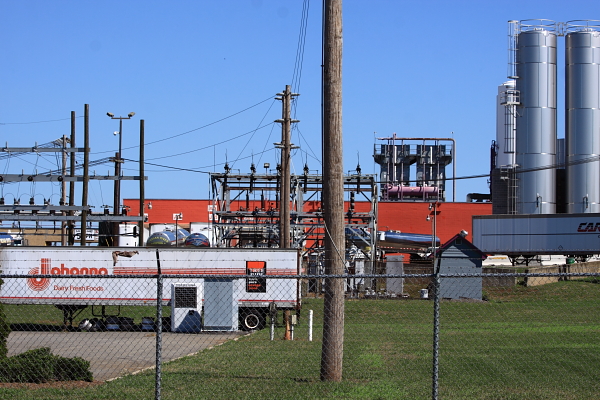
Johanna Farms, Flemington NJ Plant - didn't smell Dairy Fresh

Johanna Farms, Flemington NJ Plant - didn't smell Dairy Fresh

Woke up to a spectacular crisp and cool morning after the 100 degree heat and humidity broke. I felt so good I thought I’d boogie up the road to Flemington for a bagel and coffee.

Just as I hit the Flemington border on Rt. 31 I was overcome by a strong rank odor.

Leaving the bagel store, I met a man who worked for the Raritan sewer authority and asked him if his plant was having problems.

He laughed and said they were getting hundreds of complaints, but it wasn’t them – it was Johanna Farms just down the road (behind the car dealers on the western side of Rt. 31).

The Johanna Farms plant has a history of plant upsets that have caused major sickening odor and air problems. They discharge yogurt and juice waste residuals to on site disposal lagoons. They process the sludge and ship it off site for disposal on agricultural lands. Land application of this sludge on farmland has created local controversies due to strong odors, including in my town of West Amwell. (and this)

The Johanna plant also uses extraordinarily hazardous chemicals, and is regulated under the DEP Toxic Catastrophe Prevention Act permit program.

The smell was so disgusting, I called the DEP Hotline (877-WARNDEP) to report a violation of the NJ Air Pollution Control Act. That law prohibits nuisance odors beyond the facility boundary.

In this case, the air for miles around was polluted with the stench of anaerobic decaying organic matter. I assume there must be similar local health laws regulating odors from this facility that need to be enforced.

Not confident that DEP would do anything to enforce the law and DEP air and water permits, I decided to take matters into my own hands.

I drove to the plant and asked at the security gate for a meeting with the plant environmental manager.

I was given the phone number of  Plant Environmental Compliance Manager Joe Saracini (908-788-2385). I called Joe. Shortly after  he returned my call and I was able to get a good half hour discussion with Joe and the Company VP. [Correction - it is Tony Saracini. - I got his name mixed up with VP Joe (see comments for contact info). Thanks for comments John - that's what they're there for!!]

Initially, Joe tried to give me a BS story to downplay the problem.

Joe  claimed that 1) the problem was natural and caused by the heat wave; 2) that they were simply treating yogurt and juice byproduct in lagoons with swimming pool chemicals; and 3) that they were in compliance with all permits and laws.

[Update: to clarify, Johanna's  claims are flat out false: 1) the problem is not natural, but is caused by a waste treatment process at an industrial plant; 2) the lagoon contents are not "byproducts" they are regulated wastes. The "pool chemicals" used to treat these wastes are hazardous (NaOH); and 3)  the facility is in violation of state law, DEP regulations, DEP permits, and perhaps local health ordinances.]

I called them on that and in so doing I learned that they were experiencing an upset in the pre-treatment process and waste lagoons. The lagoons had gone or were going anaerobic and were not responding to aeration and chemical treatments to stabilize the pH.

After persistent questioning, they conceded that they made a $5 million investment in a new pre-treatment, aeration, and lagoon processing system 10 years ago in response to DEP requirements after a catastrophic tank collapse, followed by a power outage. That event created anearobic conditions and severe odor problems.

They also admittted that they had odor problems last year and that the most recent problem was ongoing and had begun last week.

The odors caused numerous complaints from nearby residents that led to plant insections but no enforcement actions by the Hunterdon County and Flemington Health Departments. They said that DEP has not been to the facility to inspect or enforce.

I requested that they give me a specific plan to remedy the problem and a schedule – they refused to provide this info but said they had retained engineering consultants to answer those questions.

I thanked them for their cooperation and then called DEP Air enforcement to relay this information and request inspection and enforcement action.

I gotta tell you, their seeming inability to understand and appropriately manage a biological process in a lagoon did  not inspire confidence that they can safely handle extraordinarily hazardous chemicals that can kill nearby residents.

We will keep you posted in terms of DEP and local enforcement response and whether the problem gets fixed quickly.

I really feel bad for anyone that lives nearby that stench.

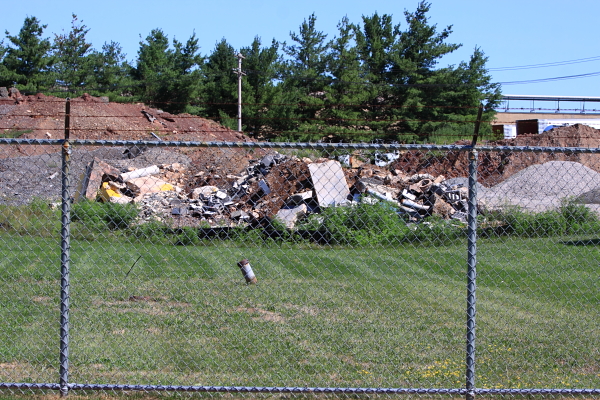
thats a groundwater monitoring well in the foreground and construction adn demolition waste (illegal) storage in the background. Let's hope DEP inspectors cite them for this violation.

thats a groundwater monitoring well in the foreground and construction and demolition waste (illegal) storage in the background. Let's hope DEP inspectors cite them for this violation.

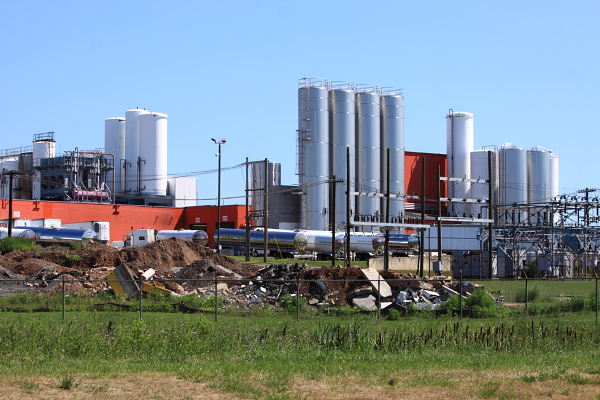
Dairy Fresh?

Dairy Fresh?

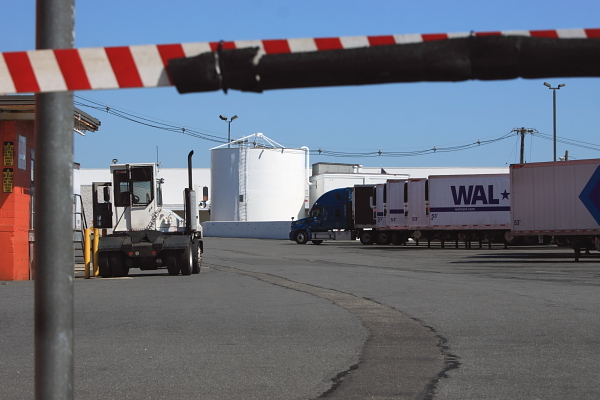
view from the security gate - tanks in background

view from the security gate - tanks in background

Categories: Uncategorized Tags:

Radioactive Risks From NJ Drinking Water Go Un-Regulated

July 25th, 2010 No comments

Increased Health Risks and Chronic DEP Failure To Enact Protections cries out for media, citizen and legislative intervention

[Update: 7/27/10 - Joe Tyrrel of NJNewsroom writes a good story "Radioactivity rampant in New Jersey well water" - I can't believe that DEP chose to point out the cost benefit analysis- I guess the Christie people have no moral qualms with trading off hundreds of lives lost in horrible cancer deaths for a few pennies a day:

DEP spokesman Larry Hajna rejected the suggestion that the agency has been sitting on the information. The report was part of an ongoing process, with information posted on the DEP website, while the private well data results from a state law, he said.

"We definitely know there's a problem," he said. "We're developing this information and working to protect the public."

He pointed to the report's cost-benefit analyses for various levels of stringency. The 800 picocurie standard would cost an estimated $404,103 per life saved.

[7/26/10 correction: I shouldn't have said DEP has done nothing. You see, they had the balls to fine Pemberton $4,500 for failing to provide timely notification to DEP for one well- while at the same time DEP does not disclose and covers up a statewide problem impacting thousands of wells used by over 1 million NJ residents.

And way back in 2004, under real leadership, DEP did try to get the word out - but take a look at this DEP Guidance and note by how much current data exceeds the risks then presented. Risk are FAR greater.

And its been no secret among experts for a long time - see this 1998 USGS study - but what explains the low news coverage? Compare the sparse news coverage these significant risks with the massive media coverage of the nuke plant tritium leaks]

(Intro Note to readers: aside from criticisms of the annual DEP Private Well Testing Act Reports (and see this ), we have not done a lot of work on the drinking water program. But we decided to take a closer look at DEP’s drinking water program because the Christie Administration decided to attack drinking water regulations in Executive Order #2. We do not like what we see. We also note that environmental activist Dave Pringle of NJEF is no longer the Chair of the Health Effects Committee of the Drinking Water Quality Institute, so a voice for the public interest from the inside has been lost, thus heightening the need for outside public scrutiny. The DWQI Chair resigned, members have not been appointed, and the DWQI is in disarray. This is occurring as science finds increasing risks from hundreds of unregulated toxic pollutants in the water supply, toxic sites are not cleaned up, infrastructure deficits grow, and over-development continues to pollute even more NJ water supply waters).

It is fair to say that NJ’s drinking water program is broken and in need of outside intervention, having proven incapable of responding to chronic problems and increasing public health risks.

In March, we disclosed the fact that DEP Commissioner Martin killed a proposed new drinking water standard for perchlorate (see: CHRISTIE DEEP-SIXES NEW JERSEY PERCHLORATE STANDARD — “Red Tape” Review Runs Out Clock on Rocket Fuel in Drinking Water Limit)

We later exposed documents that proved that Martin’s explanation for why he killed the perchlorate standard was false (see: RATIONALE FOR NEW JERSEY WATER QUALITY DELAY IS BOGUS — Commissioner Claim of Imminent EPA Perchlorate Action Contradicted by E-Mails

Exposing even greater risks that were being ignored by DEP, in May, we disclosed that DEP had failed to update and lower many standards recommended by scientists:

TIGHTER NEW JERSEY DRINKING WATER STANDARDS IN OBLIVION — Drinking Water Institute Chair Resigns in Frustration; Successor to be Announced

Trenton — A five-year effort to update limits on more than 30 contaminants commonly found in New Jersey’s drinking water appears to be doomed by the anti-regulatory stance of the Christie administration, according to Public Employees for Environmental Responsibility (PEER). As a result, New Jersey residents will continue to be exposed to chemicals ranging from benzene to formaldehyde in amounts that its expert Drinking Water Quality Institute (DWQI) has found unsafe. (link to full report)

We now report that DEP is not warning the public about risks, setting standards, and mandating treatment systems be installed for some radioactive contaminants known to be present at unsafe levels in thousands of NJ wells.

Just like perchlorate and more than a dozen other toxic chemicals, more than a year and a half later, DEP still has not acted on a February 2009 recommendation by the NJ Drink Water Quality Institute that DEP adopt a standard for radon 222.

DEP is aware of risks associated with uranium and ineffective treatments systems homeowners may be relying on, yet have not provided warnings or regulations to reduce these risks.

Below is some prior coverage we generated previously. But despite these exposes, nothing has changed at DEP – in fact, the problems at DEP have gotten worse and the risk to the public have increased. This is an unacceptable situation that cries out for media, citizen and legislative, intervention to demand reforms:

[7/26/10 correction: I shouldn't have said DEP has done nothing. You see, they had the balls to fine Pemberton $4,500 for failing to provide timely notification to DEP for one well- while at the same time DEP does not disclose and cover up a statewide problem impacting thousands of wells used by over 1 million NJ residents]

N.J. finds many private wells contaminated
http://www.philly.com/inquirer/home_top_stories/20080829_N_J__finds_many_private_wells_contaminated.html

Contaminants found in 300 Morris wells
NJ study finds 1 in 8 private wells contaminated

http://www.dailyrecord.com/apps/pbcs.dll/article?AID=/20080828/UPDATES01/80828005/1005/NEWS01

State: 1 in 8 private wells contaminated
Officials urge more testing
http://www.app.com/apps/pbcs.dll/article?AID=/20080828/NEWS03/808280507/1007
The story has gained national attention also. See:
Radioactivity, Arsenic Contaminate New Jersey Drinking Water
http://www.ens-newswire.com/ens/aug2008/2008-08-28-093.asp

Drink at your own risk
Posted by Bill Wolfe August 27, 2008 1:21PM
http://blog.nj.com/njv_bill_wolfe/2008/08/drink_at_your_own_risk.html

I followed that NJ Voices post up with a widely distributed press release yesterday:
WIDESPREAD CONTAMINATION FOUND IN NEW JERSEY DRINKING WATER — Survey of Wells Is Far From Well; State Does Not Follow-Up on Pollutants
http://www.peer.org/news/news_id.php?row_id=1095

See below press release with links to supporting documents.

Press Release

For Immediate Release:  Monday, July 26, 2010

Contact:  Bill Wolfe (609) 397-4861; Kirsten Stade (202) 265-7337

Radioactive Wells Pose Bigger Risks in New jersey

Hundreds of Thousands Exposed Daily to Rad Levels Many Times over Safety Limits

Trenton — Radioactivity levels in state drinking water wells are much higher than previously known and at-risk wells cover a bigger slice of the Garden State, according to agency documents released today byPublic Employees for Environmental Responsibility (PEER).  Despite significant adverse public health implications of the findings, the state has not taken steps to alert or protect affected populations.

Naturally occurring radiation has long been a known presence in New Jersey’s well water.  But, according to new scientific findings presented at the May 7, 2010 meeting of the state Drinking Water Quality Institute (DWQI), the extent and depth of radioactivity levels are grounds for renewed concern:

  • Official “Private Well Testing Act” data show that 10.7% of wells in the coastal plain violate the drinking water Maximum Contaminant Level (MCL) for gross alpha (i.e., radiological contaminants). Levels in excess of 30 times the MCL have been reported;
  • Additional health risks in Northern New Jersey due to uranium are now being discovered; and
  • The treatment system for gross alpha from radium is NOT effective in treating risk for uranium. Thus, homeowners who install certain treatment systems incorrectly think they are protected, when they are not protected if uranium is the source of radiation in their well water.

A February 2009 DWQI report estimated that more than 211,000 people are exposed to an individual cancer risk which is 600 times the acceptable risk level. DWQI recommended that the state adopt a drinking water MCL for radon 222 but it was not acted upon and no follow-up action is scheduled.

“The state should not be sitting on this information.  Officials need to warn affected homeowners now that they may need treatment systems or that they have the wrong systems,” stated New Jersey PEER Director Bill Wolfe, noting 13 other key drinking water protections recommended at the May 7th DWQI meeting were also orphaned by the Christie administration.  “This is yet another instance where supposed regulatory reform becomes regulatory retreat, leaving the public unprotected from dangers that the government is supposed to address.”

Under state law individual homeowners are notified about their well contamination readings only upon sale of the property, otherwise individual well data is confidential.  In addition, there is only routine regional testing for gross alpha in the 12 southern and central New Jersey counties.  In order to track gross alpha from uranium decay, which is being detected in northern counties, new regulations are required.

“Homeowners should not require lead suits to go to their wells,” Wolfe added.  “The state needs to take affirmative steps to change laws and rules so that excess radiation is no longer an accepted side effect in our drinking water.”

###

View the DWQI PowerPoint presentation

Read the Radon 222 report

See pollution pattern in New Jersey drinking water wells

Look at the breakdown of water quality standard-setting in New Jersey


New Jersey PEER is a state chapter of a national alliance of state and federal agency resource professionals working to ensure environmental ethics and government accountability

Categories: Uncategorized Tags:

Cleanliness Is Next To …

July 24th, 2010 No comments

Cleanliness is next to …. Cancer

Ancient Proverb:

- CLEANLINESS IS NEXT TO GODLINESS “This ancient proverb is said by some to have come from ancient Hebrew writings. However, its first appearance in English – though in slightly altered form - seems to be in the writings of Francis Bacon. In his ‘Advancement of Learning’ (1605) he wrote: ‘Cleanness of body was ever deemed to proceed from a due reverence to God.’ Near two centuries later John Wesley in one of his sermons (1791) indicated that the proverb was already well known in the form we use today. Wrote Wesley: ‘Slovenliness is no part of religion.’Cleanliness is indeed next to Godliness.’”

Modern Science: (click for research abstract)

Household cleaners may double risk of breast cancer – Household cleaners and air fresheners could be bad for women’s health, new research suggests.

By Richard Alleyne, Science Correspondent
Published: 6:30AM BST 20 Jul 2010

Women who regularly use household cleaners and air fresheners are at double the risk of developing breast cancer than those who never use the products.

The study of more than 1,500 women found that solid slow-release air fresheners and anti-mould products had the biggest effect.

Insect repellents, oven and surface cleaners also produced a slight increase.

“Women who reported the highest combined cleaning product use had a doubled risk of breast cancer compared to those with the lowest reported use,” said Dr Julia Brody, from the Silent Spring Institute in the United States,

“Use of air fresheners and products for mould and mildew control were associated with increased risk.”

My home is a healthy pigsty.

Categories: Uncategorized Tags:

EPA Whistleblower: Cover-up on Toxic Dispersants in Gulf

July 23rd, 2010 No comments

[Update: 7/30/10 – from MSNBC (video)

EPA Whistleblower Hugh Kaufman: We’ve Now Poisoned Thousands of Square Miles of the Gulf

O‘DONNELL: Now, were you and others at the EPA making this case within the system, that—arguing that we shouldn‘t be using dispersants there? And what was the response?

KAUFMAN: Well, the working level troops in research, some of the toxicologists who have experience and education, were trying to get management to pay attention to the data that EPA had and has had for decades, but to no avail. There was a political decision made to let BP take the lead as opposed to the government being proactive, as we used to be.

O‘DONNELL: Now, when you say a political decision, are you saying that that decision was made by EPA administer, Lisa Jackson, a Barack Obama appointee? Or was it made outside of the EPA?

KAUFMAN: The decision was made outside of the EPA, by political appointees. But I don‘t have the vision to see how high up that was made. My vision is limited, because I‘m in the middle of the bureaucracy.

Longtime EPA employee and truth teller Hugh Kaufman called the EPA handling of toxic dispersant “Corexit” in the Gulf a “coverup” and called for a Congressional investigation.

Last week, EPA Administrator Lisa Jackson faced tough questions in a Senate oversight hearing, particularly by Maryland Senator Barbara Mikulski, who suggested that Corexit could be the agent orange of the Gulf cleanup.

According to MotherJones story:

Kaufman, a senior policy analyst in the EPA’s Office of Solid Waste and Emergency Response, alleges that agency administrator Lisa Jackson sidestepped the issue last week in her answers to questions about whether the agency has the authority to call off use of dispersants in the Gulf. The agency, he says, is deliberately downplaying the threat—and its own role in regulating the chemicals—to protect itself from liability and keep the public from getting too alarmed.

Kaufman, as EPA Ombudsman, conducted the investigation of false statements by EPA that air in southern Manhattan was safe to breath after 9/11. He was fired by Christie Whitman for that investigation.

Kaufman appeared on Democracy Now! - it is a must watch video: (transcript available at that link too).

PEER’s DC Office has been working closely with several scientists and whistleblowers on scientific integrity and gulf response - see: News You Wont Get From The Hometown Cheerleaders. EPA’s failure to block Corexit are a focal point in those efforts.

Lisa Jackson has some explaining to do – but I have no faith that Congressional Democrats will  conduct appropriate in depth investigation and oversight.

So it is up to the media to investigate EPA’s rubber stamp of BP’s plans to use Corexit – a move that saved them billions of dollars in cleanup liability and poisoned the Gulf ecosystem an thousands of workers and residents.

Categories: Uncategorized Tags:

Collapse of Cap & Trade Is A Good Thing – But for All The Wrong Reasons

July 23rd, 2010 No comments

Global warming crisis needs Urgency, Movement Politics & Civil Disobedience

Ironically, the death of the cap and trade global warming bill is a good thing, but for all the wrong reasons.

Perhaps the utter capitulation by both political parties to corporate interests will finally convince mainstream environmental groups to abandon both a failed insider political strategy and bad policy.

Politically, the Republican Party is hopelessly under control of the right wing global warming deniers – there can be no hope of courting their support.

But don’t blame just the Republicans.

That so called big green liberal John Kerry and the corporate Democrats are equally to blame. Three weeks ago, Kerry spinelessly signaled defeat: “We believe we have compromised significantly,” Kerry declared, “and we’re prepared to compromise further.” (Kerry was following in the footsteps of a humiliating lack of leadership by Obama at Copenhagen). (read another killer by Tim Dickinson of Rolling Stone)

So, politically, there’s no where to go – the Beltway enviro’s are all dressed up, with no one to lobby!

Worse, as a matter of policy, cap and trade is a terrible idea and suffers “multiple unfixable flaws” (see: EPA EMPLOYEES BLOW THE WHISTLE ON FLAWED CLIMATE BILLS — Agency Specialists Say Greenhouse Gas Offsets Unenforceable and Demand Probe.

As is usual, for good or bad, in environmental policy, NJ was there first.

During the Whitman Administration, NJ was one of the first states to adopt the so called “Open Market Emissions Trading” (OMET) model: NEW POLLUTION TRADING FOR FOUR STATES GUTS CLEAN AIR ACT — Whitman Trading Plans Emerge as First EPA Policies

Before the corporatization of the environmental movement, it used to be understood by environmental advocates that market trading schemes are a sham. Recall this 2001 Trenton press conference (I was there as NJ Sierra Club Policy Director).

EMISSIONS TRADING PROGRAM CRITICIZED AS BOON TO POLLUTERS
By ALEX NUSSBAUM, Staff Writer
Date: 02-15-2001, Thursday

The state’s industries may be taking advantage of a law that allows them to buy or sell the right to pollute, environmentalists said Wednesday.

The five-year-old system that allows companies to trade air pollution credits has loopholes that make it impossible to tell if factories or power plants are really reducing emissions, critics said at a Trenton news conference.

Due to these fatal flaws, the OMET program was repealed . The termination of the program was announced in 2002, and made formal on February 25, 2004 by DEP Commissioner Bradley Campbell. [full disclosure, I worked for Campbell at the time]. (see: NEW JERSEY REJECTS EPA PLAN FOR TRADING POLLUTION CREDITS — Rebuked EPA Weighs Enforcement Against Companies Using Credits

But since then, market trading schemes have been embraced by the national beltway lobby driven environmental groups.

No politics, no policy.

Chris Hedges, in a horrifically painful but necessary piece of truth-telling “Calling All Future-eaters“  lays out what it will take politically:

As climate change advances, we will face a choice between obeying the rules put in place by corporations or rebellion. Those who work human beings to death in overcrowded factories in China and turn the Gulf of Mexico into a dead zone are the enemy. They serve systems of death. They cannot be reformed or trusted.

The climate crisis is a political crisis. We will either defy the corporate elite, which will mean civil disobedience, a rejection of traditional politics for a new radicalism and the systematic breaking of laws, or see ourselves consumed. Time is not on our side. The longer we wait, the more assured our destruction becomes. The future, if we remain passive, will be wrested from us by events. Our moral obligation is not to structures of power, but life.

With global warming impacts increasingly obvious to not only the scientist/modeler, but the man in the street, and nowhere to go politically, will the environmental groups go back to movement politics?

WE don’t need a weatherman to tell which way the wind blows, right?

Categories: Uncategorized Tags:

If I had a Hammer …

July 22nd, 2010 No comments

08311Well I got a hammer, and I got a bell;

And I got a song to sing, all over this land.

It’s the hammer of  justice; it’s the bell of freedom;

It’s the song about love between my brothers and my sisters, all over this land.

~~~ (Lee Hays and Pete Seeger (1958)) (watch it)

Photos from Ringing Rocks Park, Bucks County, PA. Cool place for a ramble over the rocks – bring the bike – the hill up from Rt. 32 is a real challenge. Most places hikers leave cairns, at RR, they leave hammers – and the rocks really do ring!

072

069

081

086

093

Categories: Uncategorized Tags:

DEP Attack on Baykeeper Masks Statewide Pollution Problems and Failure to Comply with FDA Food Safety Standards

July 21st, 2010 2 comments
xxxxxx

DEP Shellfish Classification Areas

[Update 2 - 7/23/10 - Bergen Record nails it,  DEP to use state police boats to patrol New Jersey's shellfish harvesting areas.

Update 1: this is the kind of straight up bad news FDA regulatory safety story that DEP Commissioner Martin's spin dodged:  "New FDA report shows multiple lapses at J&J Plant"]

I don’t like to beat a dead horse and I prefer to create stories instead of criticizing main stream journalism, but due to misinformation, I want to inject a few facts into the continuing misleading press coverage by the Star Ledger.

The Ledger’s coverage  has amplified misleading impressions - originally created by DEP Commissioner Martin’s June 7 press release - by conflating FDA requirements, real shellfish health risks, and bogus DEP claims.

DEP has (I believe intentionally, as a diversion to cover their asses) created the false impression that the Baykeeper oyster restoration research (AKA “shellfish gardening”): 1) threatens closure of the $790 million NJ shellfish industry; 2) puts public health at risk; and 3) is the source of FDA oversight concerns.

All three claims individually are simply not accurate – taken together and in light of other relevant facts, they amount to a gross lie.

And today’s Ledger story reinforces that lie, which is inexcusable, because the facts of the matter have been outed (listen to Senate Environment Committee July 15 hearing  testimony starts at 1 hour 20 minutes). Hit the links below and get the relevant facts.

Above is the most recent map of shellfish growing water classifications. As is obvious, NJ has a huge problem due to pollution that has resulted in the closure of the areas in red. The Baykeeeper project is a tiny dot in that red area in Raritan Bay (by Keyport).

More detailed and current classification updates and maps can be found by clicking here and here.

Here is FDA’s evaluation of NJ program and findings of deficiency. Here is FDA’s June 2 warning letter to DEP Commissioner Martin threatening to shut down NJ’s commercial shellfish industry. Here is DEP’s June 4 draft Vibrio parahaemolyticus Management Plan to reduce the risk of illness from pathogenic bacteria. It is one of DEP’s first efforts to satisfy FDA concerns.  Comprehensive Action Plans by DEP and DHSS to correct all deficiencies are due to be submitted to FDA by August 2.

Baykeeper’s research project includes 50,000 oysters, 80% of which are too small to sell commercially. In contrast, DEP’s Raritan Bay Shellfish Survey estimates that there are over 600 MILLION clams that are far more accessible, commercially marketable, and more readily poached.

Not only is Baykeeper research insignificant geographically, but the numbers of research oysters are dwarfed by other nearby, accessible, unsafe shellfish.

Any Statewide shellfish management plan based on an honest risk assessment would consider these facts and therefore would not deploy enforcement resources and focus on Baykeeper.

But instead of rational science based management, DEP has engaged in political science and media spin, by claiming: 1) the  Bay-keeper restoration research is subject to poachers, 2) poachers may sell contaminated oysters in commercial markets; 3) as a result, someone might get sick and 4) the $790 million NJ shellfish industry might be harmed.

At the same time, while singularly targeting Baykeeper research, DEP’s June 7 press release failed to disclose 1) other known far more important facts regarding serious risks to public health from shellfish, 2) far more substantial deficiencies identified by FDA FY ’09 evaluation Report, and 3) the the FDA’s June 2, 2010 letter threat to close NJ shellfish industry.

As a result of DEP’s misleading June 7 press release, the news coverage got it all wrong from the get go.

But that all changed when we released the FDA evaluation Report, followed by disclosure of the June 2 closure warning letter to DEP Commissioner Martin.

The facts are that 1) FDA has threatened to close the NJ shellfish industry because the DEP and Department of Health and Senior Services do not have adequate resources, staff, boats, etc to test water quality, patrol shellfish waters, and monitor commercial shellfish processing and distribution operations; and 2) there are far greater risk to public health from shellfish that have nothing to do with Baykeeeper oyster research.

Many other NJ news outlets seem to understand this - and even moderate Mike Catania wrote an Op-Ed that questioned Commissioner Martin’s judgement.

On July 15, Kirk Moore of the Asbury Park Press reported

In his report Wolf [of FDA]  noted the growth of oyster restoration efforts in the New York-New Jersey harbor area and that the DEP has “an appropriate focus on the public health aspects of oyster/shellfish gardening.” The report called for adequate patrolling but does not demand removal as the DEP has done.

Moore nailed it down further in a follow-up July 17  FDA story:

Feds: N.J. didn’t patrol shellfish grounds

New Jersey has seriously neglected patrolling its shellfish grounds for years, with inadequate enforcement on more than two-thirds of its waters, according to the U.S. Food and Drug Administration.

[Baykeeper] Mans said the agency is “using our small research project to hide the larger problem — that DEP has for years been underfunding and understaffing its shellfish patrol program statewide.”

Patrols are not frequent enough to meet standards of the National Shellfish Sanitation Program, according to the FDA 2009 report, which was obtained and distributed last week by Bill Wolfe of Public Employees for Environmental Responsibility. A possible trigger for the DEP’s move against Baykeeper oysters appears in a comment halfway through the eight-page federal report, right after the document says New Jersey does not have enough officers on the water.

“There are increased demands placed on this Marine Enforcement Section (DEP’s marine patrol) from non-commercial shellfish oyster gardening requests in “closed’ harvest areas,’ ” the FDA report says.

But the FDA did not demand a shutdown of the oyster projects, only calling for adequate patrols

Mike Miller of the Atlantic City Press reported on the FDA concerns, and quoted an industry spokeperson to the effect that it is highly unlikely for poached shellfish to enter commercial market:

Oversight of New Jersey’s shellfish industry lacking, group finds

State oversight of the lucrative shellfish industry has fallen short of federal standards because of budget cuts, a public  advocacy  group said. [...]

The U.S. Food and Drug Administration oversees New Jersey’s shellfish programs to ensure they are protecting the public from health risks associated with eating tainted seafood.

The federal agency’s 2009 evaluation faulted New Jersey for several shortcomings:

* The state had lax enforcement in 21 of 30 closed shellfish areas that are supposed to be patrolled by fishing regulators to keep poachers out.

* The state conducted inspections of processing plants and shellfish wholesalers infrequently.

* The state has taken 30 percent fewer water samples to classify shellfish grounds since 2008, when one of the state field employees retired.

The FDA report warned that fewer patrols of closed waters could harm public health. [...]

But [Scot] Mackey  [spokesman for Garden State Seafood Association] said seafood, and shellfish in particular, is so carefully monitored that poachers would have trouble finding a market to sell illegal products in New Jersey.

“We don’t believe anyone would be able to harvest shellfish from a closed area and sell it commercially anywhere in the state,” he said.

Joe Tyrrell of NJNewsroom reports that the FDA itself has said that the DEP reaction to close down oyster research has nothing to do with them:

The FDA had nothing to do with Martin’s order to the Baykeeper or other research beds, according to Herndon[of FDA].

“This is a state decision alone… in consideration of limited patrol resources,” he said.

The DEP enforcement actions and incomplete and misleading press release claims create a false appearance of significant risk to public health from oyster research. This is a fraud and a cynical PR diversion by DEP.

The Star Ledger’s repeated misleading stories are a disservice to readers.

Categories: Uncategorized Tags:

Corporate Blackmail and Worse

July 20th, 2010 No comments

Life Imitates Art – Jersey Style

[w/Update below]

I figured my outrage was exhausted, after reading today’s Bergen Record story about corporate blackmail by polluters who poisoned the Passaic River (and NY Harbor) with dioxin.

Corporate polluter Tierra is suing local governments in order to pressure DEP and the NJ Attorney General’s Office to stand down on their lawsuit seeking to recover hundreds of millions of dollars in damages, – click on an see:

Taxpayers on the hook? Big legal bills ahead in fight over blame for pollution

Officials from towns caught in a costly lawsuit that claims they’re responsible for polluting the lower Passaic River say it’s unfair that taxpayers will have to foot the growing legal bill.

But a spokesman for Tierra Solutions Inc., which in February 2009 sued more than 70 towns and cities — including Paterson, Hackensack, Newark and Clifton — said the company never wanted the court battle and blames the state for suing it in the first place.

But then I came across this BP scheme to buy scientists – and yes, I do consider corporations seeking to buy scientists and supress science as worse than blackmail:

Watch it and Check it out: BP tries to Buy Gulf Coast Scientists

And yes, similar things are happening here, but more subtly and behind the scenes inside DEP and other high places in Trenton.

[Update: The corporate abuses never seem to end - looks like BP is extorting liability waivers in exchange for compensation checks, exactly the OPPOSITE of what Obama pledged - Let's go to the video tape: President Obama Claimed Escrow Fund From BP Would Not ‘Supersede’ Rights to Present Claims in Court, Feinberg Says It Will

Someone needs to ask President Obama why Ken Feinberg is directly contradicting him on claims against BP and those with claims giving away their right to sue later and being forced to sign a piece of paper with a BP lawyer there to receive a check.

Feinberg is doing nothing but liability damage for BP if everyone has to sign off not to sue to receive a check right now. That is not how this was painted by the Obama administration. I’d like to know where the rest of our media is on this besides Ed Schultz.

Right.

(well at least I found some good news – Star Ledger reports: Atlantic Green Power gets land use approval for 14.4 megawatt solar farm)

Categories: Uncategorized Tags: